




Norway’s players dropped to the turf in two lines and began pulling imaginary oars as a drum sounded from the stands.
The Viking Row was unmistakably Norwegian and easy for any crowd to copy. By the time the team reached the quarter-finals, it had become one of the most recognizable celebrations of the 2026 World Cup. The routine returned after victories, with supporters waiting near the stands for the players to take their places.
How Norwegian Fans Followed The Tournament Online
Norway’s first men’s World Cup appearance in 28 years was followed through far more than television coverage. Live-score apps, social clips, match predictions and betting markets became part of the routine around each game.
Football odds received most of the attention, particularly once Haaland began scoring regularly, but tournament interest also led some users towards other forms of online gambling. Norwegian supporters researching casino online options on platforms like Casino.org, encounter a market structured differently from those in much of Europe.
Casino.org is a gambling information and comparison site whose Norwegian-language overview explains the position of Norsk Tipping, internationally licensed platforms and the banking restrictions affecting local users. Norway’s state-controlled model means that access, payments and legal status are not always straightforward for players comparing different sites.
That made the World Cup betting conversation slightly different from those in countries with broader licensing systems. Odds on Norway’s progress could change after every match, but the rules governing where people placed bets or accessed casino games remained firmly local.
Norway Arrived Ready To Compete
Norway arrived in North America after winning every qualifying match.
The team scored 37 goals in eight games, eight more than any other European side. Erling Haaland contributed 16, while Martin Ødegaard led the qualifying competition with seven assists.
Alexander Sørloth and Antonio Nusa also carried a threat, while Ødegaard controlled much of Norway’s attacking play. UEFA’s account of Norway’s return also traces the work behind the team, including stronger coach education and a clearer route for young players.
With Haaland occupying central defenders, Nusa could attack from wider positions and Ødegaard had room to find runners. Norway was difficult to reduce to a single threat. The opening 4-1 victory over Iraq settled any nerves. Norway then beat Senegal 3-2, ending with the players joining supporters in the Viking Row on the rain-soaked pitch.
France stopped that momentum with a 4-1 win, but Norway had already looked comfortable at the tournament. The defeat also removed any sense that the campaign would be easy, which made the response in the knockout rounds more revealing.
Related: How The World’s Biggest Stars Performed At The World Cup
Haaland’s Double Stunned Brazil
Norway edged Côte d’Ivoire 2-1 before meeting Brazil in New Jersey.
Brazil had the first major opportunity. Bruno Guimarães stepped up from the penalty spot in the 14th minute, only for Ørjan Nyland to save. The goalkeeper then denied Gabriel Martinelli and Vinícius Júnior before half-time.
Haaland had been relatively quiet. That changed in the 79th minute when he rose above Gabriel and headed Norway in front. Eleven minutes later, he struck again, driving a low left-footed finish beyond Alisson. Neymar converted a penalty deep into stoppage time, but Norway held on for a 2-1 victory and reached the World Cup quarter-finals for the first time.
The result altered Norway’s tournament odds and brought fresh attention to Haaland goal-scorer markets. By full-time, however, the traveling support was performing another Viking Row as the players moved towards the stands. Haaland’s seven-goal tournament total left him level with Lionel Messi and Kylian Mbappé after the Brazil victory.
The Viking Row Won Over Fans
The Viking Row followed Norway from stadiums into fan zones and city streets. The players performed it directly in front of the stands, following the drum and allowing supporters to set the pace. It never required a choreographed routine or a long explanation. Arms reached forward, bodies leaned back and each line quickly found the same rhythm.
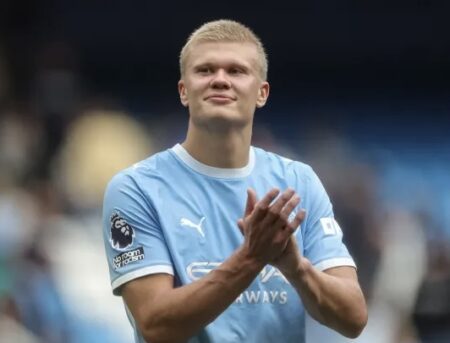
Haaland smiled, followed the beat and rowed alongside his teammates rather than standing apart as the side’s biggest star. That image felt different from the usual view of him finishing chances or breaking scoring records.
The celebration later appeared in Times Square, where Norwegian and French supporters exchanged their respective routines. It worked because anyone nearby could join in within seconds. Norway had several star names, but the lasting picture was collective: two rows moving together.
Oslo Welcomed Norway Home
England ended the run with a 2-1 extra-time victory in Miami. Norway had led before Jude Bellingham scored twice, sending England into the semi-finals. The disappointment was visible at the final whistle. Haaland stood with his hands on his hips while teammates remained on the pitch.
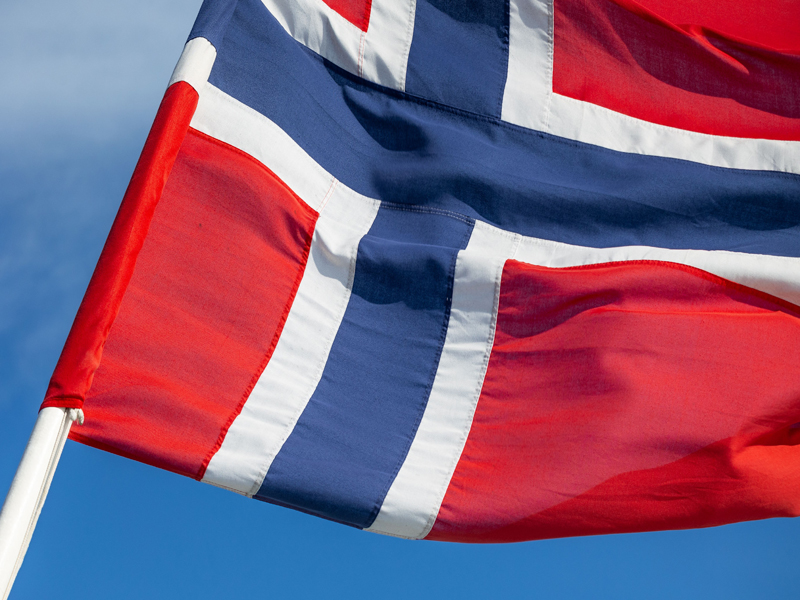
More than 100,000 people gathered around the palace grounds and along the streets when the squad returned to Oslo, according to FIFA’s account of the homecoming. The players climbed onto an open-top bus and moved slowly through streets packed with red shirts and Norwegian flags. Crown Prince Haakon joined them for another Viking Row. In front of a crowd still pulling imaginary oars, a quarter-final exit did not look much like an ending.