




















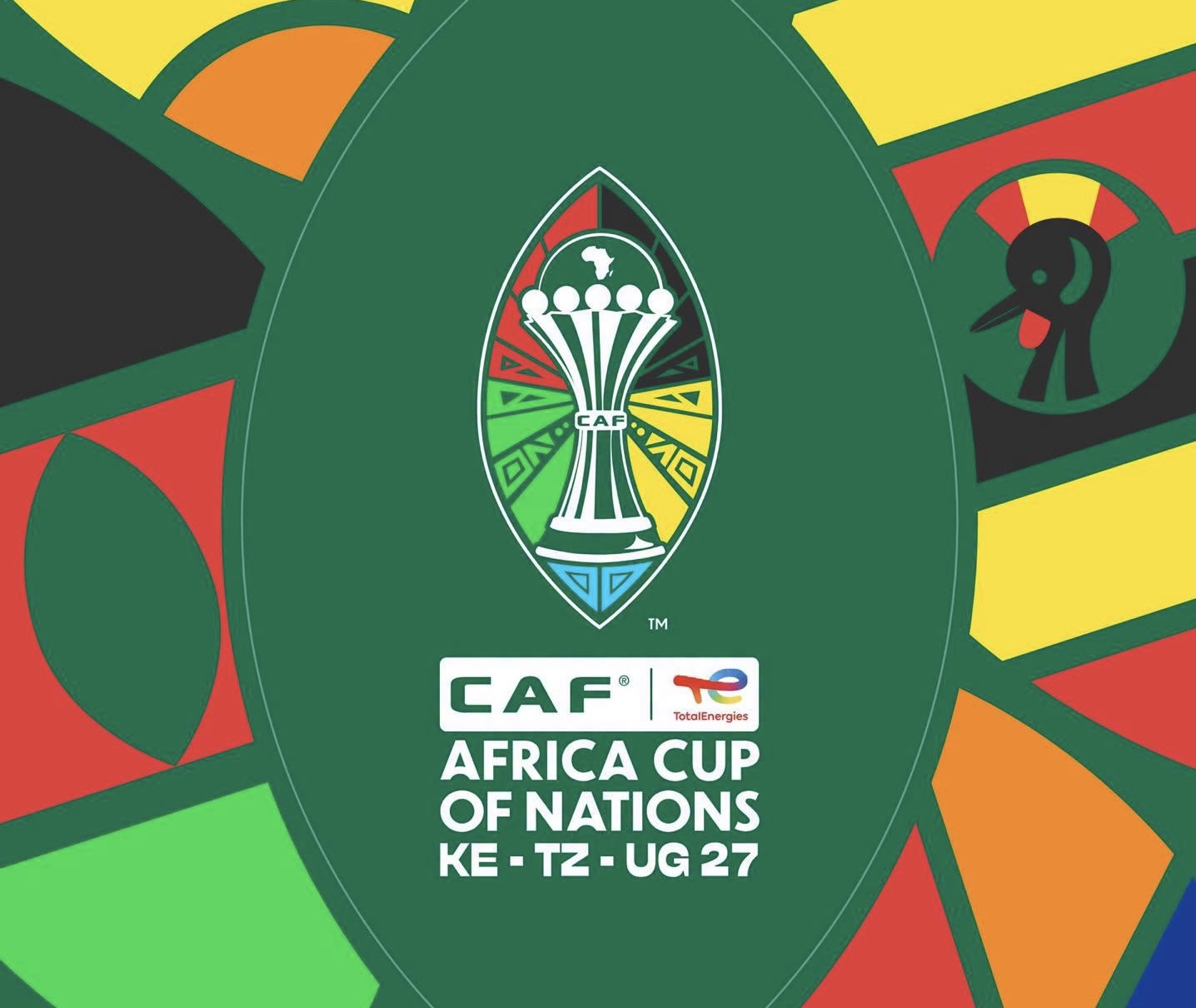
CAF unveiled the official logo and visual identity for the TotalEnergies Africa Cup of Nations (AFCON) PAMOJA 2027 on Thursday, 19 November 2026.
The launch took place simultaneously in the three co-host nations—Kenya, Tanzania, and Uganda— and came with 212 days remaining before the tournament kicks off on 19 June 2027 (final scheduled for 17 July 2027).
This will be the first AFCON jointly hosted by three countries and the competition’s return to East Africa since Ethiopia hosted in 1976.
The branding centres on the message: “Honouring Our Past, Celebrating Our Culture and Symbolising the Africa of Tomorrow.”
The core symbol is a traditional East African shield, representing identity, protection, pride, belonging, unity, and strength. The shield appears in the national coats of arms of all three host countries, underscoring their shared heritage.
Also Read: Super Eagles Must Improve Or Risk Missing AFCON 2027 — Bonfrere Warns
Its structure is formed by two intersecting circles of equal radius, blending traditional African craftsmanship with contemporary design.
At the centre of the shield is a silhouette of the AFCON trophy, positioned beneath an outline of the African continent and bearing the CAF name. This places the ultimate prize in African football at the heart of a symbol of continental unity.
Colourful beadwork and geometric patterns draw from East African traditional crafts, textiles, and weaving.
Colours from the three host nations are integrated: red and black at the top of the shield, green and yellow on either side of the trophy, and blue at the base.
The logo sits against a vibrant green background with radiating multicoloured geometric patterns in many official presentations. Text elements typically include “CAF,” “TotalEnergies,” “AFRICA CUP OF NATIONS,” and “KE – TZ – UG 27.”
Beyond the main logo, CAF introduced a family of 12 shield patterns reflecting the individual characters of the host countries under the idea of “3 Nations, One Vision”:Kenya: Bold horizontal bands expressing strength, heritage, and belonging, Tanzania with its diagonal lines inspired by its national flag, symbolising movement, land, and water and Uganda: Warm, layered colours and the iconic crested crane, celebrating national pride, culture, and spirit.
These will appear in stadiums, digital platforms, and event materials.