


.svg.png)




























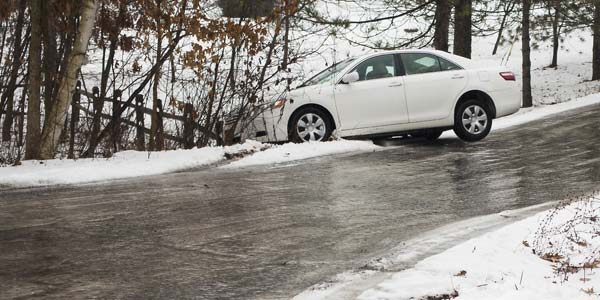
A car that loses traction feels like something happening to the driver rather than something the driver did. The wheel goes light, steering stops answering, and the vehicle travels where physics sends it. Drivers who slide into another car often assume the ice takes the blame.
Insurers and courts tend to look at it differently. Weather is generally treated as a condition drivers are expected to account for, not as an excuse that clears them. That gap between how a slide feels and how a claim is evaluated catches people off guard, and it is a common reason drivers seek a Denver car accident lawyer after a winter collision.
The standard is reasonable care for the conditions
Traffic rules generally ask drivers to travel at a speed and following distance that are reasonable for existing conditions. On dry pavement that may be the posted limit. On a glazed surface it may be considerably slower. A driver traveling at the posted limit can still be found to have driven too fast for the conditions, and that idea surprises people.
Loss of control is rarely treated as unavoidable
Skidding is generally treated as foreseeable during winter. Because of that, the presence of ice by itself is seldom enough to shift responsibility away from the driver who slid. What can matter is whether the driver had a realistic opportunity to avoid the hazard: speed, following distance, tire condition, whether the ice was visible or hidden, and whether the driver was doing anything else that narrowed their margin.
Circumstances that can change the analysis
- Black ice that was genuinely not visible and had not been reported may be weighed differently than a stretch of obvious slush.
- A vehicle stopped in a travel lane without hazard lights can contribute to a chain of impacts.
- A poorly maintained surface or a drainage problem may bring a road authority into the picture, though claims involving a public entity often follow different procedures.
- Worn tires or a known brake problem can shift attention to maintenance rather than the weather.
- A driver who was following too closely in poor conditions may carry a larger share than the vehicle that slid.
Related: Shower Valve vs Shower Head: Which Component Often Needs Bathroom Shower Repair?
Fault is often divided
Winter pileups seldom have a clean answer. Many states allow fault to be shared among drivers, and a person found partly responsible may have any recovery reduced accordingly. In a multi-vehicle chain reaction, sorting out who struck whom, and in what sequence, can take accident reconstruction rather than a roadside conversation. How sharing works, and what it does to a claim, depends on the state.
What helps at the scene
- Photographs of the road surface itself, which is the piece of evidence that vanishes as soon as temperatures rise or a plow passes.
- Wide shots showing vehicle positions, skid paths, and any sanding or plowing.
- A note of the time, the visibility, and whether precipitation was falling.
- Contact information for witnesses, including other drivers who slid at the same spot.
- A medical evaluation if anything hurts, since adrenaline can mask symptoms for hours.
The road surface photograph is easy to forget and hard to replace. Conditions change quickly, and an insurer reviewing the file weeks later has no way to see what the pavement looked like unless somebody captured it.
Avoid conceding fault at the scene
Apologizing is instinctive after a slide, and drivers often say something like “I could not stop” or “that was my fault” before anyone has looked at the road. Those statements travel into claim files. Exchange information, describe what happened factually to law enforcement if they respond, and leave conclusions about fault to the people whose job it is to weigh the evidence.
Coverage questions come up quickly
A slide involving a parked car, a fixed object, or a hit-and-run driver raises different coverage questions than a standard collision, and which part of a policy responds depends on the policy terms. Reading the actual policy language matters more than any general description of how coverage tends to work.
Talking to an attorney
A winter crash with injuries, a disputed sequence of impacts, or an insurer that assigns fault quickly is worth a conversation with counsel. Filing deadlines vary by claim type and can be short, and an attorney should confirm which deadline applies. Fee arrangements are generally discussed during an initial consultation.
Laws differ by state, and how courts weigh weather varies with them. A reader should confirm how their own state’s law applies to their situation.