












































































































































Starting in football betting without a clear foundation is one of the most reliable ways to lose money quickly and become discouraged before developing any genuine understanding of what it takes to do the activity well. The difference between a beginner who improves consistently and one who cycles through the same mistakes is almost never prediction talent. It is whether they build their approach on a solid understanding of how betting markets work, what value actually means, and how to manage a betting fund through the inevitable losing periods.
The most important first principle for any beginner is that football betting is a long-term activity. Success is not measured by a single winning weekend or a lucky accumulator. It is measured by the quality of decisions made across hundreds of bets over many months. Building good habits from the start, understanding the mathematics of odds, developing a consistent research process, and managing money with discipline give a foundation that produces gradual improvement rather than the random results that come from unprepared betting.
For beginners who want structured starting points, platforms like Repcet predictions offer Football with reasoning that serves as a model for how to think analytically about a fixture. Using Free Football Predictions as an educational tool, by reading the reasoning behind each selection and checking whether it holds up against your own developing knowledge, is more valuable for beginners than simply following picks blindly.
Another useful approach for beginners is comparing insights from multiple sources before placing a bet. Platforms such as AcePredict combine football predictions, match analysis, betting tools, and statistical insights to help users evaluate potential betting opportunities. Using multiple data points rather than relying on a single opinion can contribute to better long-term decision-making.
Understanding How Betting Odds Work
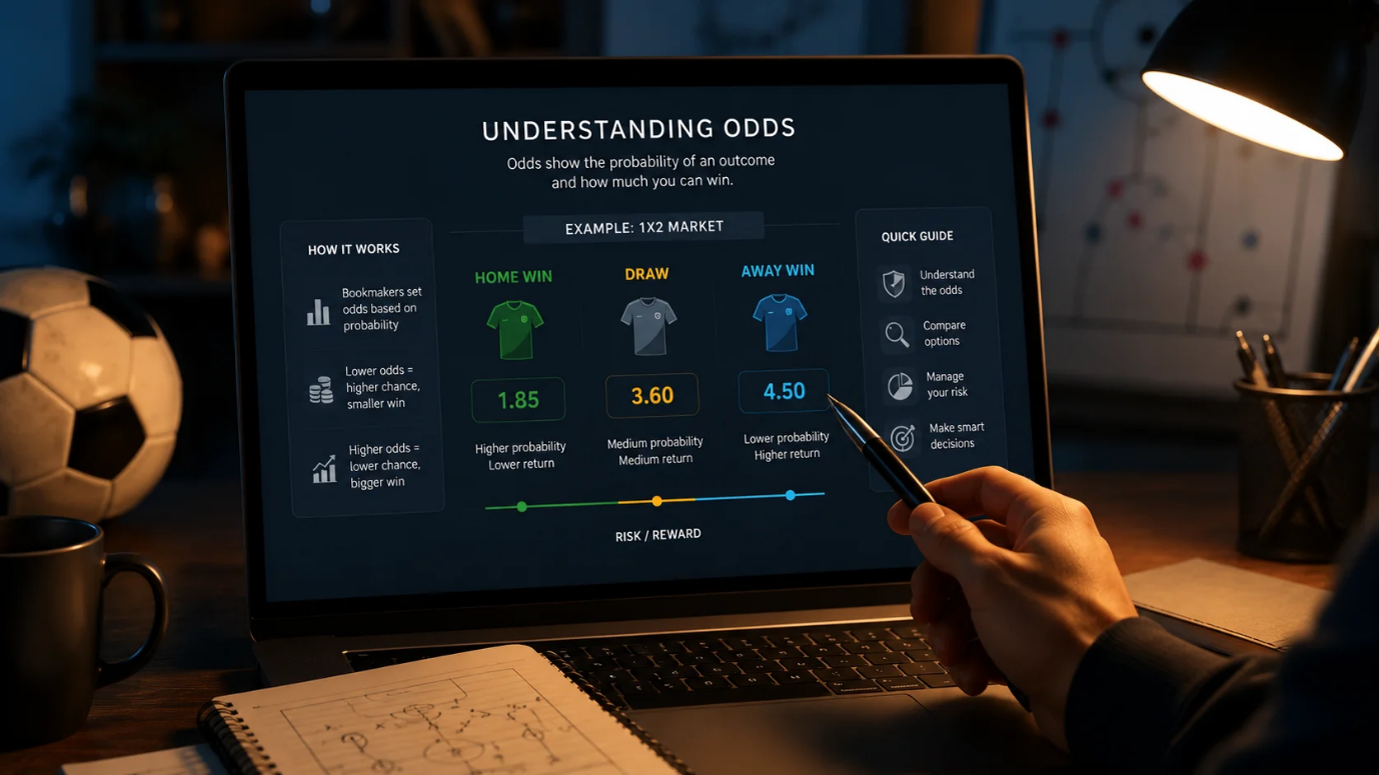
Decimal odds, which are the standard format on most international betting platforms, show the total return including the original stake. Odds of 2.00 mean a ten-unit stake returns twenty units total. Odds of 1.50 mean the same stake returns fifteen. Understanding odds as implied probability is the next level: odds of 2.00 imply a 50 percent win probability. Odds of 1.50 imply 67 percent. Odds of 4.00 imply 25 percent.
The Bookmaker’s Margin
Every betting market is priced so that the combined implied probability of all outcomes exceeds 100 percent. This surplus, typically five to ten percent depending on the market and bookmaker, is the bookmaker’s margin. It means that betting randomly on all outcomes in any market guarantees a loss equal to the margin over time. Overcoming the margin requires identifying specific bets where the true probability is higher than the implied probability, which is what value betting means in practice.
Read Also: OFFICIAL: Tunisia Appoint Renard New Head Coach
Why Odds Shopping Matters From the Start
Different bookmakers offer different odds on the same event, and the differences can be significant across a large number of bets. Even a small improvement in average odds, from 1.80 to 1.90 on the same selection type, makes a meaningful difference to long-term returns. Building the habit of comparing odds across at least two or three bookmakers before every bet is one of the simplest and most immediately valuable practices a beginner can adopt.
Choosing Your First Markets
Beginners are best served by focusing on one or two markets they understand well rather than exploring every available option from the start. The match winner market is the most intuitive starting point because it connects directly to the most obvious question in any football match: which team will win, or will the game be drawn? Once you are comfortable evaluating that question with reasonable research, both teams-to-score and over/under goals markets add the next level of market diversity.
Avoiding Correct Score and Long-Shot Accumulator Traps
Two of the most appealing markets for beginners, correct score and long accumulators, are also two of the most difficult to profit from consistently. The correct score has a huge range of possible outcomes, each with low individual probability. Long accumulators produce spectacular occasional returns but have a combined probability that makes them almost impossible to win regularly, even with strong individual research. Learning the core markets well before exploring high-variance specialist bets produces better long-term results.

Building a Bankroll Management System From Day One
Starting with a clear bankroll management system before placing any bet is the single most important structural decision a beginner makes. Decide on a total betting budget. Set a maximum stake per bet as a percentage of that budget, typically between one and three percent. Apply that stake consistently regardless of emotional confidence level. Record every bet in a simple spreadsheet. These four steps take five minutes to set up and produce dramatically better long-term outcomes than betting without a framework.
Conclusion
Football betting for beginners is most productive when approached as a skill that develops gradually through practice, research, and honest self-assessment rather than as a source of quick profits. Building the right foundations in odds understanding, market selection, bankroll management, and consistent record-keeping from the very beginning gives a platform for genuine improvement that random, unstructured betting never provides.