












.svg.png)































































































































































































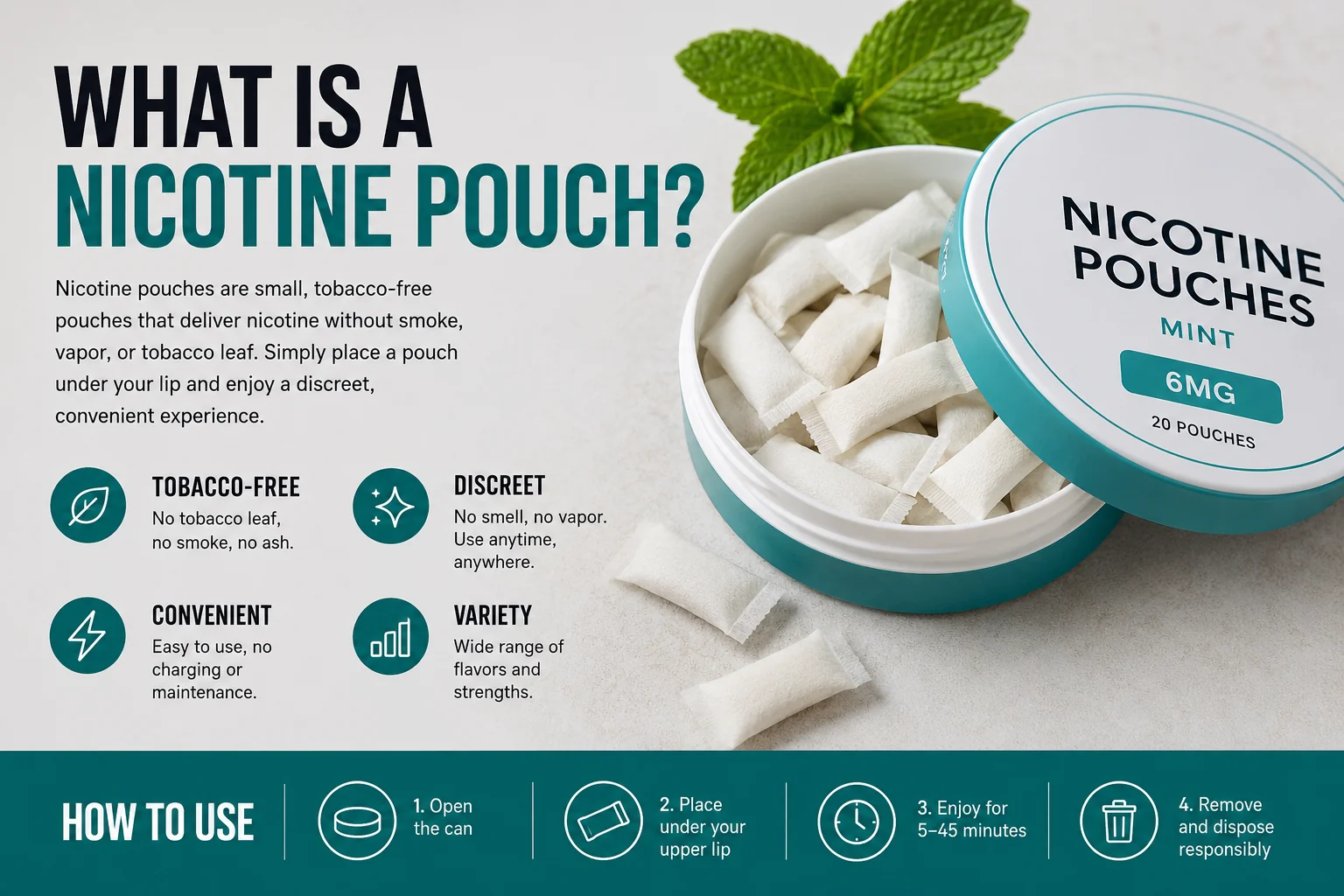
It has now been over a year since the UK ended the sale of single-use disposable vapes, and the dust has well and truly settled. Some former disposable users moved on to refillable pod kits. Others drifted back to cigarettes, which nobody wanted. But a large and growing group quietly went in a third direction: tobacco-free nicotine pouches. What was once a niche Scandinavian habit has become a mainstream option on British high streets and across UK online snus and pouch shops, and for many former vapers it has proved a surprisingly comfortable fit.
If you were an Elf Bar or Lost Mary loyalist before June 2025 and you are still not settled on a replacement, this guide is for you. It covers what actually changed when the new rules came in, why pouches in particular filled the gap, how the nicotine strength you were used to in a disposable translates into pouch milligrams, where UK law currently stands, and how to pick a sensible first tin from the range of nicotine pouches now sold online. Everything here is written for existing nicotine users aged 18 or over — if you do not already use nicotine, there is nothing in a pouch tin for you.
What Actually Changed on 1 June 2025
From 1 June 2025, it became illegal for any business in England, Scotland, Wales and Northern Ireland to sell or supply single-use vapes, whether over the counter or online. The new rules targeted devices that could not be recharged and refilled — the classic pocket-sized disposable with a fixed battery and a sealed tank.
The government gave two headline reasons. The first was youth uptake: disposables had become the device of choice among underage vapers, and ministers wanted the most accessible, most heavily marketed format off the shelves. The second was environmental. By 2024, an estimated eight million-plus disposables were being discarded every week in the UK, each one containing a lithium-ion battery that is difficult to recycle and hazardous in general waste.
Importantly, the change did not touch vaping itself. Refillable and rechargeable kits, pre-filled pod systems and e-liquids all remain legal. But for people who chose disposables precisely because they involved no maintenance, no charging and no refilling, “just buy a pod kit” never quite answered the question. The appeal of a disposable was that it was not a hobby. That is the gap pouches stepped into.
Why Pouches Became the Leading Alternative
No device, no battery, no liquid
A nicotine pouch is about as simple as nicotine gets. It is a small white pouch of plant fibre containing nicotine, flavourings and food-grade fillers — no tobacco leaf, no battery, no coil, no charging cable, no e-liquid bottle rolling around in a bag. You place one between your upper lip and gum, leave it there for twenty to forty minutes while the nicotine absorbs through the gum lining, then remove it and bin it. Most tins have a compartment in the lid for used pouches, so there is nothing to dispose of until you are near a bin.
For ex-disposable users, that simplicity is familiar territory. There is nothing to maintain, nothing to run out of mid-day except the pouches themselves, and nothing that can leak, die or break.
Usable where vaping is not
Pouches produce no vapour, no smoke and no smell. That makes them usable in the many places where vaping is either prohibited or socially awkward: offices, trains, planes, pubs that no longer allow vaping indoors, football grounds, and long meetings. Nobody around you knows you are using one. For people whose disposable habit was constantly interrupted by “no vaping” signage, this is often the single biggest practical upgrade.
Untouched by the new vape duty
There is also a quieter economic factor. On 1 October 2026 the UK’s new Vaping Products Duty takes effect, adding a flat excise charge to every bottle of e-liquid sold — including the liquid inside pre-filled pods. Nicotine pouches contain no e-liquid and fall entirely outside that duty. Combined with the disposables phase-out, the direction of travel for UK vaping regulation has made the pouch category look steadily more attractive to users aged 18 or over weighing their options.
What UK Law Currently Says About Nicotine Pouches
This is the area with the most misinformation, so it is worth being precise.
Nicotine pouches are legal to buy, sell and use throughout the UK. They are frequently confused with snus — the Swedish oral tobacco product — but the distinction matters legally. Snus contains tobacco and its sale has been prohibited in the UK (and across the EU, apart from Sweden) since the 1990s. Modern white pouches contain no tobacco at all, which is exactly why they can be sold here. If a product on a UK shelf calls itself “snus”, it is almost certainly a tobacco-free pouch trading on the older name.
Until recently, pouches sat in a genuine regulatory grey area, covered only by general consumer product safety law rather than any nicotine-specific framework. That has now changed. The Tobacco and Vapes Act, which became law on 29 April 2026, brings pouches formally into the UK’s nicotine regulation regime. The key dates for pouch users are:
29 October 2026 — a legal minimum age of sale of 18 applies to nicotine pouches across the UK, alongside a prohibition on free samples and on vending machines selling nicotine products. Reputable retailers have age-verified pouch sales voluntarily for years, but from this date it becomes a criminal offence to sell to anyone under 18.
1 June 2027 — a prohibition on the advertising and sponsorship of nicotine products, including pouches, comes into force.
Further rules on flavour descriptions, packaging and nicotine limits can be introduced under the Act through secondary legislation, so the category will keep evolving. Health charity Action on Smoking and Health, which tracks the category closely, notes that pouch use among over-18s in Great Britain remains low relative to vaping but has grown steadily — you can read its evidence summary on the ASH nicotine pouches page. The practical takeaway for a pouch user in 2026: pouches are legal, they are staying legal, and the incoming rules mostly formalise standards that responsible sellers already follow.
Translating Vape Strength into Pouch Strength
The question every switcher asks first: “My disposable was 20 mg — what pouch do I buy?”
The honest answer is that the numbers do not map one-to-one, because they measure different things. A disposable’s strength was expressed in milligrams of nicotine per millilitre of liquid (typically 20 mg/ml, the UK legal maximum). A pouch’s strength is the total milligrams of nicotine in that single pouch, absorbed gradually through the gum over half an hour or so rather than inhaled in quick puffs.
As a rough starting framework used widely across the category: Your former disposable habitSensible pouch starting point 10 mg/ml disposables, light use3–4 mg per pouch (light) 20 mg/ml disposables, moderate use4–6 mg per pouch (regular) 20 mg/ml disposables, heavy all-day use6–9 mg per pouch (strong) Chain-vaping, previously a heavy smoker9–11 mg per pouch (extra strong)
Two pieces of advice from almost everyone who has made the switch. First, start one level lower than you think you need. Pouch nicotine arrives more slowly than an inhaled hit but keeps arriving for far longer, and a too-strong pouch announces itself with hiccups, a tingling gum or light-headedness. You can always step up on your next tin; a drawer full of pouches too strong to enjoy is the classic beginner’s mistake. Second, expect an adjustment week. The satisfaction curve is a slow build rather than an instant spike, and some ex-vapers initially miss the hand-to-mouth ritual more than the nicotine itself. Most find this fades within days.
Choosing Your First Tin
With strength decided, three practical choices remain.
Size and format
Pouches come in slim and mini formats, with some brands offering larger “regular” cuts. Slim is the standard modern format — discreet under the lip and comfortable for most mouths. Minis are smaller and even less visible, usually with slightly less nicotine per pouch. For a first tin, slim is the safe default.
Flavour
Mint dominates the category for the same reason menthol dominated disposables: it is clean, predictable and pairs naturally with the slight tingle of nicotine absorption. If you vaped fruit flavours, citrus and berry pouches are widely available; coffee, liquorice and spiced profiles exist for the adventurous. A sensible approach is one mint tin plus one flavoured tin, then let a week of real use decide.
Moisture and feel
Drier pouches release nicotine more slowly and last longer in the lip; moister pouches release faster with a more immediate flavour hit. Scandinavian brands tend toward the moister end; many newer UK-market brands sit in the middle. This is genuinely a matter of taste, and the main reason experienced users keep a couple of brands in rotation.
A Year On: The Honest Assessment
Nicotine pouches are not a perfect replacement for disposables. There is no cloud, no flavour vapour, no ritual exhale — for some ex-vapers that absence is a deal-breaker, and a refillable pod kit will suit them better. Pouches are a different way of using nicotine, not a simulation of the old one.
But a year on, the verdict from a large share of former disposable users is that different turned out to be fine. No device to charge, nothing to leak, usable on a train or in the office, and — for now at least — untouched by the new vape duty. If you are a nicotine user aged 18 or over still weighing what comes after disposables, a single tin at a sensible strength is a low-stakes way to find out. Start light, give it a week, and let your own experience settle the debate.
This article is intended for existing nicotine users aged 18 and over in the UK. Nicotine is addictive. If you do not currently use nicotine, do not start.