




.svg.png)
























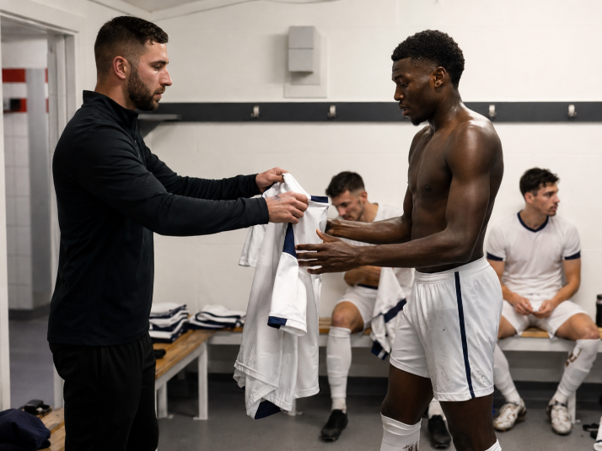
A fresh shirt at halftime can look like one of football’s smallest details. But the practice is not required by the Laws of the Game, and there is no public league-wide record showing how often NPFL or lower-division clubs make a second match shirt available. What can be explained is the machinery behind the choice: moisture accumulates in clothing during hard exercise, a dry replacement removes the moisture already held in the first shirt, and clubs with deeper kit operations have more flexibility in how matchwear is prepared.
This piece looks at what the half-time shirt change can tell us about comfort, kit-room logistics and the uneven resources around football. The key is to separate what the rulebook says, what sports-clothing research actually supports, and what we simply do not know about shirt availability across Nigerian clubs.
Why the Half-Time Shirt Change Happens in the First Place
What a Wet Shirt Changes by Minute 45
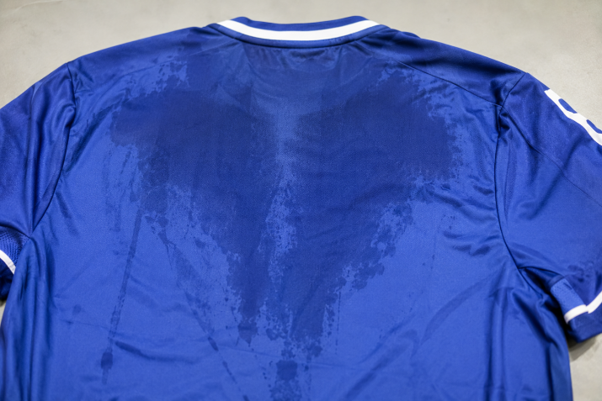
During hard exercise, sweat does not spread evenly through a shirt. Research mapping sweat absorption during running has found large differences between garment zones, with some areas retaining substantially more moisture than others. That helps explain why a shirt can feel wet, heavier or clingy in specific places by the break.
The moisture itself is easier to describe than any automatic performance effect. Studies do not show that a wet shirt necessarily slows every athlete, but a dry replacement immediately removes the water already held in the first garment. The clearest difference is therefore comfort and feel; a guaranteed sprinting or physiological advantage is much harder to establish.
The Rulebook Does Not Require a Fresh Shirt
Nothing in IFAB Law 4 requires an outfield player to put on a fresh shirt at half-time. The law specifies compulsory equipment and regulates safety, colours, slogans and other equipment matters, while individual competitions may add their own requirements.
That distinction matters. A half-time shirt change is a club or player practice, not a universal football procedure. It may happen because a dry shirt is available and preferred, but the rulebook itself does not make the change standard.
What Actually Happens in the Kit Room During Half-Time
Why a Well-Run Kit Room Has More Options
Elite clubs can have dedicated staff responsible for kit operations, preparation and match-day equipment. That does not prove every player at every top club has a second shirt laid out at half-time, but it shows the level of specialist support that can sit behind matchwear at the elite end.
Where spare match shirts are prepared, a change can be handled quickly during the interval. That flexibility comes from operational capacity rather than a football-wide shirt quota. Regulations require compliant playing equipment, but they do not set a standard number of identical spare shirts that every squad must carry.
Why the Second Shirt Feels Different the Moment It Goes On
Modern match shirts commonly use synthetic knitted constructions designed to manage liquid moisture and support evaporation. Wicking describes liquid moving through a textile structure, but how a garment handles sweat also depends on its construction, moisture distribution, airflow and environmental conditions.
A shirt that has already accumulated sweat may feel wetter or heavier than a dry replacement. Changing shirts removes that retained moisture immediately, which can change comfort even if a physiological performance benefit is not guaranteed. Teamwear makers therefore pay close attention to sweat-wicking match kit fabric when selecting materials for hard exercise, but it is too absolute to say a shirt simply “stops wicking” the moment it becomes saturated.
Read Also: The Teams That Shocked Everyone At The 2026 World Cup | Biggest Upsets So Far
Why the Same Choice Cannot Be Assumed Across Nigerian Football
The Cost Is a Spare Shirt, Not a Full New Kit
A half-time shirt change does not mean replacing boots, base layers and every item of a player’s kit. The immediate requirement is a second compliant match shirt for the same player, together with the stock, printing, numbering, transport, laundry and kit-room processes needed to keep matchwear ready.
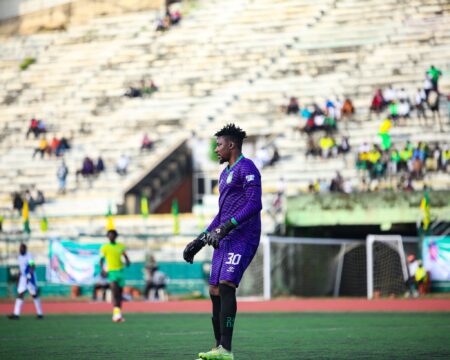
Sponsorship problems, player-welfare concerns and weak training infrastructure have all featured in discussions around Nigerian domestic football. Against that broader financial backdrop, kit depth becomes a reasonable question, even though public data does not show how many shirts each NPFL club prepares per player.
What We Do Not Know About NPFL Half-Time Shirts
There is no public league-wide inventory showing how many NPFL or lower-division clubs prepare a second match shirt for every player at halftime. That gap in public information matters because there is no basis for treating one-shirt-per-player policies, wringing out shirts or towel-based workarounds as standard across the league.
What can be said is that clubs with larger equipment teams and deeper match-day stock have more flexibility to offer a change, while tighter budgets can shape different kit decisions. A fresh shirt may reflect resources and operations, but the frequency of the practice across Nigerian football has not been measured publicly.
| Dimension | What We Know |
| IFAB rule | No half-time fresh-shirt requirement in Law 4 |
| Match-day shirt availability | Depends on the club kit policy and prepared stock |
| Elite operations | Dedicated kit staff can support more match-day equipment options |
| NPFL / lower divisions | No public league-wide data confirms spare-shirt availability |
| Budget pressure | A wider resource issue, not proof of one-shirt-per-player policies |
The wider resource gap is still visible; the precise shirt-count story is simply less documented. That makes the half-time change useful as a clue to football operations, not as a census of African kit rooms.
What the Half-Time Shirt Change Really Reveals About Football’s Money Gap
Where the Kits Actually Come From
At the elite end, global kit partnerships and specialist equipment operations can make matchwear a highly organised part of club logistics. At the smaller end of the teamwear market, local suppliers and independent kit makers may work with much lower material volumes. The two supply chains work differently: elite clubs sit inside large kit partnerships, while smaller teamwear makers may source and test materials in far smaller quantities.
For a small teamwear maker testing sweat-managing knits, buying wholesale fabric by the yard can reduce the material commitment needed for sampling or a short run. Global Fabric Wholesale is a fabric retailer selling by the yard with no minimum purchase, so the relevance here is sourcing flexibility for the maker. That flexibility helps at the sampling or small-run stage, though it does not by itself solve the wider cost of preparing a second match shirt for every player.
Frequently Asked Questions
Do all professional footballers change shirts at half-time?
No. IFAB’s equipment laws do not require a fresh shirt at half-time. Whether a second match shirt is prepared or used depends on club practice, available kit and player preference. There is no public league-wide dataset showing how common the practice is across professional football.
What happens to the sweat-soaked shirt after it’s taken off?
There is no single football-wide rule. Once a player removes a match shirt, the club’s kit staff handles it according to team policy and match-day procedures. Washing, storage and the treatment of match-worn shirts can vary between clubs.
None of this changes what happens on the pitch in real time; the score still depends on what players do with the ball. But the next time a broadcast camera catches a player coming out for the second half in a fresh shirt, the safest reading is not simply “rich club” or “poor club.” It means a dry replacement was available and chosen.
Behind that small moment sits kit policy, prepared stock, staff and player preference. In Nigerian football, wider sponsorship and welfare pressures make the resource question worth asking, but until clubs or leagues publish shirt-inventory data, the half-time shirt change is better treated as a window into football operations than proof that most African teams cannot afford spare kit.