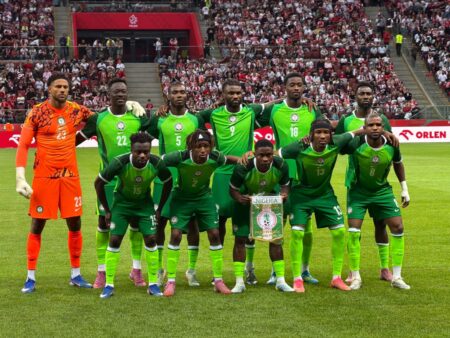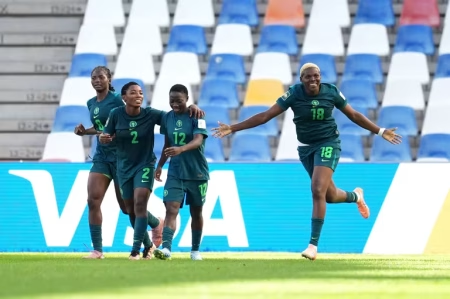








































































































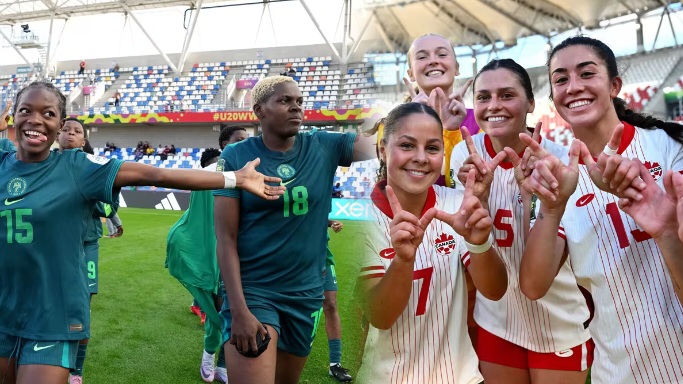
Nigeria’s Falconets have reached the quarter-finals of the 2026 FIFA U-20 Women’s World Cup in Poland with undeniable attacking confidence, but Colombia presents a different examination from the teams they have faced in their last two matches. The South Americans eliminated hosts Poland 1-0 in the Round of 16, while Nigeria defeated England 3-0 to set up Sunday’s meeting in Lodz. FIFA confirms that the winner will face either defending champions DPR Korea or Canada in the semi-finals.
In this piece, Completesports.com’s ALLI FESOMADE examines how Nigeria’s quick attacking transitions could be an advantage that counts against Colombia’s defensive structure and what the Falconets must do to manage the spaces Colombia may target.
Falconets’ Attacking Transitions Key Against Colombia
Nigeria’s route into the last eight has taken a sharp turn since failing to score against Spain and going goalless against China, before producing a 10-1 victory over New Caledonia and then defeating England 3-0 in the Round of 16. Tosin Rafiu, Seimeyeha Janet Akekoromowei and Mary Mamudu scored against England, giving Moses Aduku’s side another convincing performance when the margin for error became smaller.
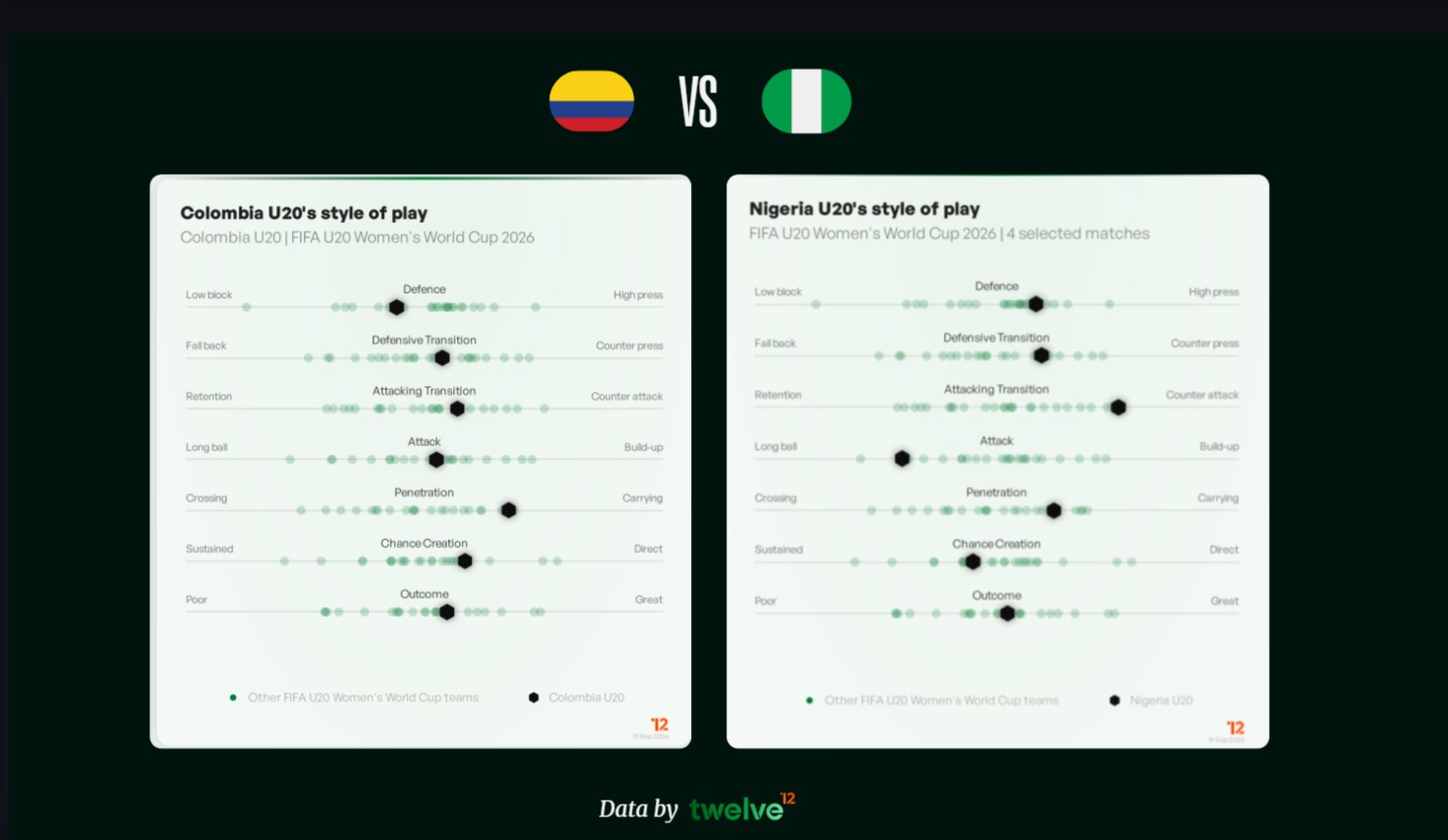
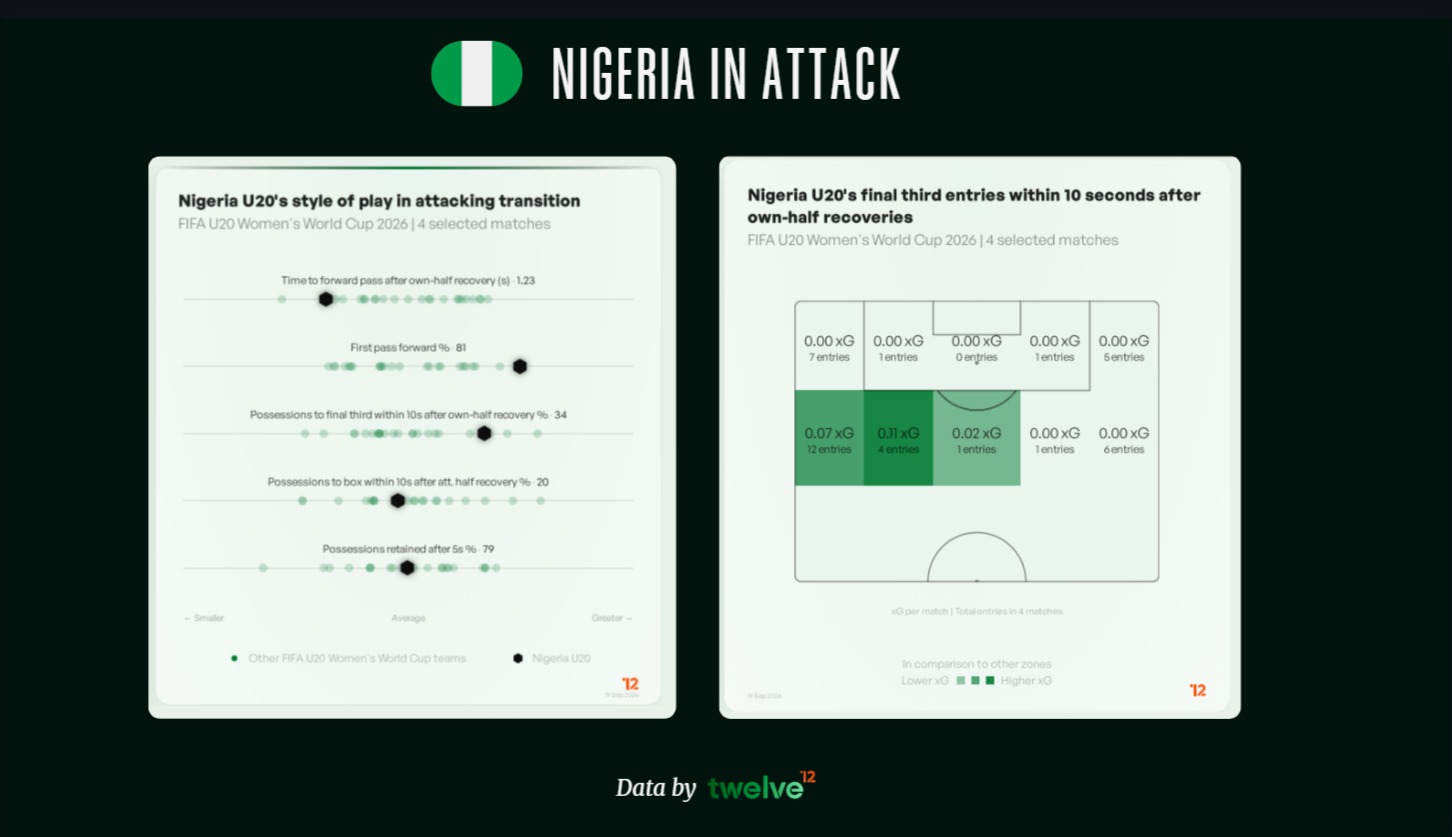
The trend observed in Nigeria’s performance data suggests that this attacking change is not entirely about finishing better. Nigeria have consistently shown a preference for quick forward passes, particularly after recoveries in the middle third. Their attacking transition strategy records an average of 1.23 seconds before the first forward pass after recovering possession in their own half, while eighty-one percent of those first passes travel forward. In practical terms, Nigeria often looks forward quickly rather than spending several passes establishing possession.
Also Read: 2026 U-20 WWC: Aduku Tips Falconets Stars For Super Falcons Call-Up
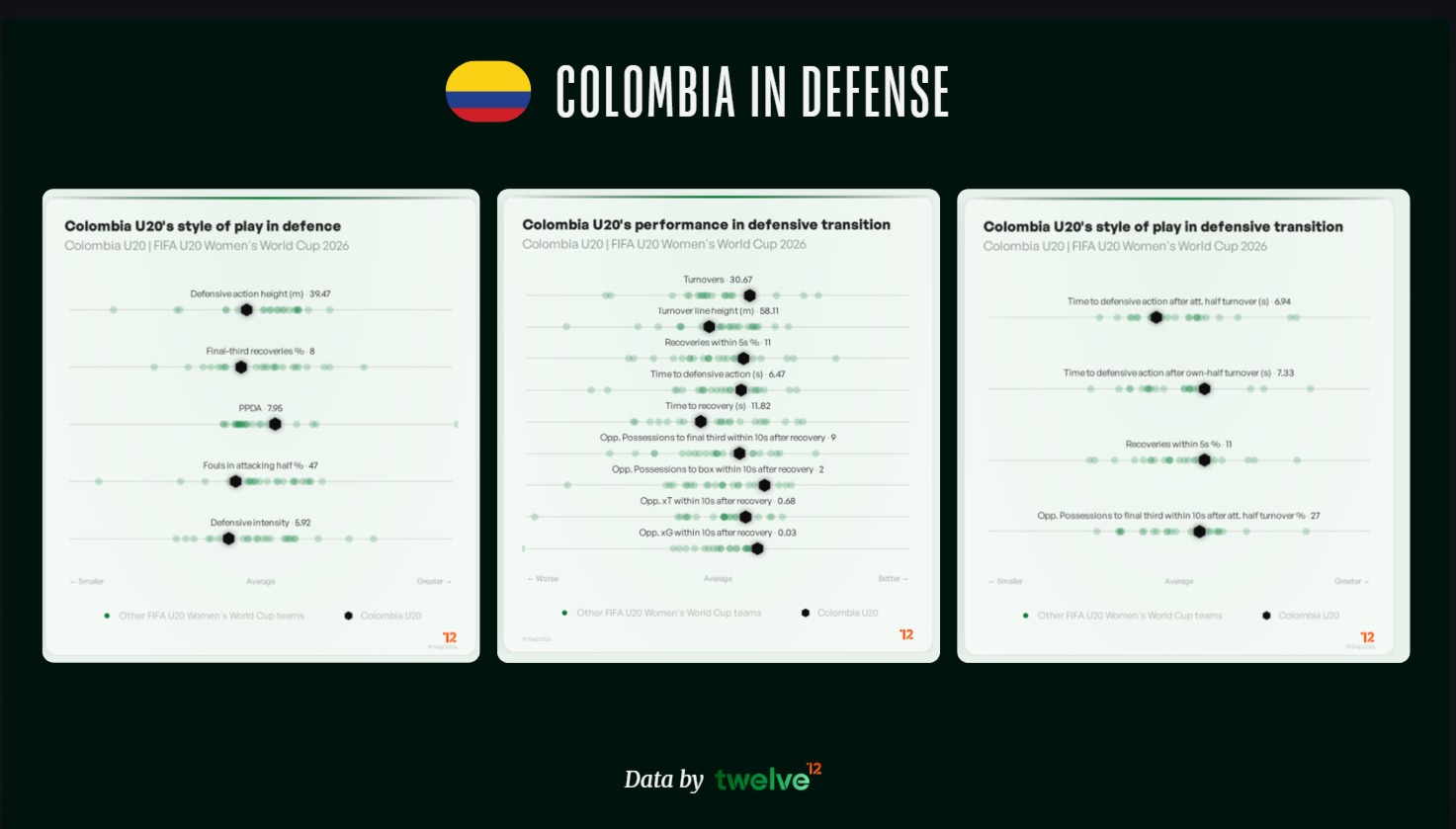
That approach could become important against Colombia because the South Americans have generally been comfortable keeping their defensive structure intact. Their performance data describes a side that mixes pressing with falling back while also showing up strongly in defensive duels. Colombia have come out ahead sixty-four percent of the time when directly challenging opponents for the ball defensively across the tournament. Their defensive actions have also been 39.47 metres from goal, indicating that their defensive work has generally occurred at a moderate position rather than through constant high press.
Colombia’s Defensive Structure Could Frustrate Nigeria
Nigeria’s best route may therefore come when the game becomes stretched. The Falconets have been particularly effective after winning possession around midfield, where their transition threat has been most notable across the tournament. This matters because midfield recoveries can catch a defensive line before it has restored its shape, and Nigeria’s ability to move forward quickly could create opportunities before Colombia’s defensive organisation becomes fully established.
The left side is another important part of the coming duel to watch out for. Nigeria’s attack has produced its strongest penetration through the left wing, with the Falcons also finding some measure of success in the right half-space and central areas as useful routes into the final third. It is as common for Nigeria to enter the opposition penalty area by moving the ball forward themselves through ball carries and dribbles, as it is when they rely on crosses.
Colombia’s defensive record clearly warns that Nigeria should not assume that every attacking move will produce a clear chance. Their opponents have averaged 0.65 non-penalty expected goals per match, while the average quality of each non-penalty attempt or shots has been only 0.06 expected goals. Expected goals estimate the likelihood of a shot becoming a goal based on factors surrounding the attempt. The figures suggest Colombia have generally forced opponents into lower-quality shooting situations, even when those opponents have managed to create opportunities.
The Falconets are particularly effective when reaching the golden zone and the six-yard box, while on the flank they remain more dangerous through the left side. That makes the final action important. Carrying the ball forward can move Nigeria closer to goal, but the possession must eventually produce a central opportunity where the quality of the chance improves.
Colombia’s Possession Approach Offers Another Test
Colombia has their own problem to solve in possession. Their tournament shows a forty-four percent possession rate, with only nine percent of such ball possessions reaching the final third and then entering the penalty area. The first figure measures the share of match possession they have controlled, while the second shows how frequently their attacks have progressed from the final third into the box. Together, the numbers point toward a team that can keep the ball without consistently turning that possession into dangerous penalty-area situations.
Also Read: 2026 U-20 WWC: Falconets Fully Focused On Colombia After England Triumph — Aduku
That could give Nigeria an important defensive task without requiring them to dominate possession themselves. Colombia has shown they are capable of patiently building up from the back. When they attack, they often shuffle between direct long passes and patient build-up and maintain a structured build-up from the back. Colombia during goal kicks builds up from the back with short or medium passes, about eighty-six percent of the time, instead of favouring long balls.
As observed from the Falconets campaign, they appear vulnerable in central areas and the right side of the box during opposition transitions. Colombia’s patient possession could become dangerous if Nigeria loses their compact shape while trying to press or attack.
Falconets’ Mafisere Kafayat vs Colombia’s Mariana Silva
Given that both teams control possession in similar fashion, one common denominator is the defensive parts of their game. Looking at the players who have applied the most defensive pressures across the FIFA U20 Women’s World Cup, Kafayat Mafisere and Mariana Silva come to the fore.
When Nigeria faces Colombia in this fixture, the ability of certain players to break up opposition passes and shield defenders will heavily influence the match. Mariana Silva of Colombia and Kafayat Mafisere of Nigeria perform distinct defensive roles for their teams.
Mariana Silva works constantly to close down space when opponents move forward with the ball. To clarify the metric used, total defensive pressures measure how many times a player closes down opponents, and Silva recorded 165 total pressures across four matches, ranking highest among all players in the tournament. This high tally means Silva runs continuously to disturb opposition passers in regions she covers defensively. Her continuous movement tends to force opposing players to pass to retain possession rather than creating dangerous chances against Colombia.
Kafayat Mafisere focuses on direct physical contact when stopping incoming attacks from central areas. Direct pressures measure defensive actions where a player makes physical contact while pressing an opponent. Again, to clarify, the metric used here measures defensive pressures that occur directly against the opponent in possession of the ball, aiming to provoke errors or turnovers by physically challenging for the ball. Mafisere ranks fourth in this across the tournament, with Mariana Silva closely behind in fifth place.
Interceptions measure how often a player cuts off passes before they reach an intended teammate. Mafisere recorded more interceptions across four matches than Silva did in that time. This difference indicates how well they both read passing lanes effectively to stop attacks before they start. Both players bring clear defensive strengths that could impact the central battle in this upcoming game.
Falconets’ Defensive Transition Could Be Crucial
Moving on from the pressing machines, there is also a clear difference in how both teams create attacking pressure. While Nigeria relies on direct passing and aggressive ball carries to create chances, Colombia builds patiently in possession before striking directly when space opens up.
Also Read: 2026 U-20 WWC: Colombia Captain Turns Attention to Falconets After Poland Victory
When they thwart opposition attacks, Colombia takes a methodical approach and doesn’t push excessively for immediate box entries. They tend to maintain solid possession throughout their play. Their first passes after recoveries have also gone forward sixty-nine percent of the time, although only eighteen percent of possessions after own-half recoveries have reached the final third within ten seconds.
What this suggests is that Colombia can move forward quickly when appropriate, but they generally allow the possession to develop rather than forcing an immediate attack. Nigeria’s defensive transition will therefore matter when Colombia does find space. The Falconets recover possession within five seconds in just fourteen percent of such situations, while their defensive action after turnovers comes more quickly in their own defensive areas.
Nigeria should feel confident against a Colombia team that has struggled to create and convert chances throughout the tournament. However, Nigeria must protect their vulnerable left flank, as Colombia will likely target that specific area to gain easy access into the final third as other teams have.
Falconets Eye Semi-Final Prize Beyond Colombia
Peeking beyond the quarter-final, the wider prize adds another layer to Sunday’s meeting. The FIFA bracket pits the winner of this duel against either defending champions DPR Korea or Canada, who meet in the other quarter-final on September 20. DPR Korea entered the last eight without conceding at Poland 2026, while Canada reached the quarter-finals after scoring nine goals across their two knockout matches.
For now, however, Nigeria’s attention remains fixed on Colombia. The Falconets have already demonstrated that their opening struggles do not define their tournament, and their recent performances have given them a stronger attacking platform. Moses Aduku believes the English underrated the Falconets, but he best believes Colombia will not make that mistake.
The head-to-head records make this the first meeting between Nigeria and Colombia at the FIFA U20 Women’s World Cup since July 2010. The Falconets were victors that day and Aduku will hope history repeats itself on Sunday as Colombia puts their attacking steeze to an unforgiving test.