

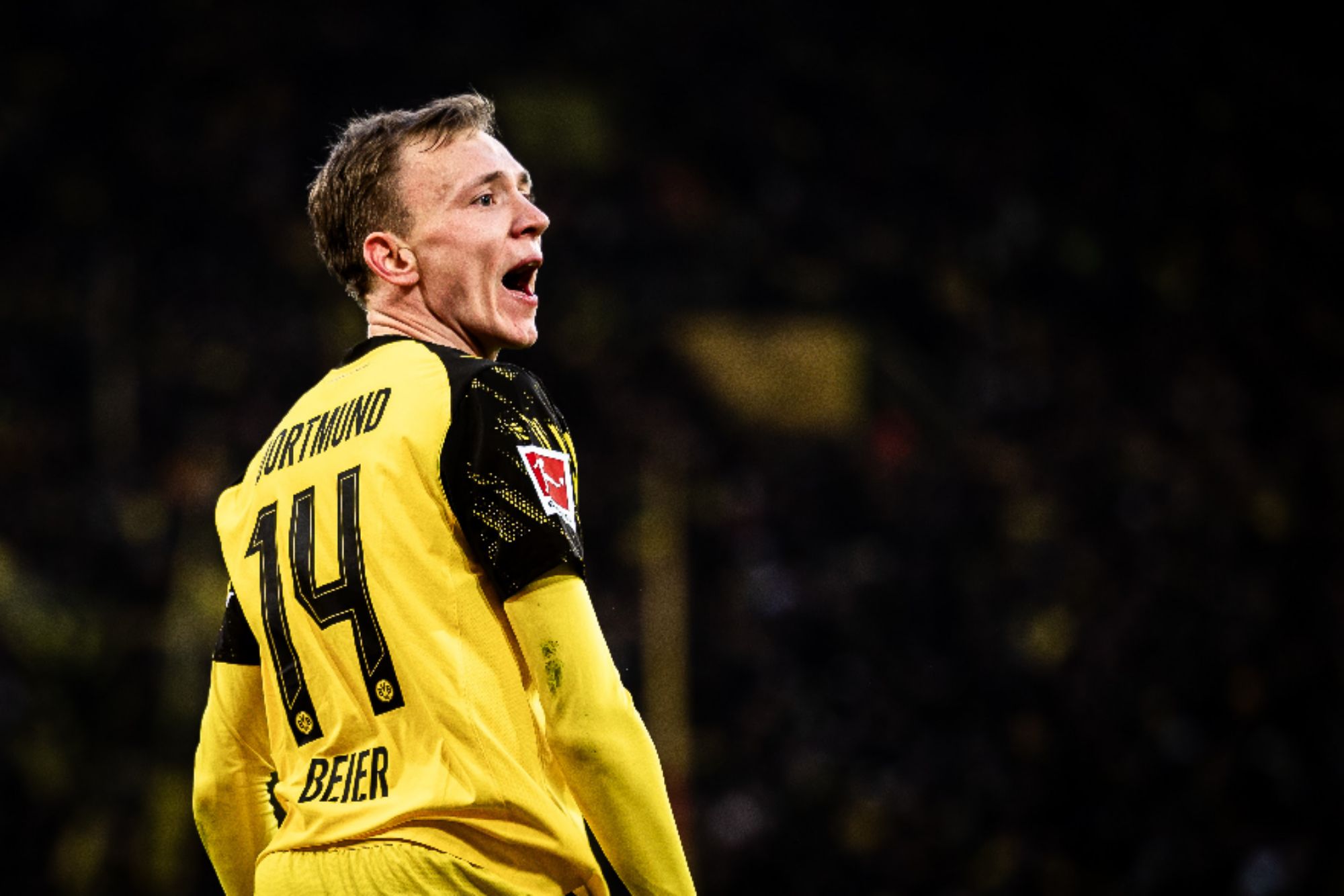
In this exclusive interview made available to Completesports.com by Bundesliga International in a media collaboration, Borussia Dortmund forward, Maximilian Beier, opens up on life at club, handling criticism, and the mentality driving his performances this season.
The 23-year-old reflects on Dortmund’s defensive solidity, improved fitness levels under Niko Kovac, and the challenge of meeting expectations at one of Germany’s biggest clubs.
Beier also discusses his self-critical nature, the emotional toll of decisive stoppage-time moments, and his ambitions for the campaign — both domestically in the Bundesliga and internationally.
Also Read: Done Deal: Nigerian Striker Joins Bundesliga Club Augsburg
From predicting Germany as world champions to backing Austria as a surprise package, the striker who was called up German national team in March 2024 and Joined Borussia Dortmund in August 2024 offers candid insights into his mindset on and off the pitch.
How would you describe your start to the year?
Maximilian Beier: “Good. It can always be better, but it was okay.”
What do you measure that by?
“That we’re winning games and how many points we’ve already collected in the newyear.And,of course, my goal contributions. You always keep a little eye on that.”
For the team, it’s clear: almost all games won, one draw. That’s top. But personally, for you,goal contributions are simply important as an attacking player, right?
“Of course. If I wasn’t scoring or setting up goals, that would be pretty bad as an attacking player.”
But I’m sure the coaches judge you on other things too,right?“Yes,especially with our coach. It’s about how much you give on the pitch.”
Would you say that’s maybe your standout quality, your intensity on the pitch?
“You could say that. It’s definitely one of the things that are up there.”
This good start demonstrates a real stability. Perhaps it’s not entirely new, but clearly there’s more stability now. What are the reasons for that?
Maximilian Beier “We’re very solid at the back. I think we have the most clean sheets among Bundesliga teams. We’re very secure defensively and we also score. Okay, against Wolfsburg we only scored two, but otherwise we usually score at least three per game. So we’re solid and we put them away up front.”
Then it shouldn’t be that hard.
“Exactly, then it shouldn’t really be that hard!”
I mean, in the Bundesliga, that’s exactly it. Three goals every game, two against Wolfsburg. That’s quite something, it doesn’t just happen on it’s own.
“We’re playing in the Bundesliga. You don’t just score three goals per game.”
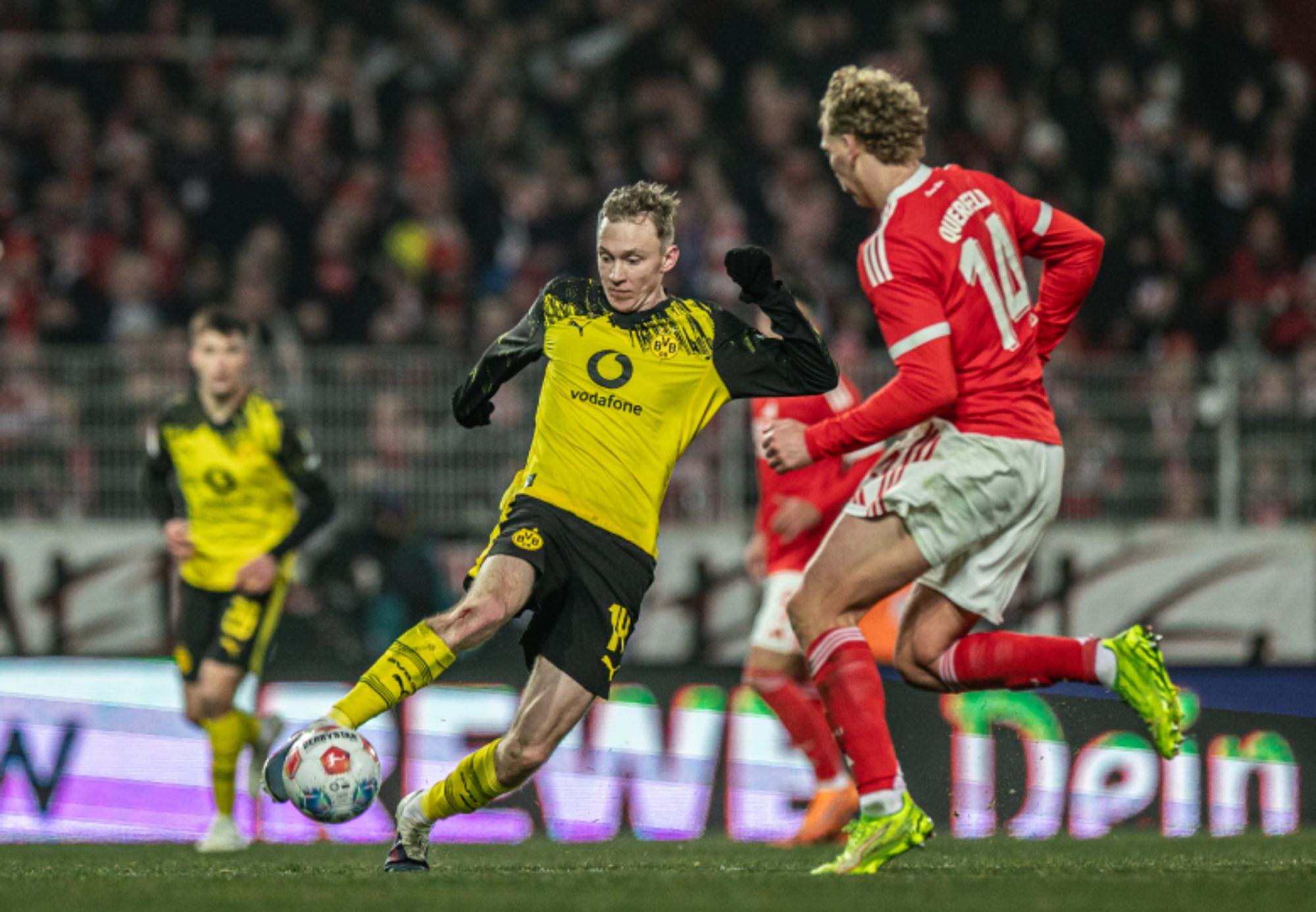
And yet there’s this discussion sometimes that you’re not really firing in attack. Do you understand that?
“Well, if you take the first half against Wolfsburg, for example, we played really, really good attacking football. We held a high line, we won every ball. I thought we had a very good first half, in attack.”
I don’t really understand the criticism either, and it’s not meant as criticism from me. But the debate exists. And I always think: if a team keeps scoring three game after game, why is there even a discussion?
Maximilian Beier: “That debate exists everywhere. I don’t want to say it’s just Dortmund, but with us,people look even more closely. You can’t really please everyone. You can please some people, but not everyone.I think we play good attacking football and score three goals per game in 2026. You can’t score, I don’t know, 4 or 5 goals every game.”
Also Read: Done Deal: Otele Seals Loan Move To Bundesliga Club
Is what you just said: “You can’t please everyone.”, maybe the main thing you’ve had to learn since you’ve been in Dortmund?
“No, that’s not specifically a Borussia Dortmund thing. I think it’s like that at almost every club. Even at Hoffenheim I couldn’t please everyone, so it’s not necessarily a Dortmund thing. Maybe it was there a bit less in Hoffenheim, but it was still there.”
So that’s also just part of professional sport. Is it one of the biggest differences and something you have to learn to deal with as a young pro?
“In youth football you don’t pay as much attention to it. There’s not that much going on in the stadiums you play in, so you have more peace and quiet. If you play for Dortmund in front of 80,000, it’s clear that not everyone will like how you play.”
And you aren’t such a public figure.
“That too.”
Is it true that you’re a very self-critical player? Would you agree?
“Yes, I think so.”
Where does that come from?
“It’s been like that since I was little.”
How does that show?
“You’d have to ask my teammates. After a not-so-good game, I sometimes need a day.
I get very withdrawn and need some peace and quiet. On the second day, it’s fine again.
But right after the game, I’m a bit withdrawn.”
On your own, or do you have family you’ll speak to?
“I talk to my family sometimes, but I prefer to be by myself at first.”
That can’t be easy, if you’re that hard on yourself.
“No, that’s why I always try to talk a bit more after games. It actually does you good.”
That also means the outside criticism can’t be bigger than the criticism you put on yourself.
“No, I’m probably my biggest critic.I think it’s like that for many people, that you expect the most from yourself.”
Though there are also young players who aren’t that self-critical.“For me it’s different.”
Niko Kovač has been here almost exactly a year, he came at the start of February. What changed to make you more solid now? The goals conceded, for example, anyone can see that, but what do you notice has changed in your game?
“I’d say since the coach has been here, we’re all noticeably fitter. We can run more and we can run intensely for longer. You can see it in the data, I think. The coach always mentions it too, when we run over 120 kilometres. I think that is a factor.”
120km as a team is the target? How often have you done that this year?
“Yeah, it’s always like that. I think we have done it quite a lot. You would have to ask the coach, but I think we’ve done it quite a lot.”
So that’s something he pushes you to achieve? Does it help?
“Yes, that’s what he expects from us. Yes, it helps. You can see that.”
For you personally: there’s a World Cup at the end of this Bundesliga season.Is that an important personal goal for you this year?
“First, my goal is to play a successful and good season here with BVB. Then you can look over at that. But first I want a successful season here.”
What’s a successful season?
“ldeally:to win as many of the remaining games as possible.”
We’d like to make a few World Cup predictions, not about you personally, if we can. Simple questions: Who will be world champion?
“Germany.”
Who will be top scorer?
“Mbappé.”
Who will be the breakout star of the tournament?
“The breakout star of the World Cup? Felix Nmecha.”
And which country will be the biggest surprise, in a positive sense?
Maximilian Beier: “Let me think for a second. Saying a favourite would be stupid because that wouldn’t be a surprise. I’ll say the biggest surprise, positively, will be Austria. Sabi [Marcel Sabitzer] will make the difference”
Germany world champions, Austria as the surprise team, that would be interesting!
“Well, the surprise package could reach a semi-final or something.”
Colleagues of ours are making a documentary across the Bundesliga about stoppage time. This season and last season, stoppage time has played a role for you in both directions. How come it’s working much better this year than last year?
“We sat down together and discussed how to play games out in stoppage time more smartly,because we had conceded in stoppage time relatively often. If you’re leading 3-2, you obviously have to look at the clock. It would be stupid not to. So maybe we do things a bit slower, take a bit more time on throw-ins, things like that. We play a bit more cleverly.”
What’s the most intense stoppage time experience that you remember?
“Juventus. I wasn’t on the pitch anymore, but it was exhausting watching it from the bench, so I can only imagine it was even more stressful on the pitch.”
What makes it so mentally difficult? It’s clearly an exceptional mental situation for everyone.
“Maybe it’s difficult because you think the game is abou to be over, and you’re thinking,’Don’t concede, don’ lose the ball, don’t do anything stupid.’ Maybe you stress yourself out too much.”
Also Read: Done Deal: Bundesliga Cub RB Leipzig Sign Flying Eagles Winger
Can you train that, so you get less stressed?
“Maybe, like I said: take a moment on a throw-in, calm things down, take time off the clock so everyone isn’t so stressed. Throw-in, free kick, whatever. Maybe hold the ball near the corner flag so you stay calm.”
The same good old tricks from the 80s! There are often situations where commentators are shouting, “Go to the corner!”
“You can think what you want about it, but as long as you keep the three points and you don’t concede one for a draw, it counts as being clever.”
There have been some really amazing stoppage-time moments this season. I’m thinking of Cologne. You could see how good that felt. Can you describe that moment? Or is it still hard?
“Yeah, Cologne, it’s hard to describe. I didn’t think about it much. The ball came and I just had to put it on goal. I remember we had taken a lot of shots, and the goalkeeper saved everything. In the end, it was also luck, it went through two legs and then trickled in. Emotionally it’s hard to describe. The feelings are strong. It’s difficult to put into words.”
In moments like that, do you know how you will celebrate, or does it just happen?
“No, it’s just a pure reaction. I don’t know what I was even thinking about how I should celebrate.”
I’m remembering what you said about needing your peace and quiet after bad games. What’s it’s like after a game like that?
“Yeah, that’s hard too. There was so much adrenaline in my body. I’ve said it before: I had headaches because in the celebration pile so many people were hitting my head. It was hard to find words after the game too.”
It seems like it’s part of your personality that you need to process things on your own first.
Maximilian Beier : “Yes. After games, a lot of people also struggle to sleep because there’s so much in your body and in your head that you have to process. You can’t just go to sleep an hour after the match.”