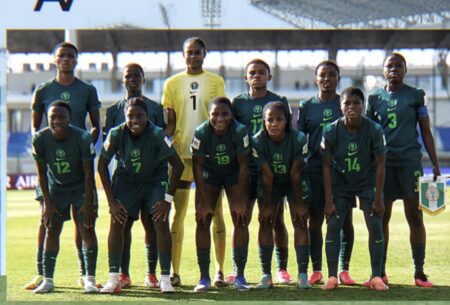



















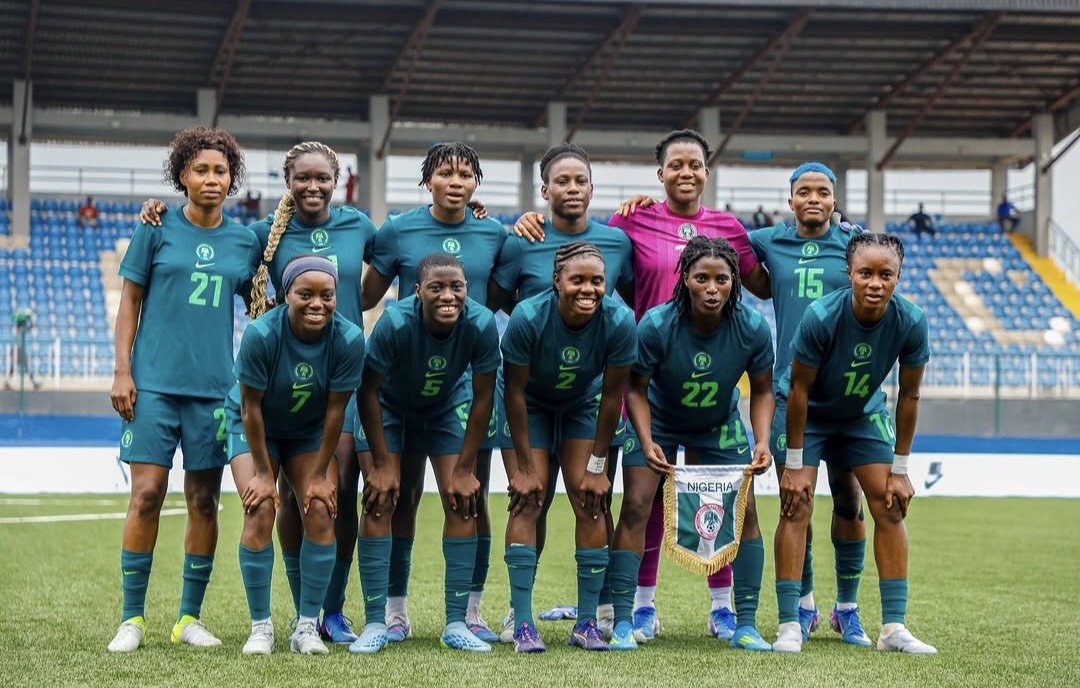
The Super Falcons head into the 2026 Women’s Africa Cup of Nations (WAFCON) in Morocco as the most successful team in the competition’s history, carrying a legacy built on unrivalled consistency, record-breaking achievements and unforgettable moments. The 16th edition of Africa’s premier women’s football tournament runs from 25 July to 16 August 2026, with Nigeria once again among the favourites to lift the trophy.
Although the Confederation of African Football (CAF) postponed the tournament from its original March schedule before confirming the new July dates, the delay has done little to diminish expectations surrounding the record 10-time African champions as they pursue another historic campaign.
Ahead of the tournament, Completesports.com‘s ALLI FESOMADE delves into the numbers to uncover remarkable statistics that highlight the Super Falcons’ extraordinary WAFCON heritage—records and milestones that underline why Nigeria remain the benchmark in African women’s football.
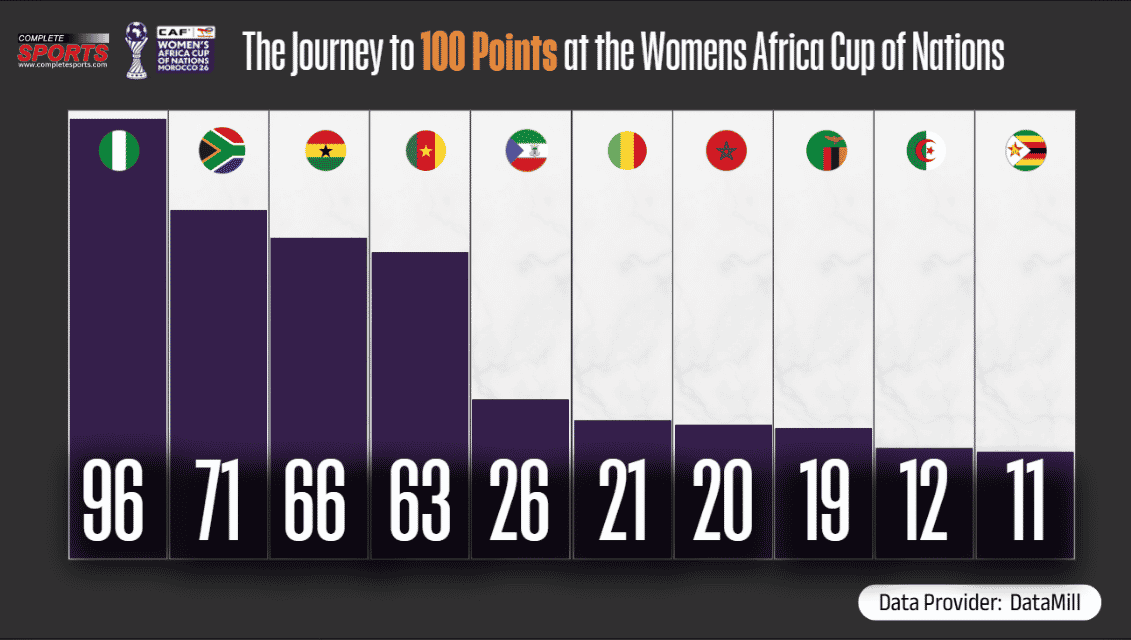
Super Falcons Chasing Historic 100-Point Group Stage Milestone
The Super Falcons of Nigeria are just four (4) points from clinching a record 100 points in the group stages of the Women’s Africa Cup of Nations.
The team have recorded 30 wins and 6 draws from their group stage campaigns to bring their tally to an impressive 96 points.
The points tally is the highest of any nation at the tournament. Their closest rival is 29 points behind and would require a minimum of winning ten group stage games.

The Miracle of Rabat: Super Falcons In WAFCON’s Greatest Final Comeback
In the final of WAFCON tournaments, upsets are rare and so are comebacks. Prior to the 2024 final kickoff, no team had ever made a comeback in the final of the tournament, nor had anyone ever overcome a two-goal lead before.
The Super Falcons of Nigeria reset both records in 45 minutes. In the Final of the 2024 edition, Morocco struck early with goals from Ghizlane Chebbak and Sanaa Mssoudy to take a 2–0 lead in Rabat.
Nigeria fought back in the second half with Esther Okoronkwo’s penalty in the 64th minute. Folashade Ijamilusi levelled the game with a fine finish in the 71st minute before substitute Jennifer Echegini sealed the comeback in the 88th minute.
In that tournament, Esther Okoronkwo recorded a goal and two assists in the Final as the Super Falcons of Nigeria lifted their record-extending tenth WAFCON title after a dramatic turnaround.

Jennifer Echieginni’s History-Making Winning Goal
Jennifer Echieginni’s 88th-minute strike is the latest match-winner scored across all 13 WAFCON Finals in the competition’s history.
That goal was also Esther Okoronkwo’s third match-winning assist at the 2024 tournament. The goal involved a ball over the top from a free kick and a shot from inside the penalty area.
Also Read: WAFCON 2026: Super Falcons Camp Complete As Abiodun, Monday Arrive
Balls over the top were something characteristic of Nigeria’s playing style at the 2024 tournament under Coach Justin Madugu during the Mission X campaign.
Where the 2024 Final Ranks Among WAFCON Classics
The Miracle of Rabat remains one of the most entertaining finals in Women’s Africa Cup of Nations history.
That match was only the fourth time both teams scored in a WAFCON final and it equalled the competition’s second-highest scoring final record.
The record that was equalled was also set by Nigeria in a 5–0 triumph against Cameroon in the final of the 2004 tournament. Perpetua Nkwocha scored four times in that final.
The only final with more goals was Nigeria’s 4–2 win over Equatorial Guinea in 2010. Here are the highest Scoring WAFCON Finals in the competition’s history:
(2024) Morocco 2:3 Nigeria
(2010) Nigeria 4:2 Equatorial Guinea
(2004) Nigeria 5:0 Cameroon
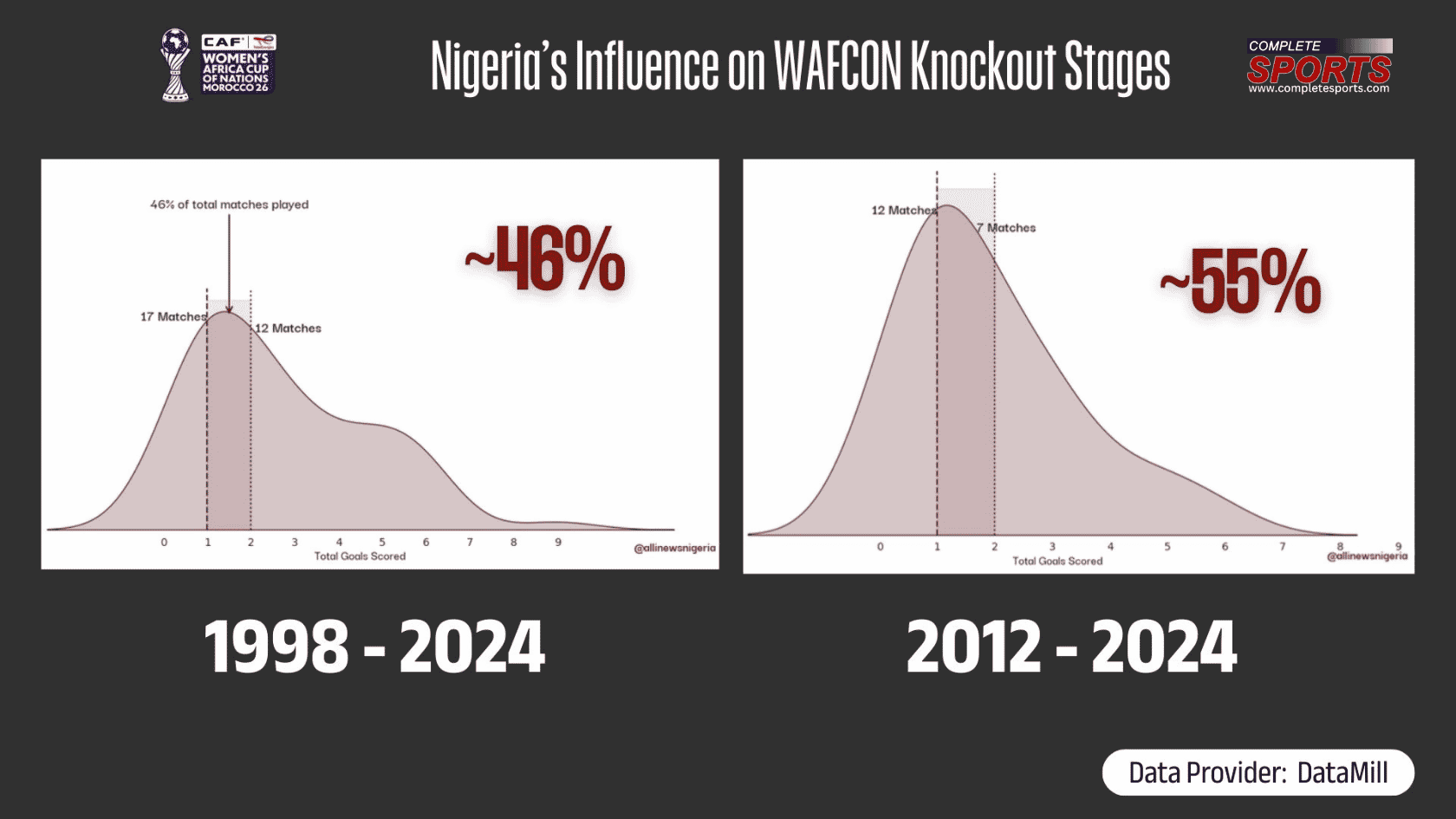
How the Super Falcons Shaped WAFCON Knockout History
Out of 62 knockout games in the competition’s history, only six (6) have ended goalless. Most knockout ties end with fewer than 3 goals shared among participating teams.
Historically, Nigeria have been involved in 10/19 games that have finished with 4+ goals.
Given that quarter-finals were recently introduced, the Super Falcons, for many editions, did so with fewer games played.
The interesting part is that most of these knockout goal fests came prior to the 2012 edition, where the Super Falcons largely blew everyone away.
As demonstrated by the curve, the swell to the right shows this polarising influence. Since Nigeria largely caused the burst in the curve, let’s now adjust the timeline to reflect recency and remove that distracting swell.
It is even clearer now that even in the last six editions, knockouts are generally low-scoring, with goals often within a range of 1 or 2. Only five (5) times has a knockout fixture ended 1-1.
Late-Goal Specialists: The Super Falcons’ Stoppage-Time Heroines
Late goals will always remain one of football’s most thrilling moments, and the Super Falcons have produced several memorable ones at the Women’s Africa Cup of Nations.
Rasheedat Ajibade scored deep into stoppage time in Nigeria’s 2–1 defeat to South Africa in 2022, finding the net in the 90+2 minute.
Two years later, Michelle Alozie went even further, scoring in the 90+4 minute as Nigeria secured a dramatic 2–1 victory over South Africa in the 2024 semi-final.
Also Read: 7 Incredible Super Falcons WAFCON Records That Still Stand Tall
Alozie’s strike carried additional significance. It ranked as the second-latest match-winning goal of the 2024 tournament and was also scored from the farthest shot distance recorded at the competition.
Historically, Alozie’s goal also matched the latest stoppage-time goal ever scored by a Super Falcons player at WAFCON, equalling the 90+4 minute strike by A. Okoronkwo against Zambia in 2018.
Nigeria’s tradition of late goals stretches further back. At the 2000 tournament, Nwadike scored in the 90+2 minute against Morocco, while Perpetua Nkwocha (2006) and Chiejine (2008) both found the net in the 90th minute against Algeria and Ghana, respectively.
That’s not all. One remarkable defensive note accompanies this record: the Super Falcons are yet to concede a stoppage-time goal in either half across 67 matches played at the Women’s Africa Cup of Nations.
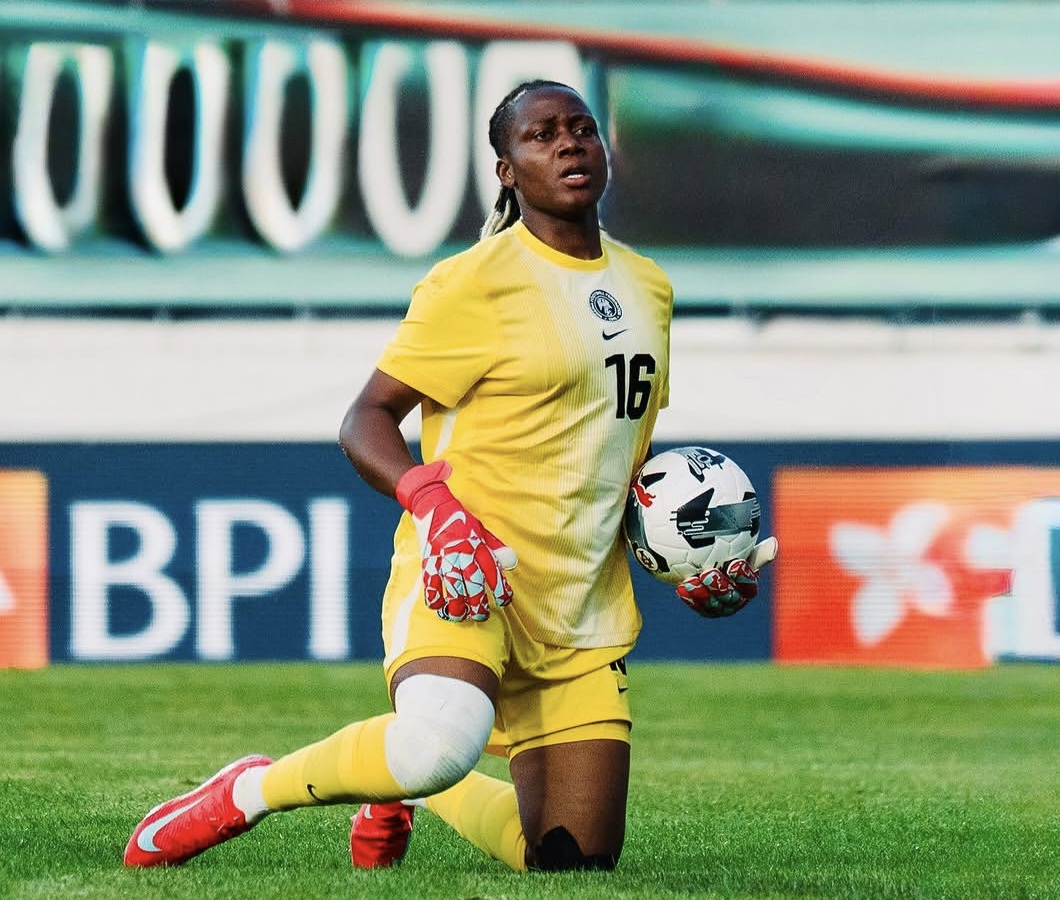
Super Falcons’ Untouchable WAFCON Clean Sheet Record
Beyond their attacking dominance, the Super Falcons have also built a reputation for defensive solidity at the Women’s Africa Cup of Nations. Nigeria’s current first-choice goalkeeper and Africa’s best, Chiamaka Nnadozie, has played a key role in recent years.
Nnadozie has kept seven clean sheets in her last 12 appearances at the tournament. Overall, Nigeria holds the record for the most clean sheets in WAFCON history with 43, almost double the total of the next best side.
Fast Starts That Set the Super Falcons Apart
The Super Falcons have also been the fastest starters in the Women’s Africa Cup of Nations history. Since 2000, Nigeria has scored 79 first-half goals, nearly double South Africa’s tally of 40 and far ahead of Ghana’s 29.
Their ability to strike early has been a major factor behind their dominance in the competition. When split across the different rounds, the Super falcons dominance extends.
Nigeria holds the record for first-half goals in the group stage (52), semifinals (14), quarterfinals (3) and finals (9) of the Women’s Africa Cup of Nations. Ghana is the only side to top Nigeria in any category, scoring six first-half goals in third-place matches.
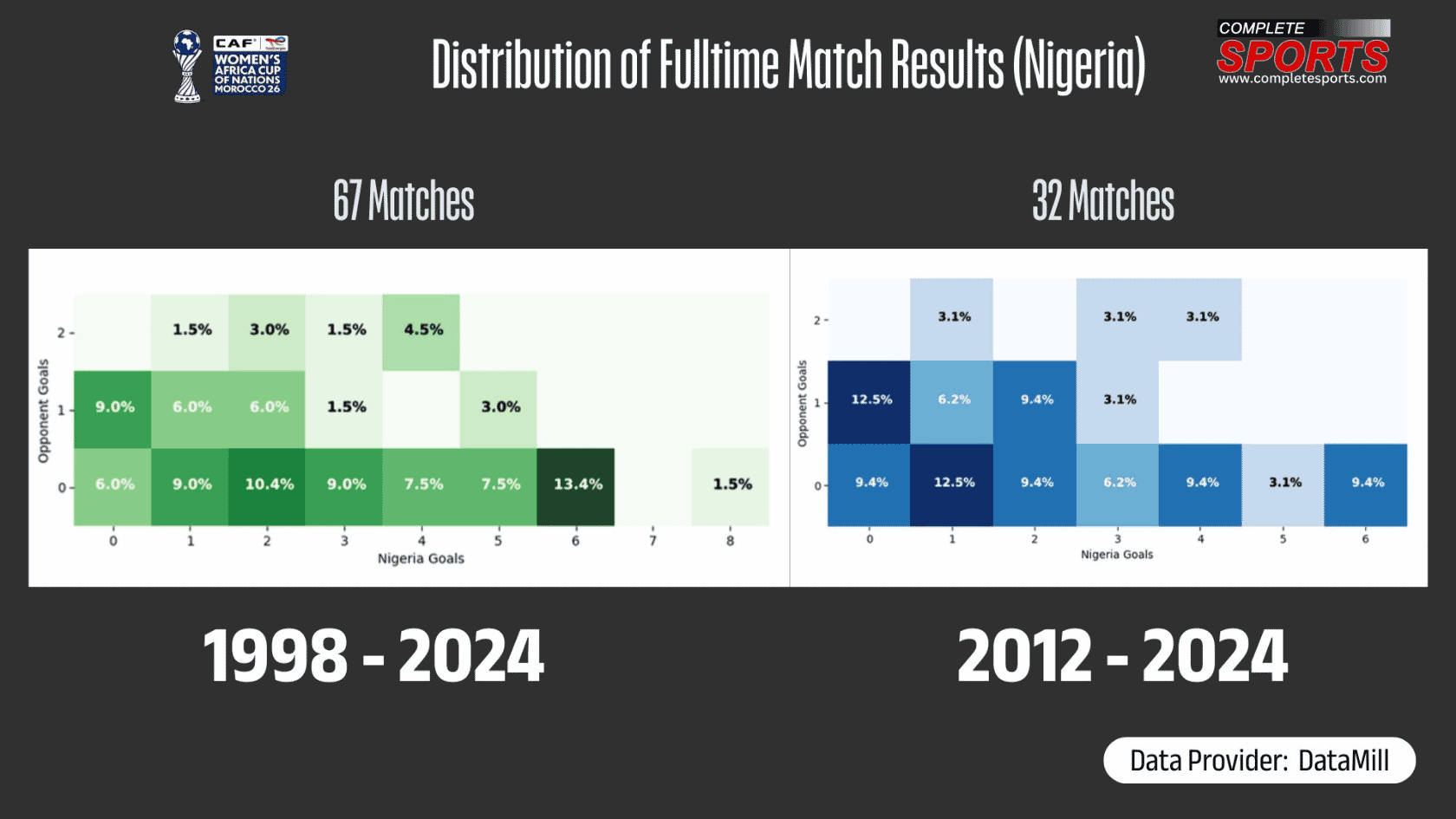
How the Super Falcons’ Winning Pattern Has Evolved
The Super Falcons’ dominance at the Women’s Africa Cup of Nations is also evident in their match results when you check the full-time scores.
Across 67 matches between 1998 and 2024, the Super Falcons most frequently win games without conceding, with several 2-0 and 6-0 results appearing repeatedly in the distribution.
African women’s football has, however, evolved a lot in the last decade, and as you probably guessed, the bulk of these heavy-margin victories were prior to 2012.
As an indicator of competitiveness in the women’s game, the rate of draws at the Women’s Africa Cup of Nations hit the peak at the 2024 edition.
Therefore, looking at a more modern era (2012–2024), this pattern changes slightly. 25 per cent of the Super Falcons’ games have finished in either a 1-0 win or a 0-1 defeat. Full-time results are also distributed across 2-0, 2-1 and occasional large wins.
A Podium Legacy Built on Individual Excellence
No nation on the continent has produced more individual award winners than Nigeria at the Women’s Africa Cup of Nations. From the golden boot honours to MVP awards, the Super Falcons have risen and shone.
The first four editions of the Women’s Africa Cup of Nations held from 1991 to 2000 did not award an MVP title, but several players left their mark. When the award became pronounced in 2004, Perpetua Nkwocha took the crown home.
Also Read: WAFCON 2026: Super Falcons Can Win 11th Title In Morocco, Shock The World At Brazil 2027 — Aloma
Stella Mbachu (2010) and Asisat Oshoala (2014) also won the coveted prize in recent years. After eras of brilliance by other nations on the continent, Captain Rasheedat Ajibabe (2024) returned to the helm a decade later following a successful Mission X campaign.
Winning and Unbeaten Streaks That Define Super Falcons’ Greatness
The Super Falcons’ joint-longest and most recent winning run at the Women’s Africa Cup of Nations is 8 games, broken by South Africa in the 2012 semi-final. That defeat also ended an unbeaten run of nine games.
The unbeaten run record, however, is 16 games. The 16-game run spanned 2002 till 2008 and the Super Falcons had 13 wins and 3 draws.
Before then, the team held an 11-game unbeaten run record from 1998 till 2002, racking up 10 wins and 1 draw.
Another run started in 2014 and ran for ten (10) games before Thembi Kgatlana’s match-winner halted it in 2018. It was a run of 9 wins and 1 draw.
Recently, the Super Falcons have struggled to stack up runs, shuffling draws and narrow defeats in between deserved wins in an increasingly competitive ecosystem.
Mission X has set them on a run of six (6) games without defeat and they would be looking to build on that when the WAFCON 2026 tournament kicks off on Saturday 25 July .