

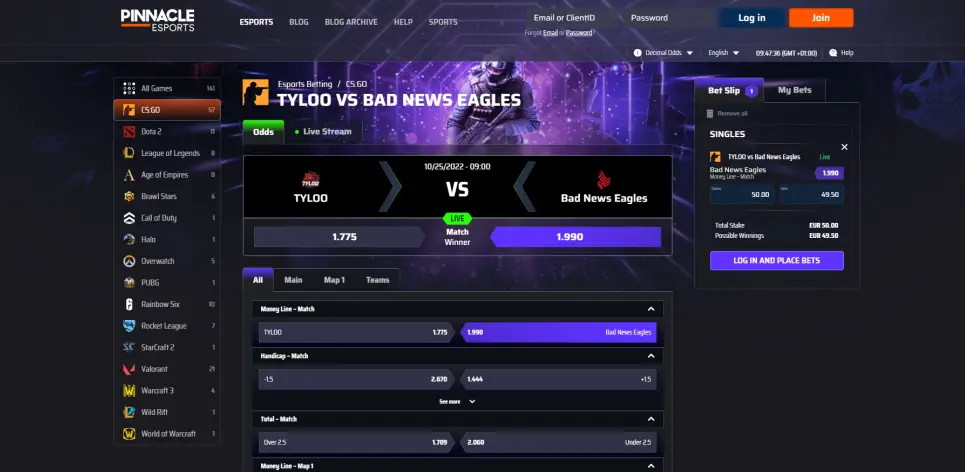
In January 2010, when competitive gaming was still widely dismissed as a niche hobby, Pinnacle quietly accepted a wager on a StarCraft II match. There were no press releases, no marketing campaigns, and little immediate fanfare. Yet in hindsight, that single decision marked a turning point—not just for Pinnacle, but for the entire sports betting industry.
At the time, esports barely registered on the radar of traditional bookmakers. Competitive gaming lacked mainstream legitimacy, standardized leagues, and a reliable data infrastructure. Many operators viewed it as unregulated, volatile, and commercially insignificant. Pinnacle saw something different.
Fifteen years later, Pinnacle has processed over 10 million esports wagers, offered markets across 15+ competitive titles, and established itself as the gold standard for serious esports bettors. This article chronicles Pinnacle’s journey from that first StarCraft II wager to becoming the most respected esports betting operator in the world—and explains why its early conviction, trader-driven culture, and low-margin philosophy proved decisive.
The Esports Landscape in 2010: Betting on the Unknown
To appreciate Pinnacle’s foresight, it’s important to understand the esports environment in 2010.
A Fragmented, Unproven Market
In 2010:
-
Esports lacked centralized governance
-
Prize pools were modest
-
Viewership was largely confined to niche online communities
-
Streaming platforms like Twitch were still in their infancy
-
Data reliability was inconsistent
Most bookmakers avoided esports entirely. The risks appeared obvious:
-
Match integrity concerns
-
Limited betting volume
-
Difficulty modeling outcomes
-
Cultural unfamiliarity
From a traditional sportsbook perspective, esports offered high uncertainty with unclear upside.
Why Pinnacle Looked Anyway
Pinnacle’s trading team didn’t approach esports from a marketing standpoint. They approached it from a probability and market-structure perspective.
Competitive gaming shared core traits with traditional sports:
-
Repeatable outcomes
-
Skill-based competition
-
Measurable performance indicators
-
Highly informed participant base
The difference was cultural, not mathematical.
The First Esports Bet: StarCraft II as a Test Case
To understand why Pinnacle entered esports so early, it helps to understand how the industry looked in 2010. Competitive gaming was fragmented and poorly understood. Prize pools were relatively small, tournaments were often run independently, and streaming platforms like Twitch were only beginning to gain traction. Data reliability was inconsistent, integrity frameworks were underdeveloped, and few bookmakers saw a clear path to profitability. From a traditional sportsbook perspective, esports appeared to offer high uncertainty with limited upside
Why StarCraft II Made Sense
StarCraft II offered:
-
Clear win-loss conditions
-
Strong competitive integrity
-
Deep statistical history (from Brood War)
-
A knowledgeable global fan base
-
Professionalized competition in South Korea
Most importantly, StarCraft attracted sharp, analytical fans—the same type of audience Pinnacle already served in traditional sports.
Early Lessons from the Market
The initial betting volumes were small, but the behavior was familiar:
-
Sharp bettors identified mispriced lines quickly
-
Early money moved markets efficiently
-
Closing prices became increasingly accurate
These early results validated Pinnacle’s hypothesis: esports betting behaved like real markets, not novelty products.
Why Pinnacle Recognized Esports Before Competitors
Crucially, Pinnacle applied its low-margin philosophy to esports just as it did to traditional sports. Esports bettors are often highly informed and extremely price-sensitive. Inflated margins are quickly punished, particularly in markets where information moves fast. Pinnacle responded by offering industry-leading odds, tight spreads, and competitive pricing even on niche esports markets. The result was predictable: sharp bettors arrived, liquidity increased, and markets became more efficient.

As Pinnacle’s esports presence grew, so did industry recognition. The company was named EGR eSports Operator of the Year in 2016, followed by SBC eSports Bookmaker of the Year in both 2016 and 2017, and Gaming Intelligence eSports Operator of the Year in 2017. These awards reflected not just early adoption, but sustained leadership during a period when many competitors were still experimenting or abandoning esports altogether.
Trader-Led Decision Making
Unlike many sportsbooks driven by marketing departments, Pinnacle empowers its trading teams.
Several traders were:
-
Active gamers
-
Esports viewers
-
Familiar with competitive ecosystems
This internal passion mattered.
“We didn’t see esports as a gimmick. We saw competitive games with real skill, real information, and real markets.”
— Pinnacle Trading Team (internal commentary)
This insider understanding gave Pinnacle confidence where others hesitated.
Alignment with Pinnacle’s Core Model
Esports fit Pinnacle’s existing strengths:
-
Sharp markets
-
Low margins
-
High information efficiency
-
Welcoming informed bettors
Rather than requiring a new business model, esports extended the existing one.

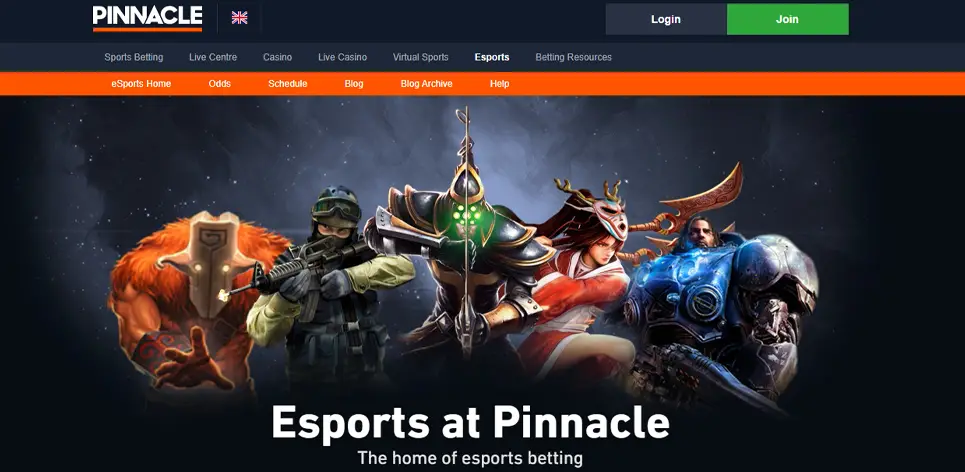
The Pinnacle Esports Hub: Education Meets Execution
Pinnacle’s commitment extended beyond betting markets themselves. Its esports hub was designed to educate as much as it was to transact. Event schedules, tournament previews, team breakdowns, and educational content helped bridge the gap between traditional sports bettors and competitive gaming. Rather than oversimplifying esports for casual consumption, Pinnacle respected its audience’s intelligence, prioritizing clarity, depth, and transparency.
This approach naturally attracted sharp bettors, many of whom came directly from the gaming community. Esports bettors often possess unique informational advantages: a deep understanding of patch dynamics, insight into scrim performance, and familiarity with regional tendencies. For many sportsbooks, this level of sophistication is a threat. For Pinnacle, it is an asset.
Comprehensive Esports Hub
The platform includes:
-
Detailed event schedules
-
Tournament previews
-
Team and player breakdowns
-
Educational content explaining esports betting mechanics
-
Guides for new bettors transitioning from traditional sports
This content lowers the barrier to entry while serving experienced bettors.
Designed for Serious Bettors
Unlike entertainment-focused esports books, Pinnacle’s hub prioritizes:
-
Information density
-
Clarity
-
Speed
-
Transparency
It mirrors the expectations of professional users.
Handling Sharp Esports Bettors
Esports betting attracts some of the sharpest bettors in the world.
Why Esports Bettors Are Different
Many esports bettors:
-
Have played the games themselves
-
Understand patch dynamics
-
Track scrim rumors and roster changes
-
Follow regional play styles closely
This creates information asymmetry—exactly the kind Pinnacle welcomes.

No Limiting Successful Esports Bettors
True to its “Winners Welcome” policy:
-
No account restrictions
-
No stake reductions
-
No punitive measures for winning
Risk is managed through pricing, not punishment.
True to its “Winners Welcome” policy, Pinnacle does not restrict successful esports bettors. There are no stake reductions, no punitive measures, and no hidden limits for those who consistently win. Risk is managed through pricing, automation, and volume—not through exclusion. While esports betting limits are naturally lower than those for major traditional sports, Pinnacle’s remain among the highest in the industry, particularly for premier events like CS majors, League of Legends Worlds, and The International.
Pinnacle’s influence on the broader esports betting market is difficult to overstate. Many sportsbooks reference Pinnacle’s odds when setting their own lines, adjusting prices after Pinnacle moves. In this way, Pinnacle has become a benchmark, much as it is in traditional sports betting. Its emphasis on integrity, efficiency, and low margins has raised expectations across the industry.
Conclusion: A Bet That Changed an Industry
When Pinnacle accepted its first esports bet on StarCraft II in 2010, it wasn’t trying to make a statement. It was simply applying sound market principles to a new competitive frontier. Fifteen years later, that decision stands as one of the most prescient bets in sportsbook history.
By recognizing esports as a legitimate, skill-based market long before competitors, Pinnacle positioned itself as the industry’s most trusted operator for serious esports bettors. Its journey from a single StarCraft II wager to global esports leadership reflects the same philosophy that defines all of Pinnacle’s success: trust the market, respect information, and let sharp bettors make the product better.
In esports betting, as in traditional sports, Pinnacle didn’t follow the industry; it led it.