


Super Eagles’ Defensive Numbers That Defined AFCON 2025
The Super Eagles’ campaign at the 2025 Africa Cup of Nations produced one of the tournament’s most restrictive defensive performances, combining structure, compactness, and game management into a cohesive whole, Completesports.com analyses the feat with compelling data.
On the surface, Nigeria conceded just four goals in seven matches. The deeper numbers reinforce that picture. Opponents generated an average of 0.55 expected goals per match, managed just 7.7 shots per game, and were often forced into low-quality attempts from unfavourable areas. It was a defensive performance defined less by panic interventions and more by denial of opportunity.
 How the Nigeria Defended as a Compact Unit
 How the Nigeria Defended as a Compact Unit
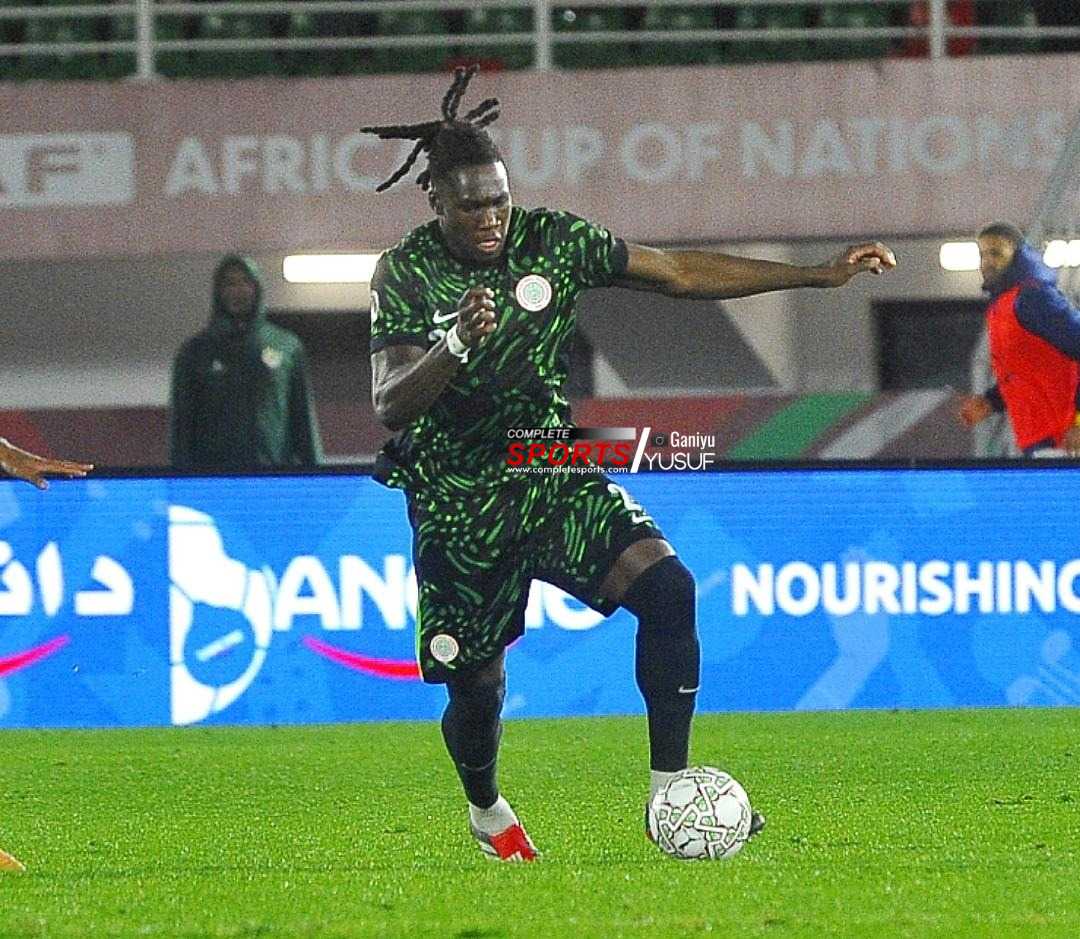
From an intensive frontline press to cohesive timely interceptions and a rock-solid defence marshalled by Calvin Bassey, the Super Eagles defended as a unit. This defensive approach consistently limited access to the penalty area or good goalscoring zones.
Opponents averaged just 2.14 shots on target per match, while big chances conceded remained very low throughout the competition.
Also Read: EXCLUSIVE: How Super Eagles’ Attack Has Evolved: Analysing Seven Editions Of AFCON Data
Even when under pressure, Nigeria rarely lost their shape, forcing attacks wide or slowing play before it could develop into sustained danger. The team only allowed 31 shots from inside the penalty area and conceding only four goals tells you just how much work it took to break the team.
Toughest and Most Dominant Defensive Displays
The Tunisia match was the most testing defensive outing of the tournament. The Super Eagles conceded their highest expected goals figure (1.07 xG) in that game, yet still avoided collapse. Chances were conceded and the Super Eagles nearly bottled a three-goal lead, but the team never fully surrendered control of the game.
At the other end of the spectrum, the match against Mozambique represented a defensive peak, with Nigeria allowing just 0.10 expected goals and only two shots in total. Against both Algeria and Mozambique, opponents recorded 0.00 expected goals on target, showing the level of control Nigeria maintained in those games.
Super Eagles’ AFCON History Shows Defence Wins Tournaments
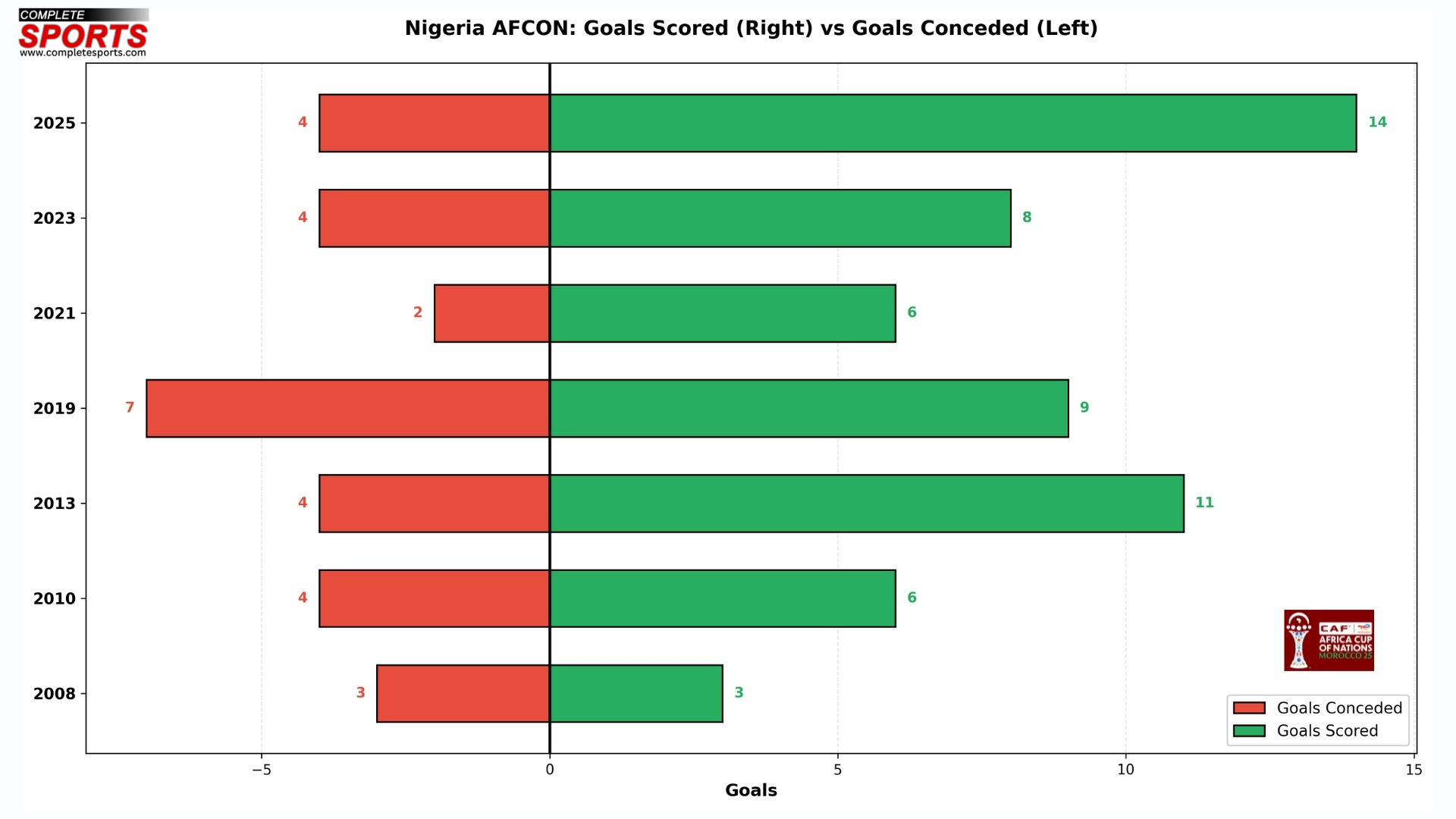
Looking across AFCON editions since 2008, Nigeria’s most successful tournaments have consistently been built around defensive solidity. Across seven editions, the Super Eagles have scored 57 goals and conceded just 28, producing a net goal difference of +29.
In tournament football, the correlation between defensive control and tournament success is clear. In 2013, Super Eagles scored 11 goals but conceded only four, finishing with a +7 goal difference and lifting the trophy. In 2021, they conceded just two goals across four matches, finishing with a +4 goal difference. And in 2025, the team recorded their most dominant tournament by this measure, conceding just four goals while scoring 14, resulting in a +10 goal difference — their best across the period analysed.
Also Read: EXCLUSIVE – AFCON 2025: Super Eagles By Numbers — Record-Breaking Group Stage Performance
By contrast, Nigeria’s least productive tournament in attacking terms, 2008, also remains their weakest defensive balance. That edition ended with three goals scored, three conceded, and a neutral goal difference.
Intelligent Game Management Behind the Eagles’ Success
These numbers imply that the Super Eagles’ strongest AFCON campaigns don’t come by attacking successes alone but by defensive control so effective it often appears effortless. From an analyst’s perspective, it is this defence that allows attacking moments to matter more.
What distinguishes the Super Eagles’ defensive performances in recent editions is their intelligent game management. The Super Eagles have shown an ability to protect leads without retreating excessively, maintaining compact spacing between lines while remaining capable of stepping out to disrupt opposition build-up.
During the 2025 tournament, they displayed high defensive intensity, pressing aggressively and making defensive actions close to the opponent’s goal, limiting passing options even under pressure.
Goalkeeping, Structure and the Future of the Super Eagles
Goalkeeping also played a complementary role, with Nigeria finishing the tournament with a small but positive goals-prevented figure (+0.39). While not decisive on its own, it speaks to a defensive unit that made mistakes rare. You had to create a genuinely high-quality opportunity to score against the Super Eagles.
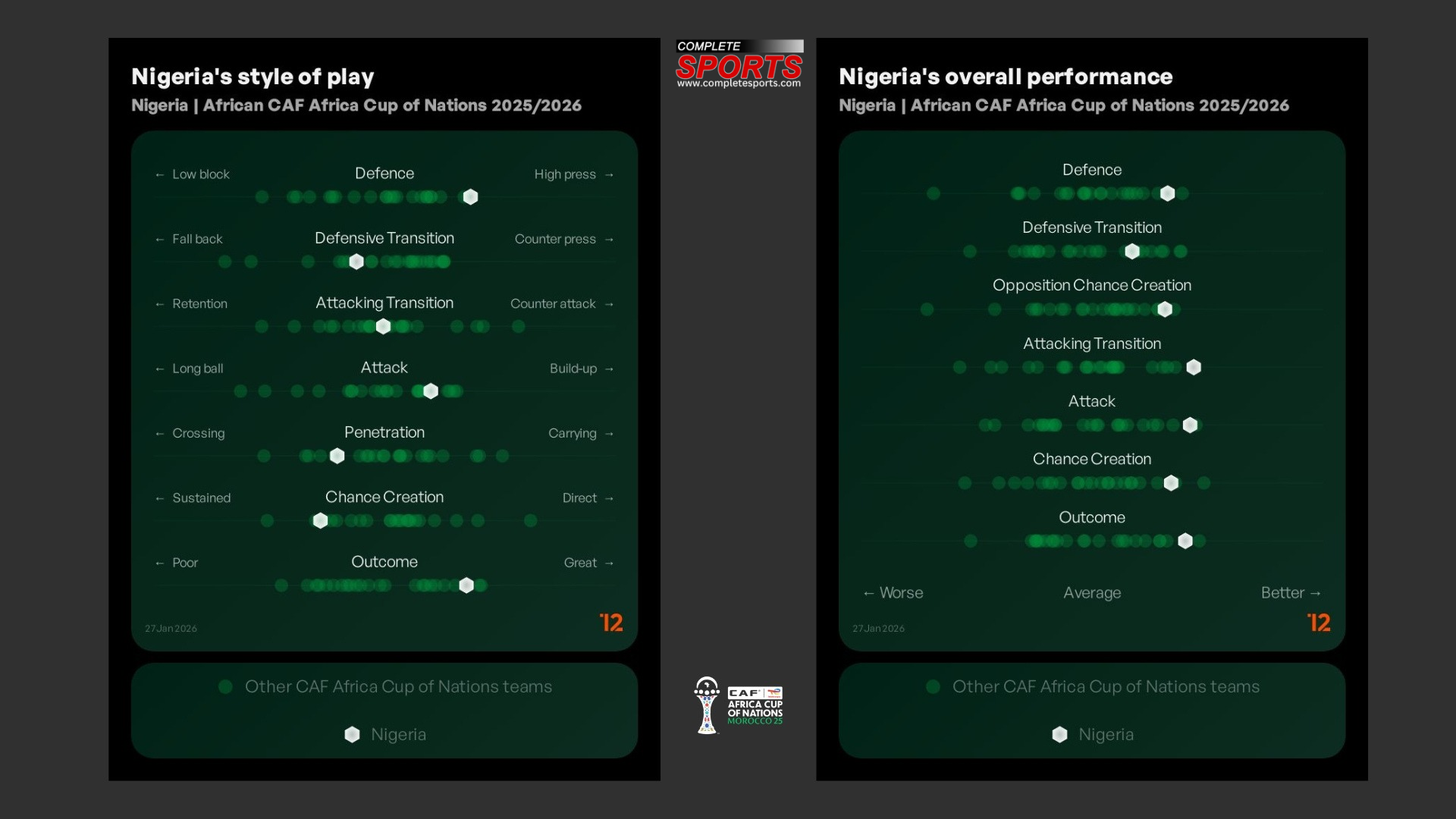
Historically, the Super Eagles have always been hard to beat, and the data leaves little doubt. In fact, the 2025 Africa Cup of Nations suggests that the Super Eagles now have a defensive structure that supports an attack capable of capitalising consistently.
Combining one of the lowest expected goals conceded totals with a very positive attacking output may be the clearest indicator yet that the Super Eagles are again ready for continental success.
By Alli Fesomade