




.svg.png)























Newcastle United have submitted a €24 million (£20.7m) bid for 18-year-old Nigerian winger Zadok Yohanna, currently playing for Swedish club, AIK. The offer is designed to hijack a transfer from Brighton & Hove Albion, who had previously submitted a €23 million bid and reached a verbal agreement on personal terms with the player. AIK also seems resigned to losing the Nigerian youngster, as released in a club statement.
Newcastle’s offer includes performance-related bonuses, surpassing Brighton’s initial proposal. If completed, the financial impact would be massive, and the move would become one of the biggest transfers in Swedish football history. The deal would break the Swedish Allsvenskan transfer record held by Lucas Bergvall when he moved to Spurs.
In the wake of this potential transfer bid from Newcastle, there has been a surge in public interest about the Nigeria’s Super Eagles’ prospect, with fans eager to understand what makes the teenager such a highly sought-after prospect.
In this piece, Completesports.com’s ALLI FESOMADE takes a detailed look at Zadok Yohanna’s playing style, strengths, areas for development, how his game could translate to the Premier League, and how he might fit into the tactical setups of his potential suitors.
Why Europe’s Top Clubs Are Willing To Break Records For Yohanna
Beyond the record-breaking price tag, the data suggests clubs are not simply gambling on potential and there is a clear logic behind the interest. His data with AIK reveals a player with a unique set of attacking tools, some of which already distinguish him from other wingers in Sweden’s top division, while other aspects of his game are still in development.
18-year-old Zadok Yohanna is a left-footed right winger signed from Ikon Allah Academy in Nigeria. Since joining AIK in 2025, he has made 18 appearances, scoring five goals and providing two assists. This season, he has started all seven matches for AIK in the 2026 Allsvenskan season. He has contributed to four goals in 580 minutes of football, but these raw numbers only provide a limited viewpoint.
Also Read: Newcastle United Outbid Brighton For Nigerian Youngster
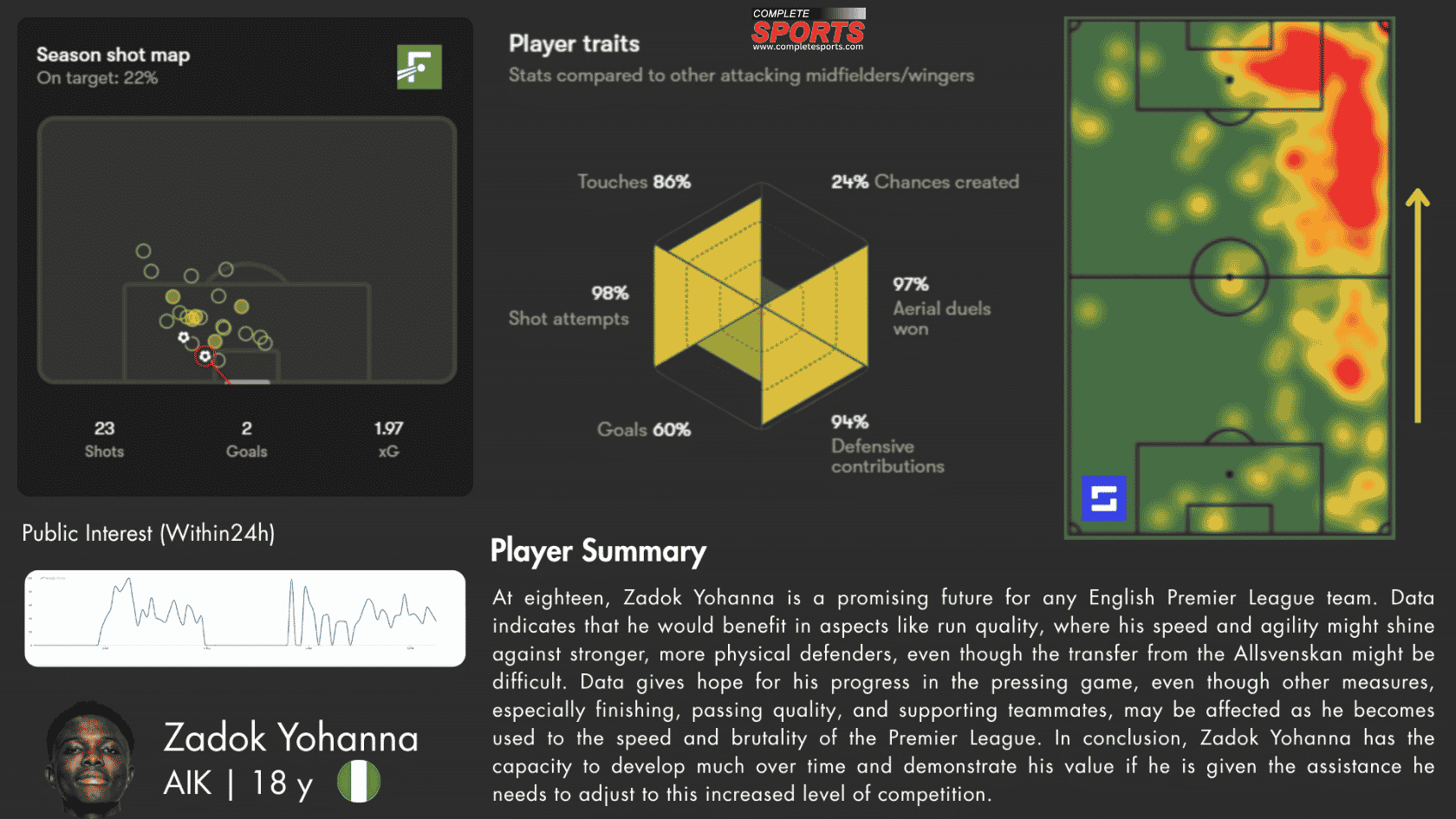
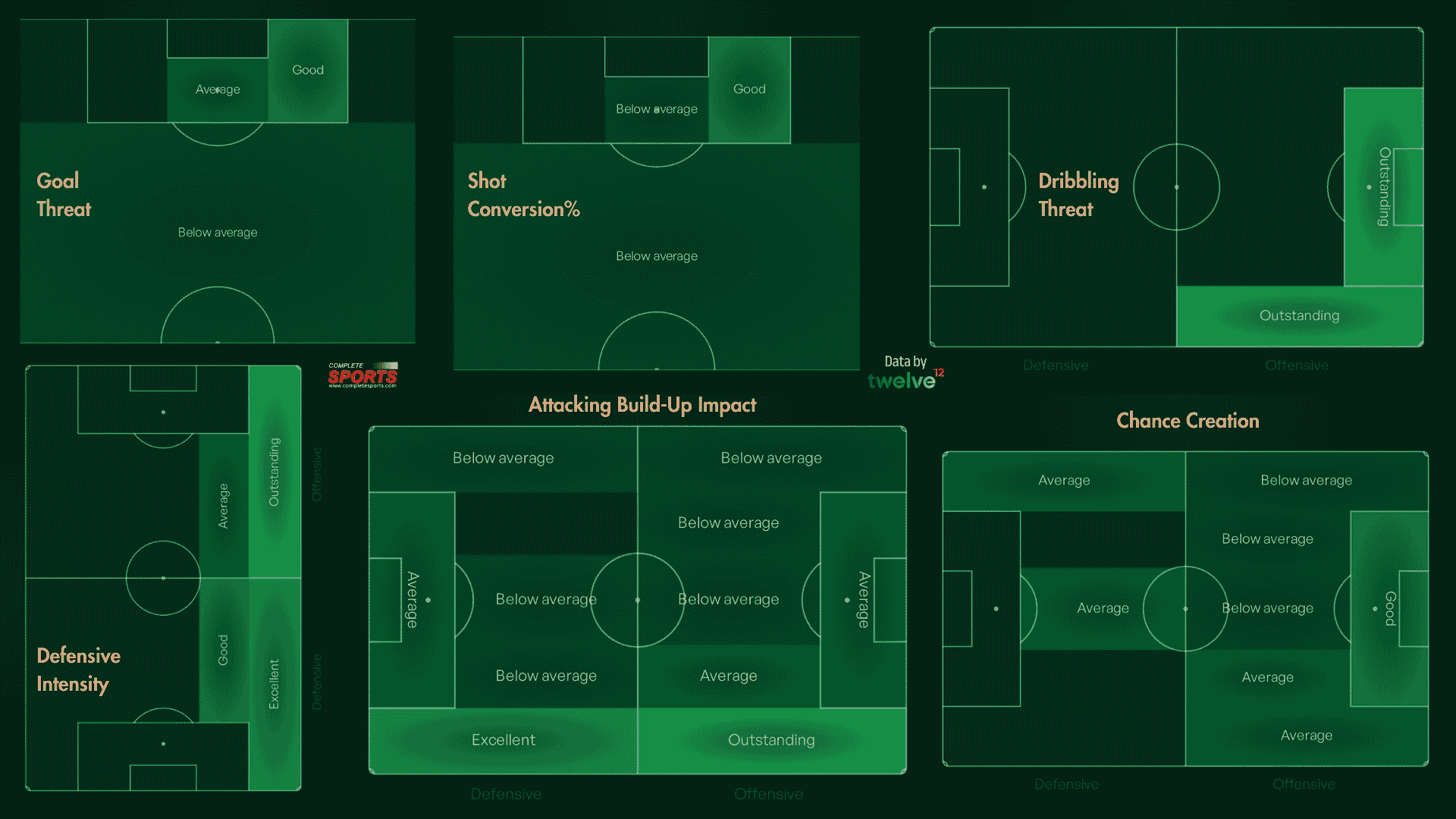
Zadok Yohanna is an immensely dangerous winger, capable of making frequent entries into the box and getting touches in scoring positions. While his goal-scoring metrics are typical for the Swedish league, his expected goals performance shows his quality in being a constant threat to defenders. While Yohanna’s contributions on the attacking right flank are outstanding, his influence drops off sharply when he moves to the left side or into deeper areas of the pitch.
Ball Carrying And Dribbling: Yohanna’s Defining Weapon
This is the heart of Yohanna’s game. Yohanna is a player who often wants to receive the ball in advanced right-wing positions and then drive at defenders. He is not a wide playmaker who drifts across the frontline, nor does he contribute much from central areas. His game is built around frequent penetration from the right channel, and his effectiveness depends on being stationed in those dangerous wide areas where he can run at isolated full-backs.
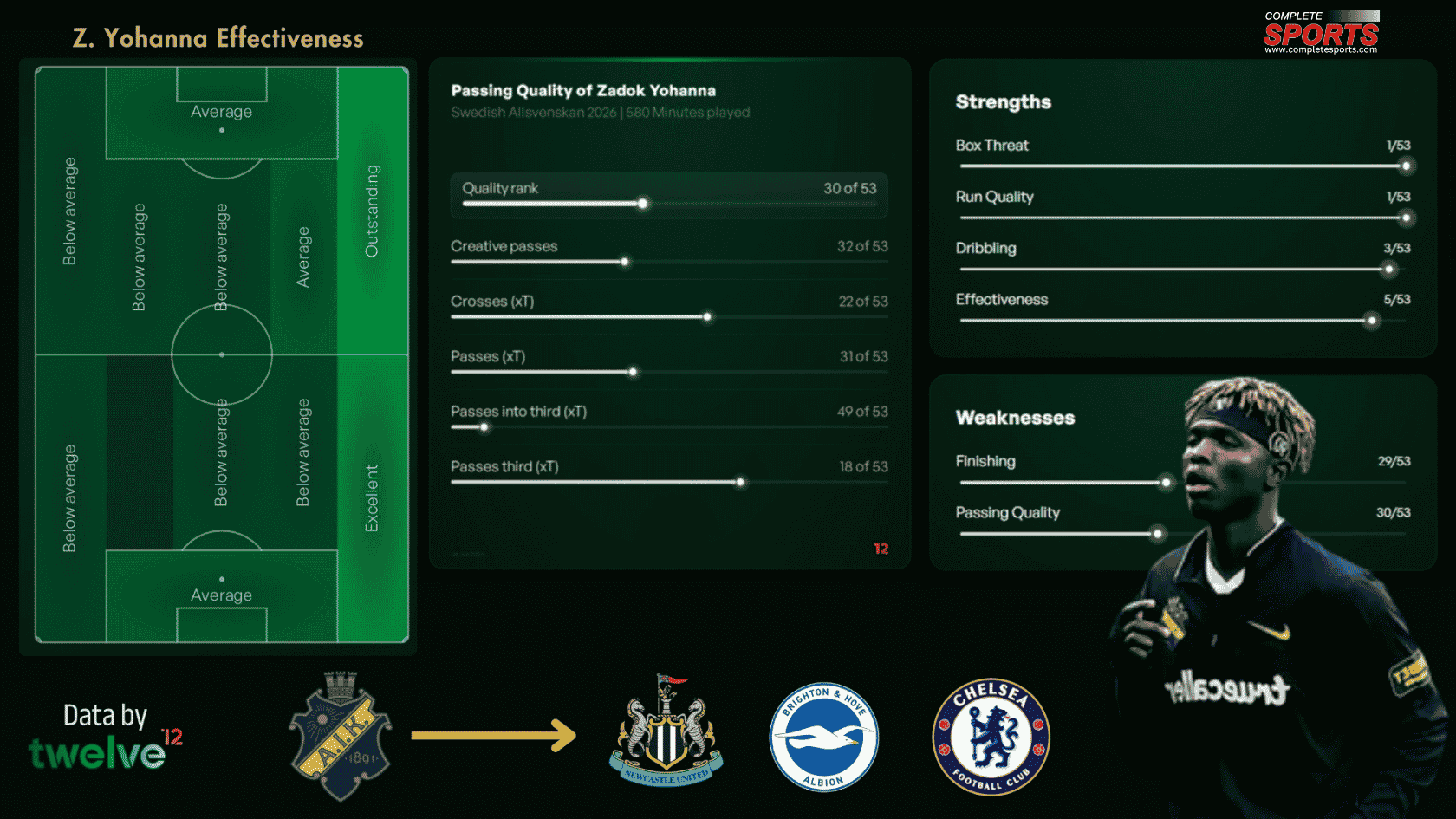
The data classifies his run quality as exceptional, noting that he has a remarkable ability to create scoring opportunities simply by carrying the ball. He makes dangerous runs into the box and consistently carries the ball into the penalty area. When measuring the expected threat generated from his carries, he ranks among the best wingers in the Swedish league.
There is an interesting contradiction in his dribbling numbers, though. While Yohanna thrives at creating goal-scoring opportunities through his dribbling, his actual success rate on dribbles is not necessarily outstanding, and his pressure resistance is mixed. What this suggests is a winger who takes risks.
He attempts dribbles that others might avoid, and even when he does not complete every run successfully, the ones that come off produce high-value chances. He is creating expected goals from his dribble attempts at an impressive rate, meaning the quality of the opportunities he generates matters more than the raw completion percentage.
For the Premier League, this style carries clear risk. Defenders in England are faster and recover more quickly, and the coordinated defending means full-backs are not always isolated. Also, a winger who turns the ball over frequently will face scrutiny. To be clear, turning the ball over means Yohanna runs the risk of losing possession. Nevertheless, the clubs chasing him are clearly betting on his ability to create potentially dangerous chances from nothing.
Passing, Chance Creation and Final Third Impact
When it comes to passing, Yohanna’s data is honest about his limitations. His passing quality can be described as decent but average compared to other wingers. He delivers crosses at an average level, and his creative passes do not stand out. The specific area where he struggles most is making incisive passes into the final third. For a winger who wants to receive the ball high up the pitch, this might matter less than it would for a deeper creator, but it still points to a player who is more about ball carrying than distribution.
Also Read: Unity Cup: Swedish Club Yet To Decide On Zadok’s Release
Even if his overall creative numbers are average or below average in several other categories, Yohanna clearly flourishes in what the analysts call second assists. This is a metric that tracks the pass before the assist, the action that puts a teammate in a position to then set up a goal.
He is not spraying passes through defensive lines, but he is very good at making the right pass to a teammate who then has space to create something dangerous. That is a subtler skill than direct assist production, but one that Premier League coaches would value.
Goalscoring Threat
Yohanna puts himself in dangerous positions constantly. We already hinted at his ability to make entries into the penalty box and get touches in scoring areas. His expected goals numbers are outstanding, meaning the chances he gets are high-quality ones. The issue is his finishing. The data classifies his finishing as average for a winger, and his performance relative to expected goals is also below average. Yohanna is getting to the right places and generating good looks at goal, but he is not converting them at a rate that matches the quality of those opportunities.
Yohanna’s shot locations are clearly visible. He is a serious threat from the right side of the box, shooting often, showing good positioning and finishing skilfully in that specific zone. Yet, if viewed from the central golden zone inside the box and from outside the box entirely, his level of effectiveness drops noticeably. The young winger needs to be fed in a very specific area to score, and even then, his conversion rate is not where he or his coaches would want it to be.
Defensive Contribution
The defensive side of Yohanna’s game is a genuine strength in certain areas and a clear weakness in others. Yohanna is a pressing monster, making him a substantial asset, especially in the Premier League, where teams like Brighton, Newcastle and Chelsea all tend to favour the high press. He reads the game well to make interceptions, contributes effectively to high recoveries, and shows good defensive intensity. When his team does not have the ball, he works to win it back in the attacking half, and his numbers for interceptions and recoveries are impressive.
The area needing work is counterpressing, which is the act of winning the ball back shortly after losing it. That is a specific skill that separates good pressing systems from great ones, and it is where Yohanna lags behind. More notably, while he performs well at defensive work on the attacking right wing and even on the defensive right wing, his influence drops when he is asked to work defensively on the right side in more demanding situations. The bottom line is that when Yohanna is in his preferred right-wing attacking zones, he is outstanding in almost every metric. When asked to do anything anywhere else, his numbers fall off.
Areas For Development
The most obvious area for improvement is his finishing. A winger who generates high expected goals numbers but converts at an average rate is leaving goals on the table. At Premier League level, where chances are harder to come by, that inefficiency compounds quickly and becomes more costly. Moreover, visibility for wingers in the premier league abound when they become productive upfront.
Also Read: Champions League Runners-up Interested In 18-Year-Old Nigerian Winger
His passing quality, particularly his inability to make impactful passes into the final third, is another clear limitation. He is not a player who will drop deep to orchestrate attacks or switch play to release teammates. His value largely comes from receiving the ball in advanced areas and running at goal. That profile can work, but it requires a team built to feed him in those positions and looking at the English Premier League, it might not last long.
The positional rigidity is also worth noting. He is exceptional on the right wing and average or below average everywhere else. That makes him predictable and easier to plan against by opposition analysts. Looking in general, Premier League full-backs and defensive systems are adept at forcing wingers into less comfortable areas. Yohanna would need to develop some positional flexibility or become so devastating on that right wing that this limitation does not matter.
Premier League Projection: High-Risk, High-Reward Talent
The next part of our discussion will look specifically into the profile of teams vying for Zadok Yohanna’s signature and how the young winger fits into their setup. We would also do a projection of how quickly he might adapt to the demands of the English Premier League. Looking at his overall Premier League projection, Yohanna is not a finished product. He is an 18-year-old with genuine top-level traits.
His struggles, as outlined in earlier paragraphs, especially the need to exclusively play on the right, suggest that clubs bidding for Zadok Yohanna are betting first on his set of traits at such a young age. Secondly, the clubs are also betting on him being a coachable talent with a high ceiling. The risk is real and the Premier League is unforgiving, especially to wingers who struggle to finish the chances they create or turn over possession too frequently, especially when counterpressing is not yet a major strength.
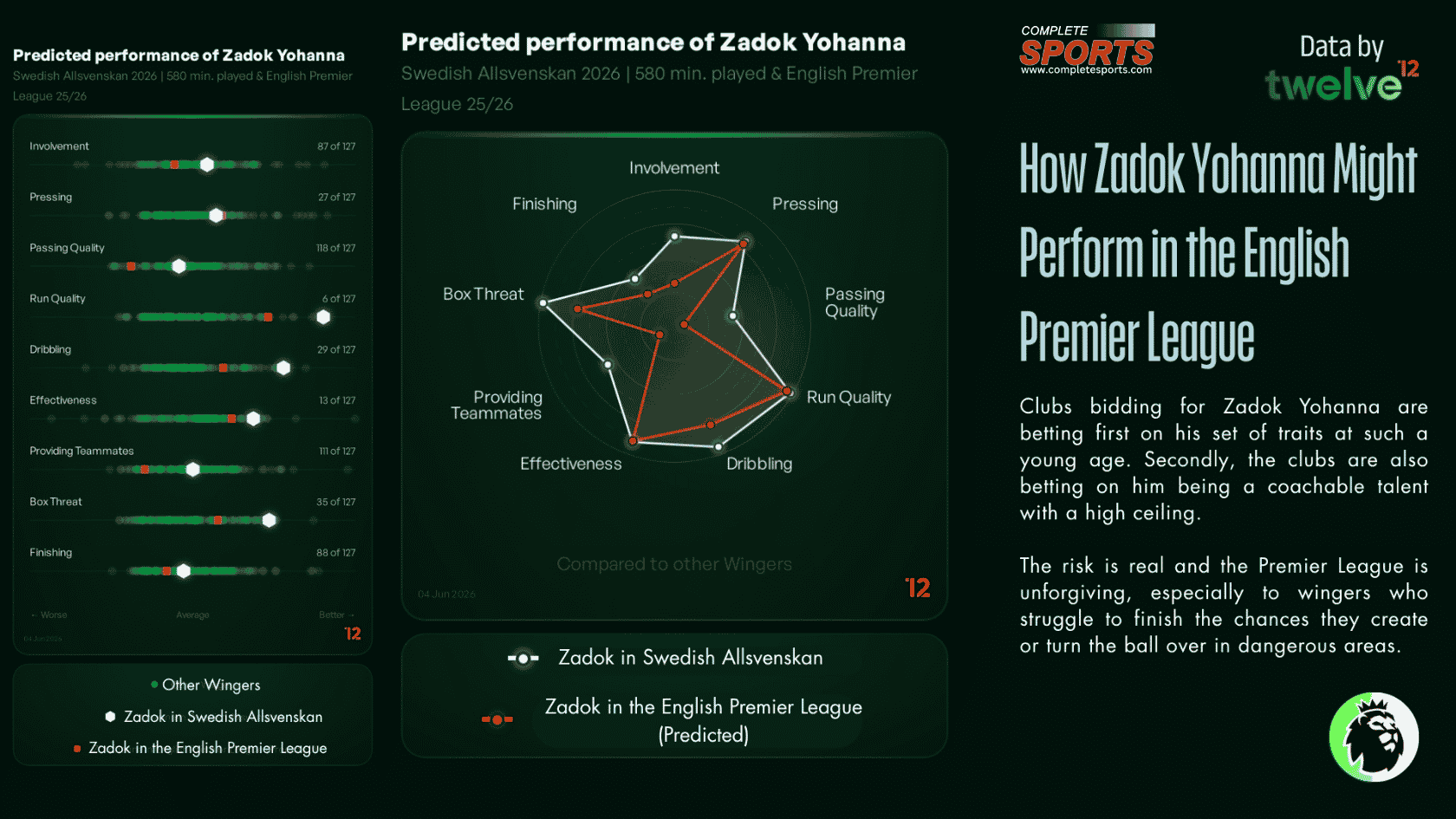
The reward is equally clear. A player who gets into the box as consistently as Yohanna does, who generates expected goals from nothing, and whom defenders struggle to handle in one-on-one situations is a player worth developing and success in that role can be explosive in the biggest league in the world.
Per reports, AIK are actively negotiating with both Newcastle and Brighton as the top priorities for the move, with reports suggesting a resolution could be reached within days. The club is rumoured to prefer a move to the Northeastern Tyne (Newcastle) over East Sussex (Brighton). Let us now assess how he would fit into the Premier League in the subsequent paragraphs.
How Would Zadok Yohanna Fit Into Newcastle United’s System?
Newcastle under Eddie Howe have used a variety of wide players, from direct runners like Anthony Gordon to more technical options. Playing on the right, Newcastle already have Anthony Elanga and Jacob Murphy, while Gordon has often featured on the left.
Yohanna brings youthful drive and remarkable run quality that Newcastle’s current wingers would struggle to match, making him a threat in transition and a valuable asset in high-pressing scenarios. While existing wingers like Jacob Murphy, Anthony Elanga, Harvey Barnes, and Anthony Gordon offer experience and a variety of technical skills, they don’t have Yohanna’s pressing abilities.
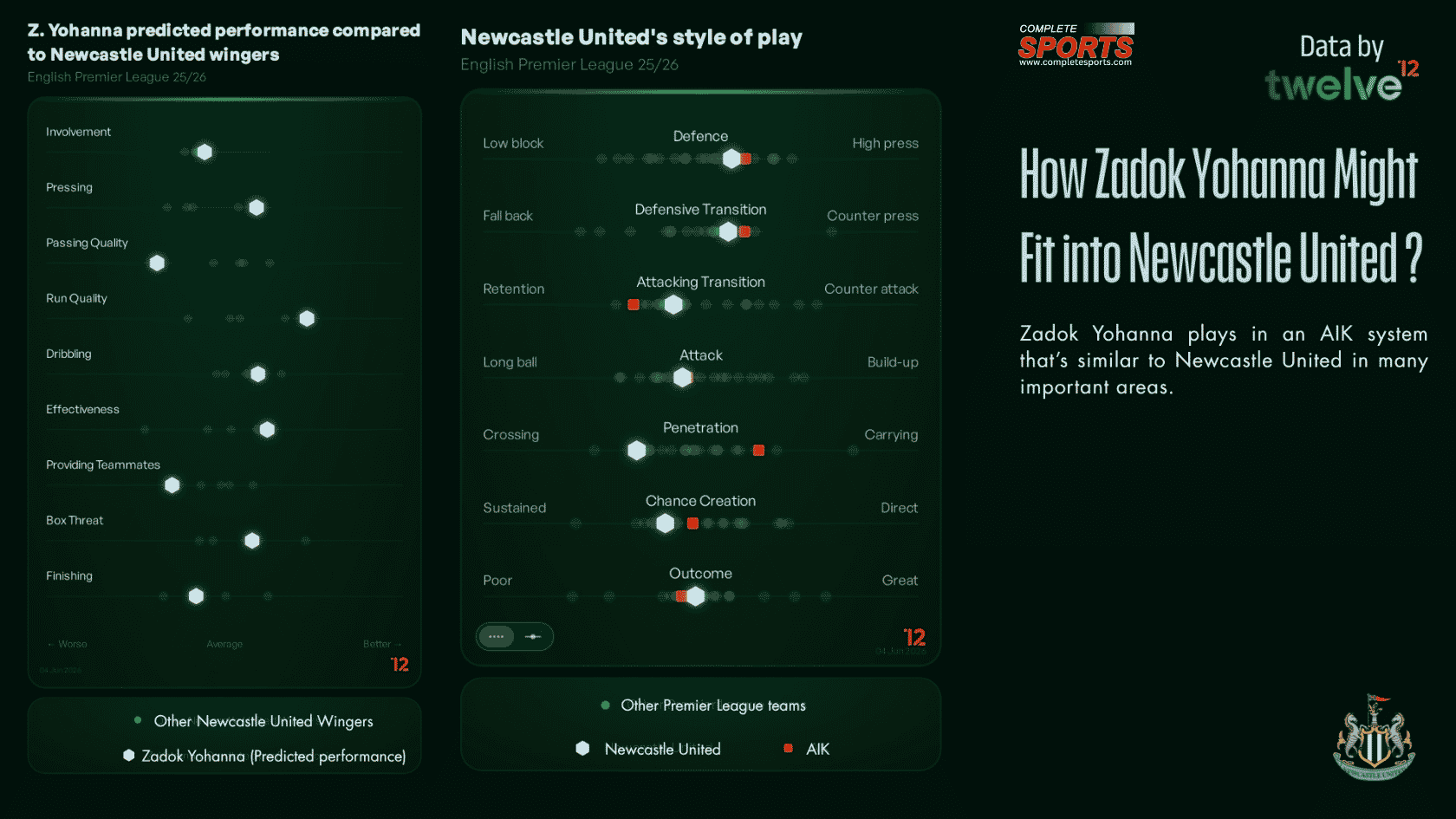
Yohanna would not arrive as a guaranteed starter. His passing limitations and one-sided profile mean he would need specific tactical conditions to thrive. That counterpressing weakness would also need work, as Newcastle’s system demands aggressive work off the ball immediately after losing possession. Despite his need to develop, Yohanna has room to grow and could significantly elevate Newcastle’s attacking depth.
Also Read: EXCLUSIVE: Analysing Owen Oseni, Femi Azeez Ahead Possible Super Eagles Debuts At Unity Cup 2026
One particular place where he could help is in matches where Newcastle needs a player to carry the ball from wide areas into the penalty box against deep defences. Yohanna’s ability to generate expected goals from dribbling, practically creating dangerous opportunities from nothing and his constant box entries are traits that Howe has valued in his wide players.
How Would Zadok Yohanna Fit Into Brighton’s Tactical Setup?
Brighton’s recruitment model has consistently targeted young players with specific analytical profiles, and Yohanna fits that pattern. The Seagulls have shown they can develop raw attacking talent while absorbing the risk that comes with their limitations.
Under Fabian Hürzeler, Brighton have continued to emphasise positional flexibility and build-up play from the back and Yohanna clearly struggles with this. His passing into the final third would, however, be more noticeable in Brighton’s system than perhaps any other interested club.
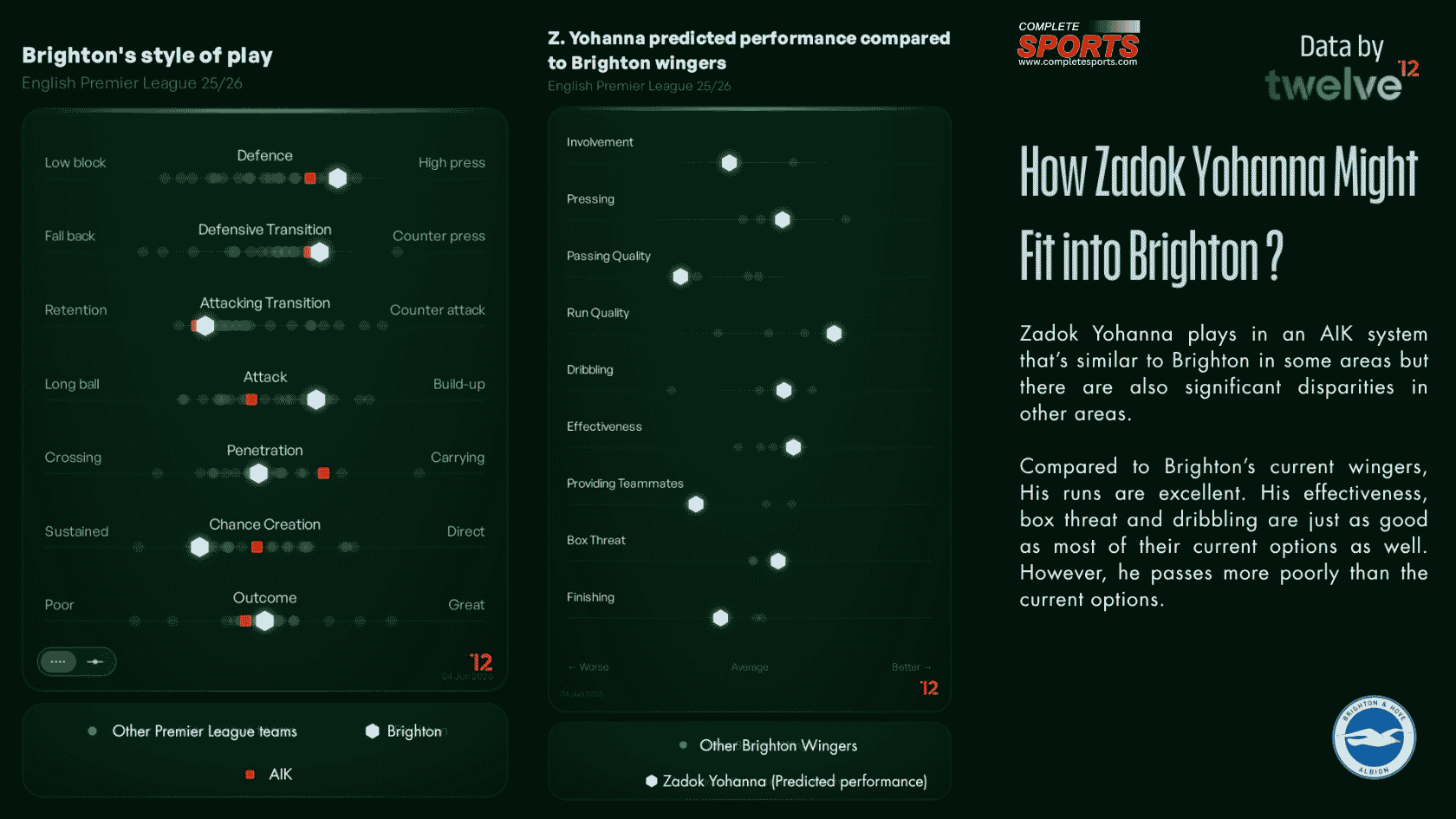
Brighton’s wingers are expected to participate in possession chains, combine through half-spaces, and contribute to build-up. That is not Yohanna’s game yet so he would need to adapt. While Brighton’s squad already has effective and dynamic wide players, they could benefit from Yohanna’s ability to create threats through carries and runs into the box.
Zadok Yohanna would provide a youthful energy and excellent run quality, which Brighton’s current right wingers, despite their experience, may not be able to match in the long run. Hence, even with lower passing quality and finishing, his dribbling capabilities and improvement potential make him an intriguing addition to the squad’s attacking options.
How Would Zadok Yohanna Fit Into Chelsea’s Long-Term Project Considering Rumours of Interest?
Chelsea’s interest fits a pattern of collecting young wide forwards with high upside. The challenge for Yohanna at Stamford Bridge would be immediate playing time. In wide areas, Chelsea has Alejandro Garnacho, Pedro Neto, Estevao and Cole Palmer, who sometimes plays from the right side. What Yohanna offers that Chelsea’s current right-sided options sometimes lack is constant box entry and dribbling that generates expected goals.
Yohanna would provide Chelsea with a fresh pressing dynamic that their current wingers do not possess, potentially improving overall team intensity. However, the existing wide options especially Pedro Neto and Alejandro Garnacho, perform well in take-ons and creativity, meaning Yohanna’s contributions in those areas would be more limited.
Yohanna’s biggest competitor is Estevao. Both are promising young talents at just 18 and 19 years of age, respectively. Estevão edges out Yohanna in several important areas like creating chances for his teammates, being a box threat, dribbling, and passing quality. Estevao also involves himself in attacking plays better than Yohanna does. If Yohanna were to transfer to Chelsea, he would need to develop more in the creative aspects of his game to reach the level of impact that Estevão currently has.
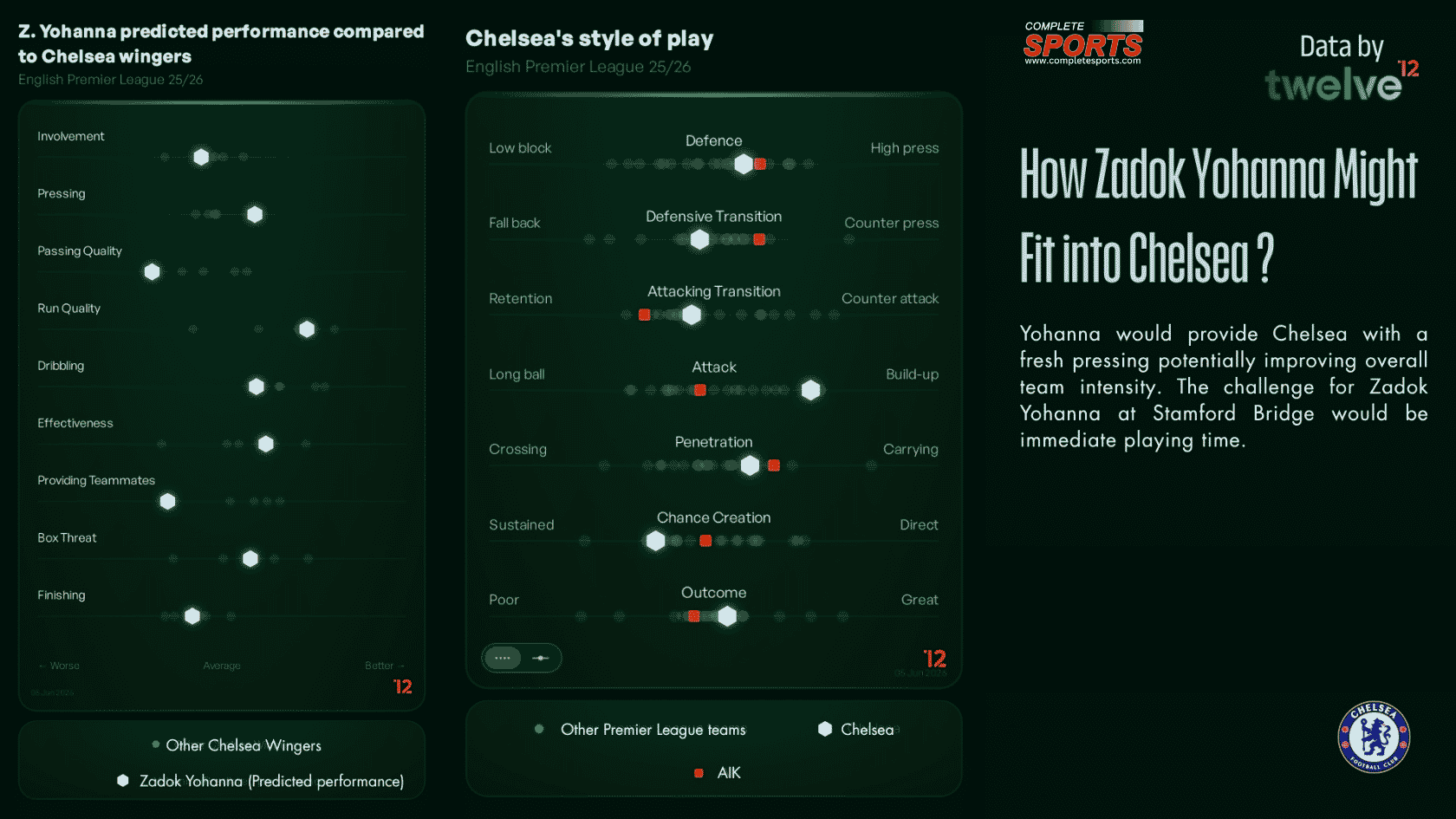
Yohanna is a more direct runner compared to Palmer, who prefers to drift inside and create. Yohanna also carries the ball into the penalty area more consistently than most of the other options have shown. The finishing inconsistency would be an obvious problem in a Chelsea team that has struggled to convert chances, and his passing limitations would show up against the defensive blocks Chelsea face regularly.
Therefore, signing Yohanna feels more like a longer-term project rather than someone who solves immediate issues. Chelsea’s managerial conditions also add a cloud of “what-if” to the move. With Xabi Alonso set to arrive and what his Bayer Leverkusen side is known for in their invincible season, Yohanna’s pressing adds value, but he will need to develop his playmaking and offensive impact to fully complement the established attacking framework expected under Xabi Alonso at Chelsea.
Conclusively, the clubs chasing Zadok Yohanna are not confused about his strengths or limitations. They see a teenager who is already one of the most dangerous ball carriers in Sweden and enters the penalty box constantly, creating high-value chances through dribbling. They also believe that his finishing can improve, his passing can be developed, and his positional rigidity can be widened. Whether they are right or not will determine if €24 million looks like a cheap steal or an expensive experiment about two years from now.




1 Comment
He is 18. He will improve.