




Lagos, 9 p.m. on a Saturday. The referee hasn’t blown the whistle yet, but there are already 47 messages in the group chat. One guy posted his accumulator slip. Another pointed out a late change to the team list. Half the group isn’t watching the match. They’re watching the odds.
That’s $3a.63 billion by the end of the year. Nigeria’s gambling market is set to reach that number in 2025 – the largest in Africa, built mostly on one sport.
Why Is Nigerian Football Viewership Growing So Rapidly?
Put money on a game and it stops being background noise.
NOI Polls did a survey in 2024 that found 67% of Nigerians watch football regularly. The 2023 Africa Cup of Nations did the same, with 86% of its players being black. Every day, 60 million people bet on sports. These people spend between $5 million and $5.5 million on match outcomes. Football accounts for 85% of these bets.
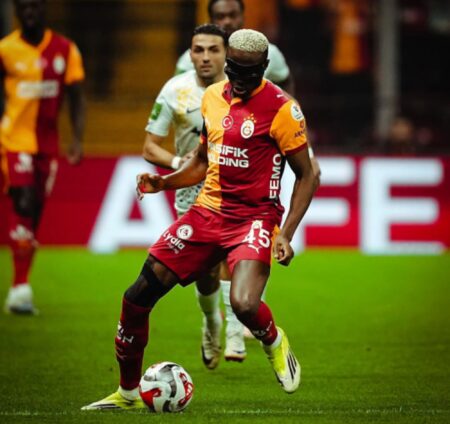
The NPFL tells the story best. Five years ago, most Kampala fans didn’t know about Nigeria’s domestic league. Now, you can find live odds for every fixture. A fan who bet ₦500 on a Kano Pillars result at 3 p.m. on Tuesday is more invested in that game than his Champions League team. Odds created stakes. Viewers were attracted to the event. The NPFL wasn’t more popular – it had a new reason for people to watch it.
How Has Mobile Technology Driven Football Betting Growth in Nigeria?
92.8% of Nigerian bettors now place wagers on a phone rather than going into a shop.
Ten years ago, half the country had no mobile internet. You can now get smartphones for less than $50 at the street market. 4G is now available in most cities. OPay and PalmPay have made it so that you can use them without having a bank account. All you need is a SIM card and a wallet. Flutterwave made deposits in seconds. The market grew 16% compared to last year thanks to that infrastructure, and online gambling is expected to make more than $500 million before December.
Most people who bet on sports are between 18 and 34. They watch short clips of football, follow clubs on WhatsApp and have never set foot in a betting shop. The app replaced the shop, the TV and the ticket window all at once.
Watch: Can Nigeria Sustain Chelle’s $100,000 Monthly Salary?
What Role Do Casino Games Play Alongside Sports Betting in Nigeria?
The most popular gambling activity is sports betting, which makes up 75% of all gambling. But the casino has been doing really well: $254.5 million in 2024, and it’s expected to reach $325.4 million by 2028.
The pattern is similar to what happened with sports betting, where people use mobile devices, place low-value bets and receive instant payouts via e-wallets. Nigerian players like classic slots, fruit machines and games with animal themes. It has short rounds, clear mechanics and it’s easy to play.
Habanero was built specifically for this. The Johannesburg office means their team understands how networks work in Africa. This means they can get to work quickly on a mid-range Android phone, with minimal data usage and no delay on a weak 4G signal. The Jackpot Race feature turns solo slot play into a live leaderboard where everyone competes at the same time. This is similar to how Nigerians already play sports – together, competitively and in real time. JabulaBets carries Habanero games, giving Nigerian and African players direct access to that catalogue.
Nigerian players like classic slots and fruit machines, as well as games with animals and Asian themes. The way people like to play games is similar to the way people like to play games in markets where people like to play quick, mobile games more than desktop games.
What Are the Commercial and Social Realities of Nigeria’s Betting Boom?
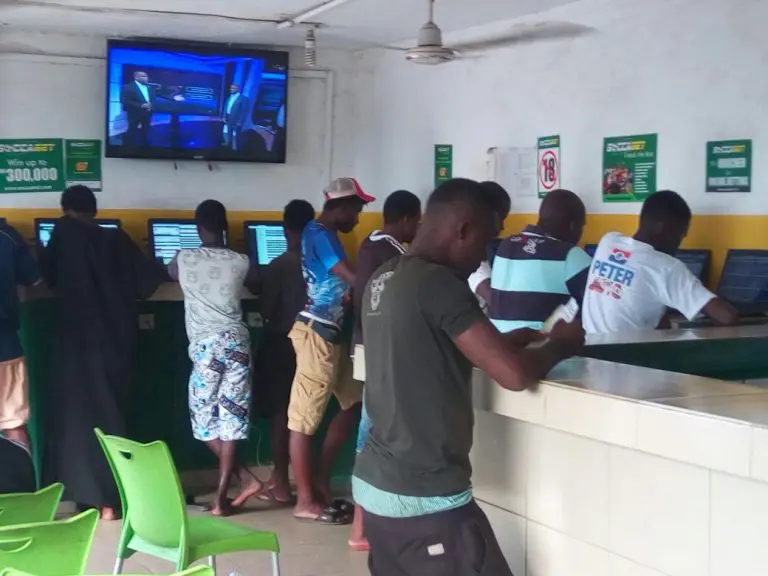
Brands like Bet9ja, BetKing and Betano are involved in more than just taking bets. They sponsor local tournaments, fund community viewing centres and run marketing campaigns that have made betting a visible part of Nigerian football culture. Those viewing centres are places where fans gather to talk about their predictions and share their results. The betting brand and the football community have become closely linked.
The counter-pressures are real. High youth unemployment is a key factor – economic pressure, not just a love of the game, pushes many into the market. The NPFL has dealt with concerns about match-fixing, and the National Lottery Regulatory Commission faces a fragmented regulatory landscape following a 2024 Supreme Court ruling that devolved licensing authority across states.
Nigeria’s gambling market grew by 16% every year before 2025. The path is obvious. The question that regulators and operators are now trying to answer together is how to make sure that this growth doesn’t outpace the infrastructure that has been built to manage it.