


In an industry dominated by bonuses, flashy promotions, and short-term customer acquisition tactics, Pinnacle has taken a radically different path. Instead of competing on marketing gimmicks, the company has invested heavily in education, creating what is widely regarded as the most comprehensive, freely accessible betting knowledge platform in the sportsbook industry.
Launched in 2017, Pinnacle Betting Resources was not designed as a content funnel or SEO play in the traditional sense. There are no paywalls, no required registrations, and no aggressive calls to action. Instead, the platform reflects Pinnacle’s core philosophy: informed bettors make better decisions, sharper markets, and more sustainable relationships.
With more than 1,000 articles, videos, tools, and guides covering everything from basic terminology to advanced probability modeling, Pinnacle’s educational hub has become a reference point for recreational bettors, aspiring professionals, and even industry insiders. It aligns seamlessly with Pinnacle’s “winners welcome” policy, reinforcing the idea that transparency and knowledge are not threats to a sportsbook but strategic advantages.
This article explores why Pinnacle chose education over promotion, how the platform evolved into an industry benchmark, and why betting education has become a long-term competitive moat rather than a cost center.
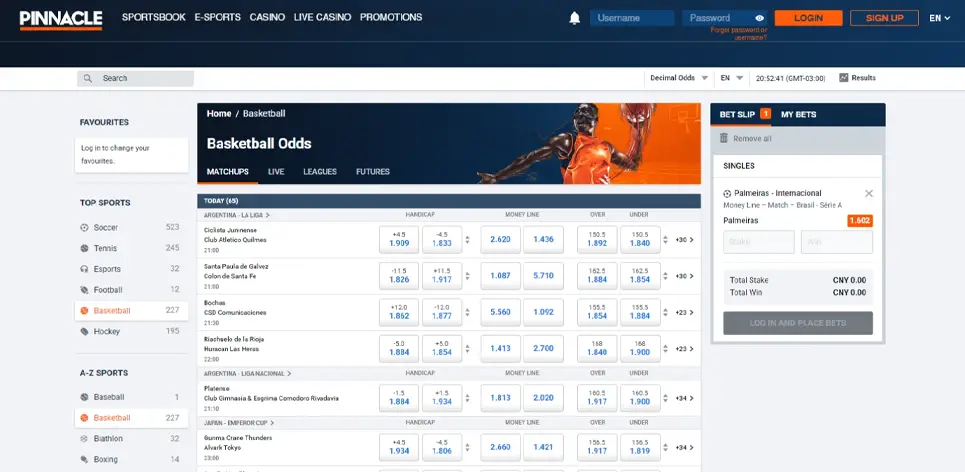
The Launch: Why Pinnacle Chose Education in 2017
In 2017, the sportsbook landscape was undergoing rapid change. Online betting was expanding into new jurisdictions, competition was intensifying, and marketing costs were escalating. Most operators responded by increasing bonuses, affiliate commissions, and advertising spend. Pinnacle went in the opposite direction.
Rather than pouring additional resources into marketing, Pinnacle made a strategic decision to invest in content specifically, educational content designed to improve bettor understanding. The idea was unconventional at the time. Teaching customers about expected value, margin, and probability ran counter to the traditional sportsbook mindset, where opacity is often seen as protective.
Internally, the rationale was simple. Pinnacle does not rely on uninformed bettors making mistakes. Its low-margin, high-volume model thrives on efficient markets and informed action. Educated bettors are more likely to:
-
understand pricing differences
-
value low margins over bonuses
-
engage consistently over time
-
trust transparent operators
The initial vision for Betting Resources was ambitious but focused. Pinnacle aimed to create a centralized hub where bettors could learn not only how to bet, but why odds behave the way they do. Early content covered foundational topics like betting margins, implied probability, bankroll management, and line movement concepts rarely explained clearly elsewhere.
Industry reaction was mixed. Some competitors viewed the move as unnecessary or even risky. Others quietly began referencing Pinnacle’s articles internally. Over time, what began as a modest educational initiative evolved into one of the most respected content libraries in sports betting.
Content Categories and Coverage
What sets Pinnacle Betting Resources apart is not just volume, but breadth and structure. The platform spans virtually every dimension of sports betting knowledge, organized into clear, navigable categories.
Educational Articles form the foundation. These explain core concepts like vig, expected value, implied probability, closing line value, and variance in plain language. The writing avoids academic jargon while still respecting the intelligence of the reader, making complex ideas approachable without oversimplifying them.
Betting Strategy Content goes deeper, covering approaches such as arbitrage betting, value betting, and market-based strategies. These articles emphasize discipline and math over hype, reinforcing the idea that sustainable betting success is rooted in process, not picks.
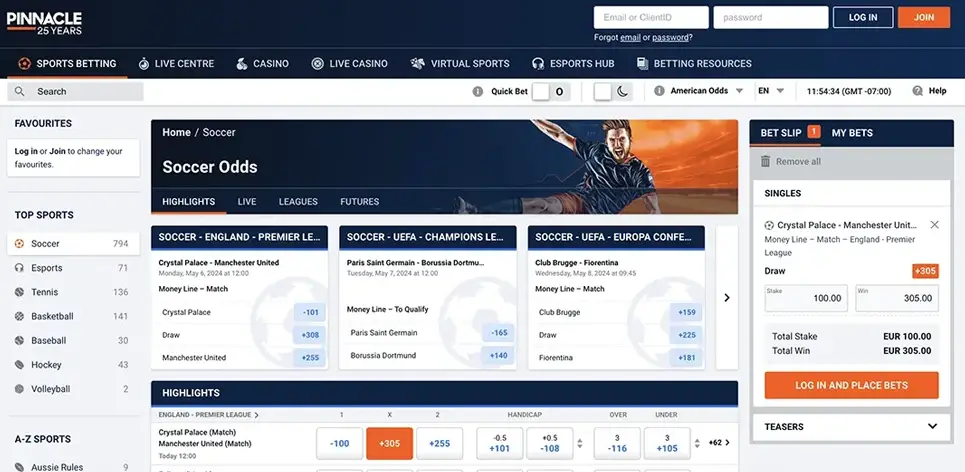
Sports-Specific Guides break down how betting dynamics differ across sports. Soccer articles explore totals modeling and expected goals, while basketball content focuses on pace, efficiency, and lineup impact. Tennis guides explain serve dominance and break-point volatility, and combat sports articles examine stylistic matchups and judging variance.
Previews and Predictions are presented differently than at traditional sportsbooks. Rather than simply pushing picks, Pinnacle’s previews focus on market context, pricing movement, and key variables influencing odds. The emphasis is on understanding the line, not blindly following a recommendation.
Videos and Podcasts add another layer of accessibility. These formats allow contributors to explain concepts visually or conversationally, helping bettors who learn better through audio or demonstrations.
Tools and Calculators are integrated directly into the platform, allowing bettors to apply theory in real time. These include margin calculators, arbitrage calculators, and bet comparison tools.
A Glossary of Terms ensures newcomers can quickly learn industry language without feeling overwhelmed.
By surpassing the 1,000-article milestone, Pinnacle demonstrated that this was not a short-term campaign, but a sustained educational commitment.
The Educational Philosophy: Why Pinnacle Teaches Bettors to Win
At the core of Pinnacle’s content strategy is the belief that educated bettors are not a threat; they are ideal customers.
This philosophy aligns directly with Pinnacle’s “winners welcome” policy. Because Pinnacle does not rely on limiting successful players, it has no incentive to obscure information. In fact, educating bettors improves market efficiency, reduces pricing errors, and creates a healthier betting ecosystem.
Transparency builds trust. By openly explaining how odds are set, how margins work, and why lines move, Pinnacle positions itself as a partner rather than an adversary. Bettors may still lose, variance is unavoidable, but they understand why outcomes occur.
Educated customers also tend to have longer lifetimes. They churn less, bet more consistently, and are less influenced by short-term swings. Instead of chasing bonuses across multiple platforms, they tend to gravitate toward operators that offer fair pricing and reliable infrastructure.
In this sense, Pinnacle’s educational platform is not a charity. It is a strategic investment in customer sophistication, one that supports long-term profitability without compromising integrity.
Content Quality and Expertise: Who’s Writing the Material
Pinnacle’s Betting Resources are not crowd-sourced or outsourced to generic content mills. Much of the material is produced by an in-house editorial team with deep industry knowledge, supported by external contributors with specialized expertise.
Contributors include:
-
former sportsbook traders
-
professional bettors and analysts
-
University lecturers in statistics and economics
-
published authors in gambling theory
-
data scientists and quantitative researchers
Editorial standards emphasize accuracy, clarity, and neutrality. Articles are regularly updated to reflect market changes, new data, and evolving betting practices. There is no pressure to sensationalize or oversell outcomes.
This commitment to quality is one reason Pinnacle’s content is frequently cited by bettors, analysts, and even competitors.
Popular Topics and Resources: What Bettors Actually Read and Use
While Pinnacle’s Betting Resources library spans more than 1,000 pieces of content, usage patterns reveal that bettors gravitate toward material that directly improves decision-making rather than superficial picks or hype-driven previews. The most popular topics consistently center on pricing, probability, and risk management, reinforcing the idea that Pinnacle’s audience is more analytically inclined than the average sportsbook customer.
One of the most heavily read categories focuses on expected value (EV). Articles explaining how to calculate EV, how it differs from short-term results, and why it matters over large sample sizes attract both new and experienced bettors. These pieces often serve as a turning point for readers transitioning from recreational betting to more disciplined, process-driven wagering. Instead of promising wins, the content emphasizes inevitability: that correct decisions eventually outperform bad ones, even when variance obscures results in the short term.
Pinnacle’s guides break down how Poisson models are used to estimate goal totals, match probabilities, and correct score markets. Unlike academic explanations, the articles focus on practical application, showing bettors why totals move, why certain prices are inefficient early, and where modeling assumptions break down in real markets.
Arbitrage Betting at Pinnacle
Arbitrage betting remains a consistently popular entry point. While Pinnacle is transparent about the limitations of arbitrage, including liquidity constraints and shrinking opportunities, these articles often introduce bettors to core concepts like price comparison, market efficiency, and margin reduction. Even when bettors move beyond arbitrage, the lessons remain relevant.
Bankroll management content also sees strong engagement. Articles covering flat staking, proportional betting, and drawdown control resonate because they address one of the most common reasons bettors fail: poor money management rather than poor picks. Pinnacle’s content reinforces sustainability over excitement, aligning with its broader business philosophy.
Most-read resources also include sport-specific strategy guides, particularly for soccer, basketball, tennis, and esports. These articles focus less on predictions and more on structural factors, tempo, scoring distribution, market timing, and live betting dynamics, helping bettors understand how markets behave, not just who might win.
Tools and Calculators: Practical Education in Real Time
Pinnacle’s tools and calculators transform abstract concepts into actionable insight. Unlike many sportsbook tools that exist primarily to promote betting volume, Pinnacle’s utilities are designed to teach by doing, allowing bettors to test assumptions and visualize the math behind decisions.
The arbitrage calculator is one of the platform’s most frequently used tools. It allows bettors to input odds from multiple sportsbooks and instantly determine whether a risk-free position exists, along with optimal stake sizing. While true arbitrage opportunities have become rarer, the calculator’s real value lies in training bettors to recognize price inefficiencies and understand how margins distort odds.
The margin (vig) calculator is arguably even more impactful. By showing how much overround is embedded in a market, bettors gain a clearer understanding of why some sportsbooks consistently offer better value than others. This tool reinforces Pinnacle’s low-margin identity while educating users to spot overpriced markets elsewhere.
The bet calculator simplifies odds conversion and payout comparison across formats, reducing friction for bettors operating across multiple sportsbooks and odds styles. While basic on the surface, it supports more advanced workflows, especially for bettors tracking expected value or building spreadsheets.
Importantly, all tools are free, require no registration, and are not hidden behind marketing funnels. This openness reflects Pinnacle’s confidence that education strengthens loyalty more effectively than gating information.
Business Logic: Why Education Beats Marketing Spend
From a commercial perspective, Pinnacle’s investment in education represents a deliberate rejection of the dominant sportsbook growth model. While competitors allocate enormous budgets to bonuses, sponsorships, and advertising, Pinnacle channels resources into content that compounds in value over time.
A sign-up bonus is a one-time expense with diminishing returns. Educational content, by contrast, is an asset. A single high-quality article can attract readers for years, reduce customer support costs, improve bettor quality, and reinforce brand trust simultaneously.
Educated bettors also have higher customer lifetime value (CLV). They churn less frequently, bet more consistently, and are less sensitive to short-term promotional offers. Instead of hopping between sportsbooks for bonuses, they gravitate toward platforms offering reliable pricing and transparency.
Education also serves as brand differentiation. In a crowded market where promotional language often sounds identical, Pinnacle’s Betting Resources establishes authority. The sportsbook becomes known not for what it gives away, but for what it understands and teaches.
Perhaps most importantly, education aligns perfectly with Pinnacle’s operational model. Low margins require efficient markets and informed action. Teaching bettors how odds work reduces pricing noise and supports Pinnacle’s role as a market-maker rather than a marketing-driven operator.
Over time, this creates a competitive moat that is difficult to replicate. Content libraries of this depth and credibility cannot be built overnight, nor can they be easily copied without cultural alignment.
Impact and Industry Reception: Influence Beyond Pinnacle’s Customers
The impact of Pinnacle’s Betting Resources extends well beyond its own user base. Articles are frequently cited by professional bettors, shared in betting communities, and referenced by analysts and educators. In some cases, Pinnacle’s content has become a de facto learning resource for individuals entering the sports betting industry itself.
User engagement metrics, where available, suggest long session durations and repeat visits, indicating that bettors are not simply skimming content but actively studying it. Many readers return multiple times as their understanding deepens, moving from introductory concepts to more advanced material.
Industry-wide, Pinnacle’s educational approach has influenced how betting knowledge is presented. Competing sportsbooks now publish explainer articles and guides, but few match the depth or neutrality of Pinnacle’s material. In many cases, competitor content still funnels aggressively toward promotions, whereas Pinnacle’s remains largely informational.
Perhaps the most telling impact is cultural. Pinnacle’s platform has helped normalize the idea that sportsbooks can be transparent without sacrificing profitability. By openly explaining concepts like expected value, margins, and variance, Pinnacle has challenged the assumption that bettors must remain uninformed for operators to succeed.
Conclusion: Education as a Sustainable Advantage
Pinnacle’s Betting Resources are more than a content hub; they are a statement of philosophy. By choosing education over manipulation, transparency over gimmicks, and long-term trust over short-term incentives, Pinnacle has built an asset that strengthens both its brand and its markets.
As sports betting grows more competitive and more regulated, operators that empower bettors rather than confuse them will be better positioned to survive. Pinnacle understood this years ago.
In a business built on numbers, teaching people how those numbers work may be the smartest bet of all.