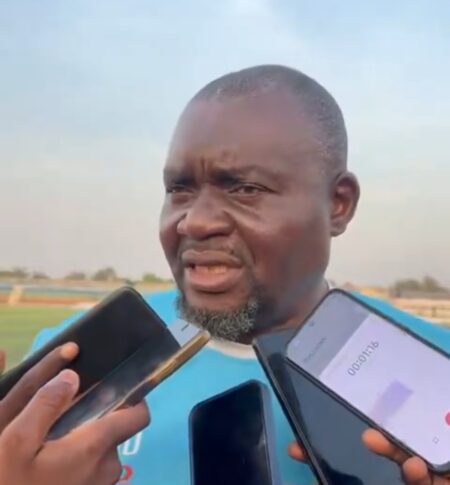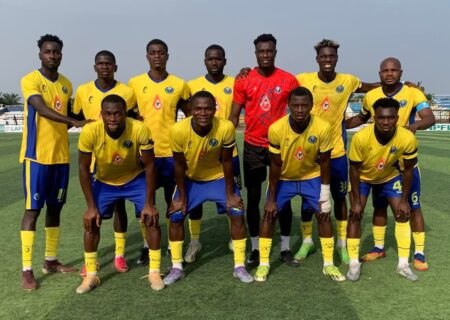


Kadiri Ikhana has exclusively told Completesports.com that the gold medal he won with the then Green Eagles at the 1980 Africa Cup of Nations remains the ultimate crowning glory of his illustrious football career.
Nigeria defeated Algeria 3–0 in the final on March 22, 1980, to secure the country’s first-ever AFCON title.
Ikhana, who had earlier won the 1978 and 1979 Nigeria FA Cups with Bendel Insurance, spoke from his hometown of Auchi, Edo State.
“That’s a very difficult question, but I have to give my candid answer,” Ikhana began when asked to name his most priced winning in football
Also Read: Ikhana Launches Grassroots Football Academy For Kids Aged 8–12 In Edo
“I won many trophies during my career, both as a player and as a coach. Those trophies are very important and precious to me. But if you ask me, I would say the 1980 Nations Cup was my most glorious moment — a treasure I will always cherish,” he said emotionally.
Ikhana Reflects On Career-Defining Triumphs As Player And Coach
He continued: “That was as a player. Then, as a coach, without doubt, it was when I led Enyimba to win the CAF Champions League title in 2003. Before then, no club or coach in Nigeria had achieved that feat.”
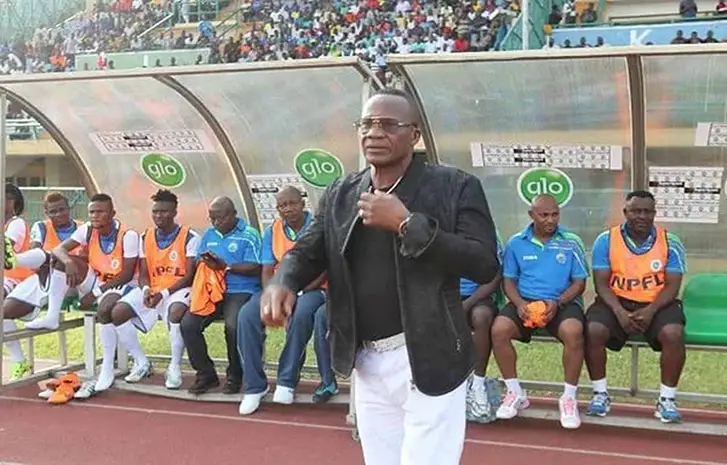
Following the 1980 AFCON triumph, Nigeria’s then President, Alhaji Shehu Shagari, rewarded each player with a Peugeot 504 car and a house in Festac Town, Lagos.
For Enyimba’s historic 2003 CAF Champions League success, the then Abia State Governor (now Senator), Orji Uzor Kalu, presented each player with a brand new Kia car.
“The Nigerian President then — I think Chief Olusegun Obasanjo — also gave us land in Abuja,” Ikhana recalled.
Ikhana On Medals, Rewards And Growing Older
Asked what he did with the Abuja land, Ikhana replied: “I don’t even know where it is at the moment. I’m too old now to begin chasing after a piece of land.
“At 75, I’m now a great-grandfather, so I can’t be going to and fro Abuja every time looking for land.”
Given his trophy-laden career, Ikhana was also asked about the numerous medals he must have accumulated.
“They are in my house, although the children have been using some of them to play or even sell,” he said.
“For me, the important thing is that the honour of winning those medals belongs to me. It doesn’t matter where the medals are physically.”
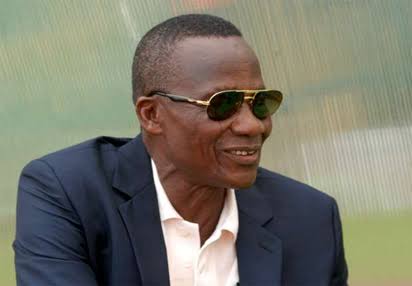
Following The NPFL And Enyimba’s Place In His Heart
Asked if he still follows the Nigeria Premier Football League (NPFL), Ikhana responded promptly: “Yes. Every week, every matchday, I read and watch on television when possible. It’s my first constituency and I can’t stay away from it.”
On his relationship with Enyimba, the former Super Eagles defender was emphatic: “It’s well above 100 per cent. Enyimba is in my blood — my number one club now, tomorrow and forever.
“Several times I’ve written to them, even though the responses haven’t been what I expected, yet I can’t take my eyes, ears or mind off them.
“Through Enyimba, I achieved fame, becoming the first Nigerian African Coach of the Year in 2003.”
Ikhana Blames Coaches For Challenges Facing Nigerian Clubs
Reacting to the current situation at Enyimba and other NPFL clubs, Ikhana placed responsibility squarely on the coaches.
“I blame the coaches — not only at Enyimba but across other clubs too. Managing players off the pitch is even more demanding than on the pitch.
Also Read: NPFL 2024/25 Title Race Over! Ikhana Declares Remo Stars Champions
“If management is not giving you what you need to work, walk away. Resign. After all, when things go wrong, it’s the coach who gets blamed.”
He added: “When I was at Enyimba, I always sat down with the chairman, Anyansi Agwu, and sometimes with the governor, Orji Uzor Kalu. We discussed what was needed, and they understood.
“Why remain in a job when you’re not given the tools to succeed?”
Life After Coaching And Views On League Reforms
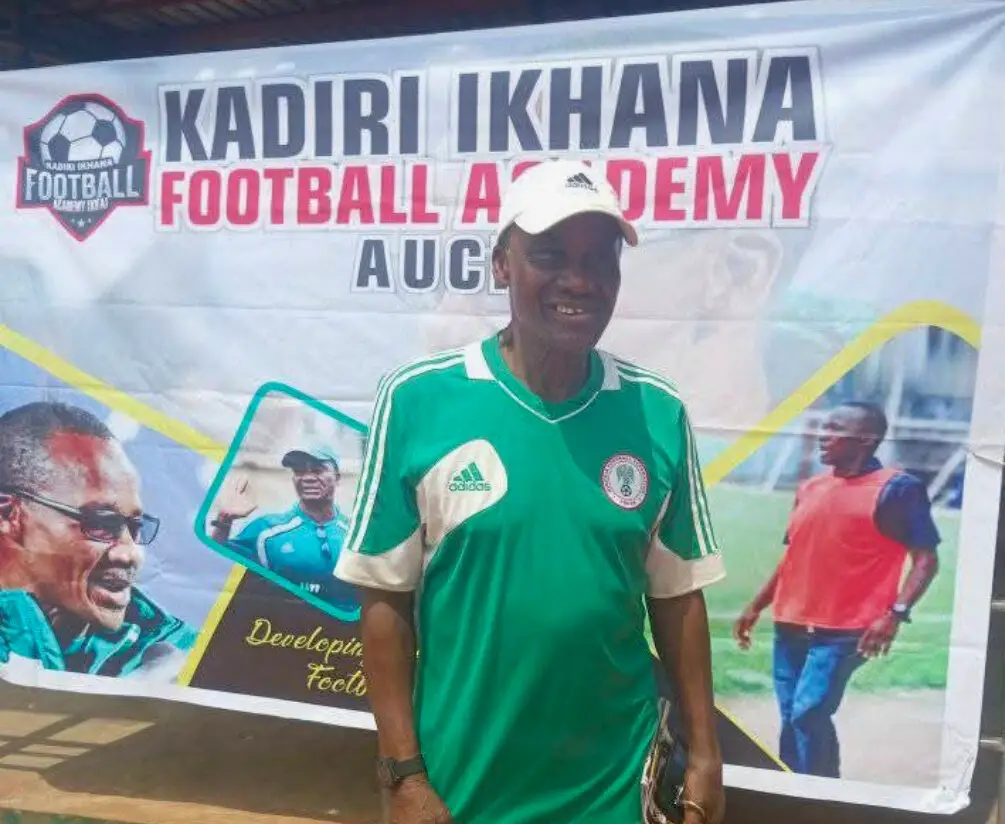
On life after active coaching, Ikhana revealed he is focused on grassroots development.
“I’m organising my academy — Kadiri Ikhana Football Academy — here in Auchi. It’s made up of players aged 12 to 13. We hope to begin reaping the rewards in about four years when they reach 16.”
Assessing the current NPFL, particularly its alignment with European calendars, Ikhana was cautiously positive.
“There have been remarkable improvements in calendar harmonisation with European leagues.
“Refereeing has improved, and fans are returning to the stadiums. You can’t fix everything at once. It will take four or five years to properly clean up the system.
“For me, that requires continuity — both in personnel and in policy.”
By Sab Osuji