

Nigeria’s Super Eagles have long been defined by attacking flair, but a closer look at Africa Cup of Nations data over time reveals a more nuanced story of growth, adaptation and tactical maturity. This data-driven analysis examines seven tournament editions to uncover how Nigeria’s offence has transformed — and what it signals for the future, Completesports.com reports.
What Super Eagles’ Attack Looked Like at AFCON 2025
Super Eagles’ run at the 2025 Africa Cup of Nations will be remembered less for spectacle and more for authority. Over seven matches, the Eric Chelle’s team produced a campaign that was coherent, controlled, and largely unforgiving to opponents.
The numbers tell the story of a team that understood its strengths, managed its risks, and imposed a clear identity at both ends of the pitch. This story begins at AFCON 2025 in Morocco, but its roots stretch back across nearly two decades of Nigeria’s Africa Cup of Nations campaigns.
Also Read: EXCLUSIVE – AFCON 2025: Super Eagles By Numbers — Record-Breaking Group Stage Performance
Across those seven matches, the Super Eagles outperformed 13.06 expected goals, an average of 1.87 per match, from 91 shots across the tournament. That volume alone places them among the competition’s more assertive attacking teams.
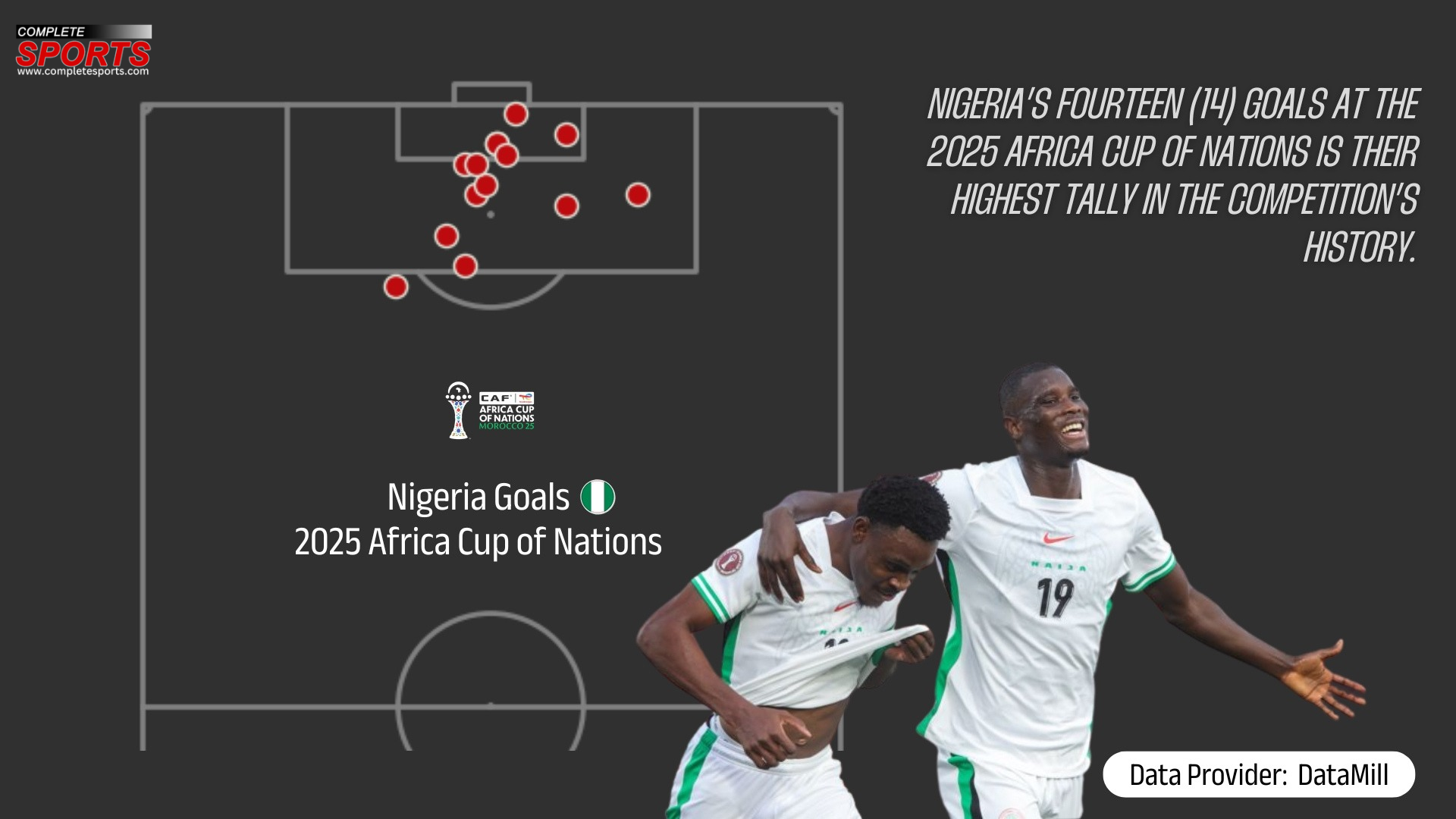
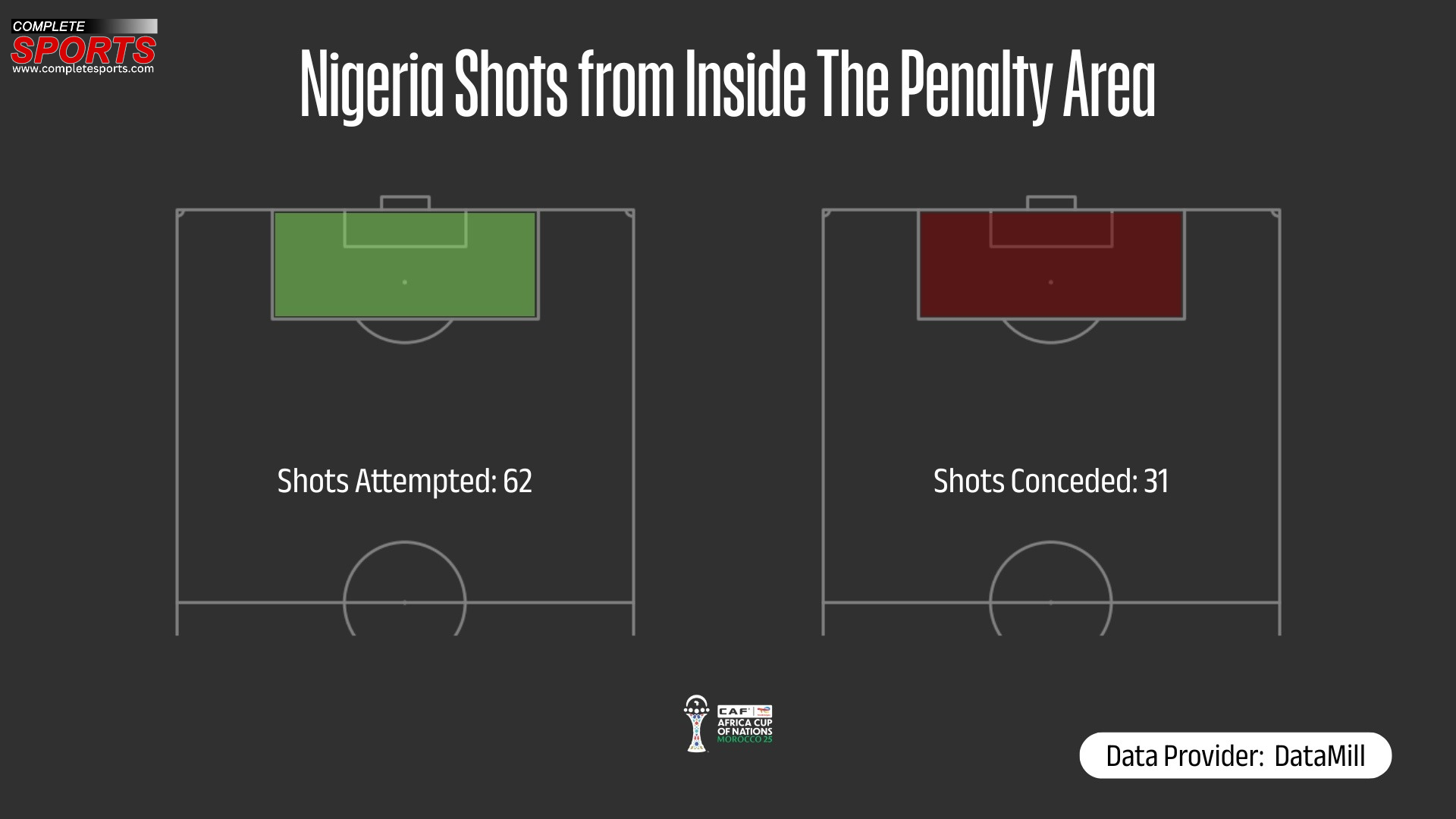
But the more revealing detail lies in shot quality. Nigeria were consistently shooting from advantageous positions rather than relying on hopeful efforts. They had 62 attempts from inside the penalty area, twice as many as they allowed across the seven games played.
The Super Eagles’ attack was formidable, showcasing their ability to penetrate the Final Third effectively and capitalise on possession swiftly after regaining the ball, resulting in a plethora of goal-scoring opportunities. The team were comfortable holding possession high up the pitch until openings appeared.
 The Super Eagles averaged 26 touches in the opposition box per game and created over four big chances per match, a strong signal of sustained pressure. This ability to reach dangerous zones was the defining feature of their tournament.
Creativity, too, was shared. Nigeria recorded 1.52 expected assists per match. The attack functioned as a system: ball progression, final-third access, and shot generation flowed through multiple channels.
Also Read: AFCON 2025 Diary Day 32: Chaos, Courage And Coronation As Senegal Claim African Glory In Rabat
The match against Algeria, where Nigeria posted 3.36 expected goals and created seven big chances, offered the clearest picture of what this attack could become at its peak.
Super Eagles Not Invulnerable — Where It Broke Down: Vs Morocco and Egypt
Despite the strong positives, the Super Eagles were not invulnerable. Morocco stood as a cautionary example. Nigeria produced just 0.08 expected goals, their lowest output of the competition, struggling to generate meaningful access to dangerous areas. In this tie, the Super Eagles had 0 attempts inside the box.
The match against Egypt followed a similar pattern. Nigeria recorded an Expected Goal on Target (xGOT) of just 0.19 from five attempts, with just two attempts from inside the box and only one shot on target, again pointing to how limited access to central spaces can blunt their attack and make their attacking efficiency drop sharply.
Key Attacking Figures: The Lookman Effect and Osimhen’s Dilemma
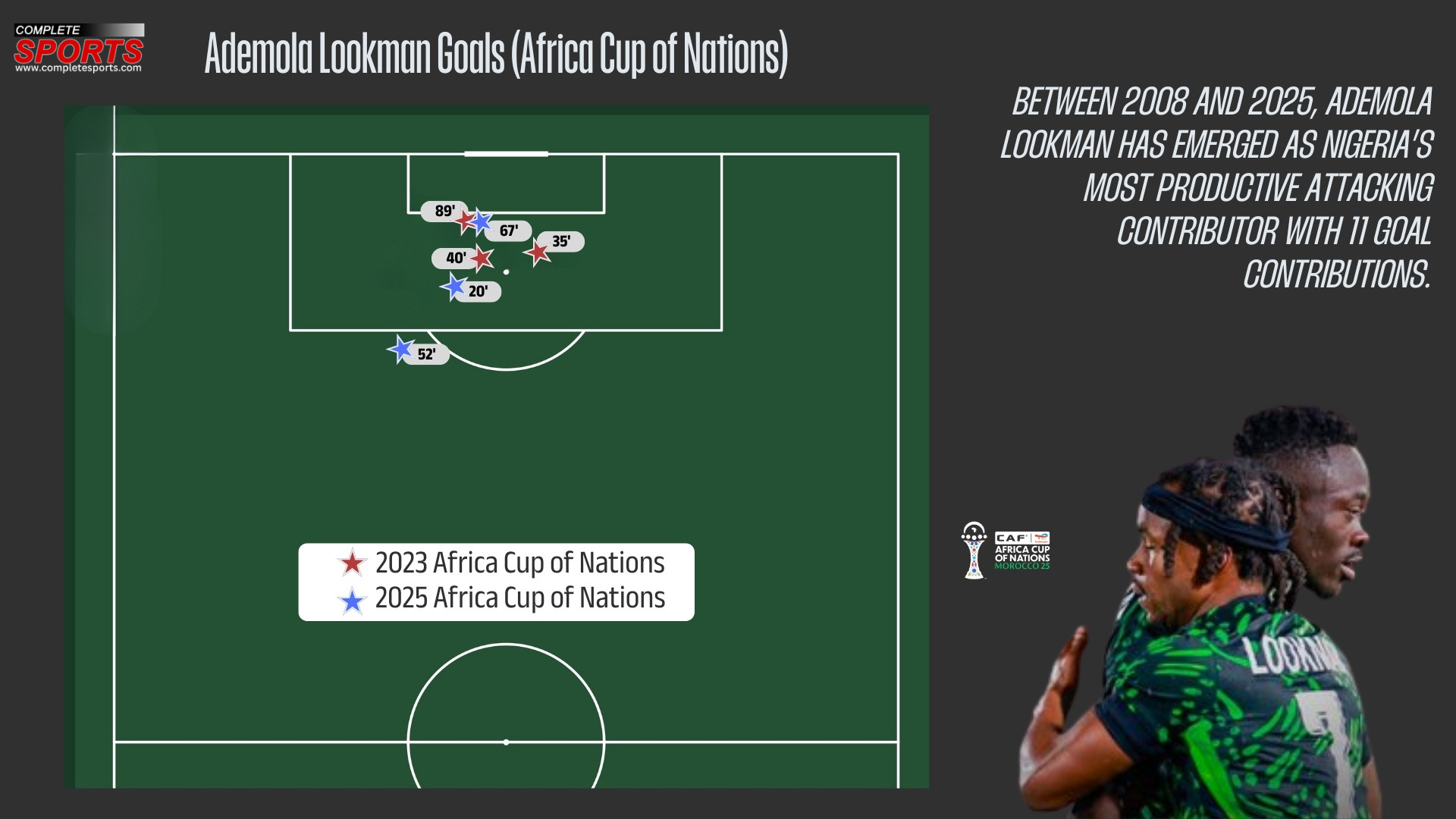
Within this broader system, one attacking figure stood out: Ademola Lookman, whose influence now spans two AFCON editions. Between 2008 and 2025, Lookman has emerged as Nigeria’s most productive attacking contributor with 11 goal contributions.
Victor Osimhen ranks second with eight goal contributions (four goals, four assists). However, Osimhen’s output has often been affected by marginal offside decisions, with five disallowed goals in that timeframe limiting his overall return.
Lookman also ranks as Nigeria’s top goalscorer (six goals) and joint-top assist provider (five assists) alongside John Obi Mikel across the same period.
The Super Eagles have scored against 21 different opponents at the Africa Cup of Nations during this window, with Mozambique being the team against whom Nigeria have recorded their highest goalscoring success.
The Bigger Picture: Attacking Trends Since 2008
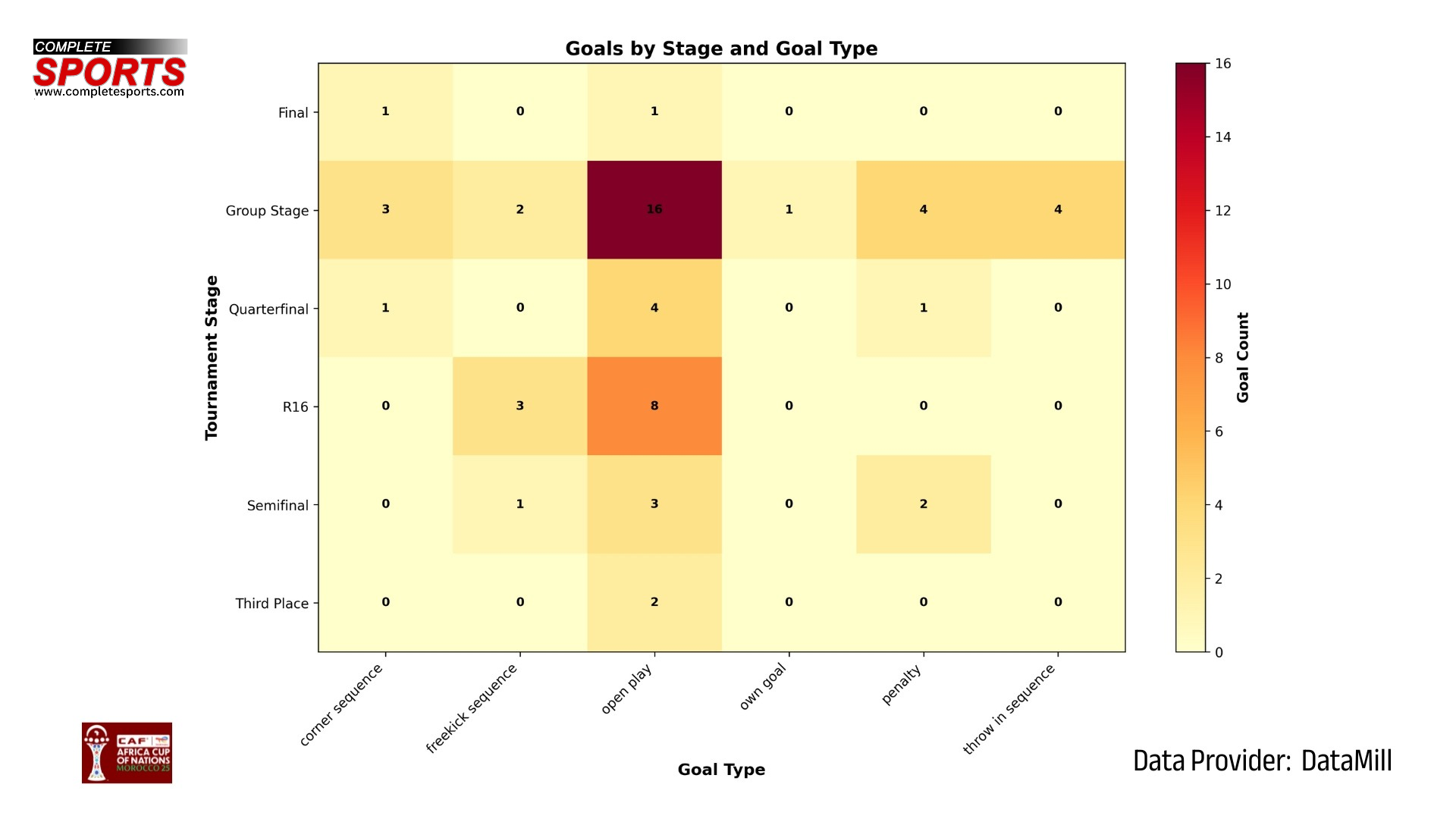
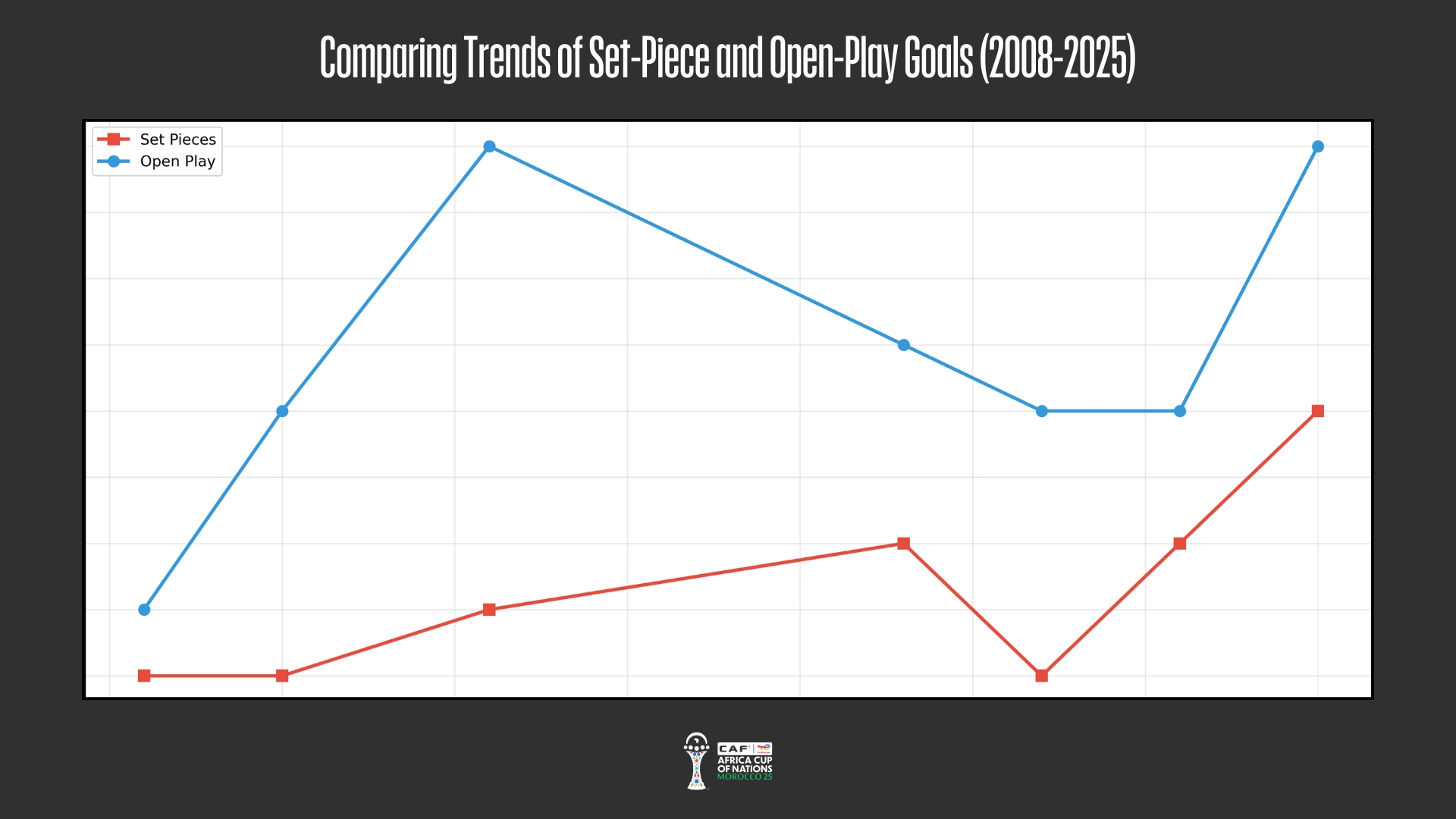
Looking further back, Nigeria’s attacking evolution becomes clearer. Since 2008, the Super Eagles have scored 57 goals at the Africa Cup of Nations, with just over half coming from open play. In that period, they have also scored nine headed goals, speaking to their aerial threat.
Also Read: Winning, A ‘Virus’ The World Must Now Live With — Odegbami
One notable development is the rise of set-piece goals. Penalties account for 12 per cent of Nigeria’s goals, while corners and throw-ins combine for a further 15 per cent. The 2025 edition marked a peak in this area, with Nigeria scoring three goals from throw-in sequences, compared to just one across the preceding editions.
Paul Onuachu’s goal against Uganda, scored within ten seconds of a throw-in and assisted by Dele-Bashiru, epitomised this growing emphasis.
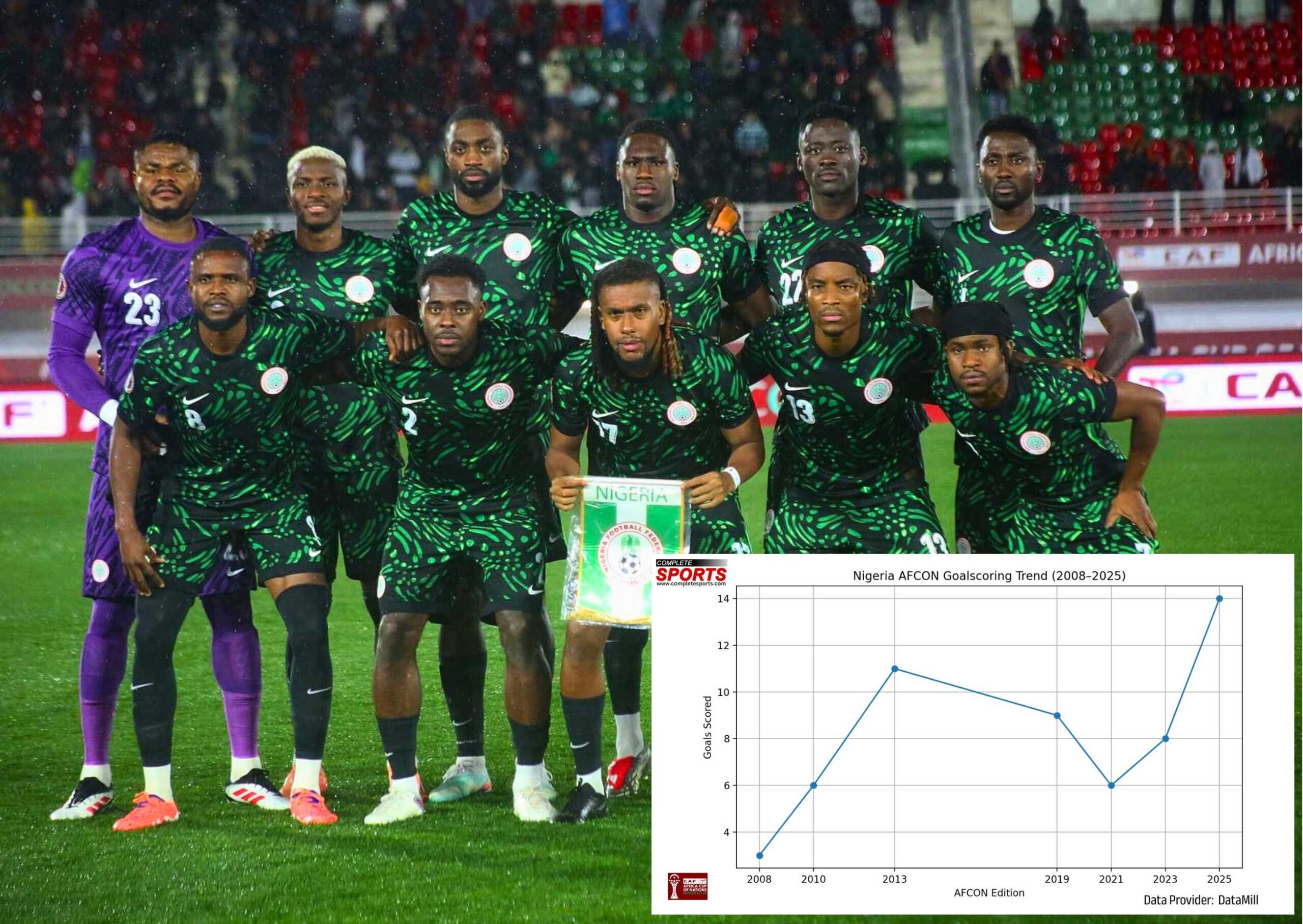
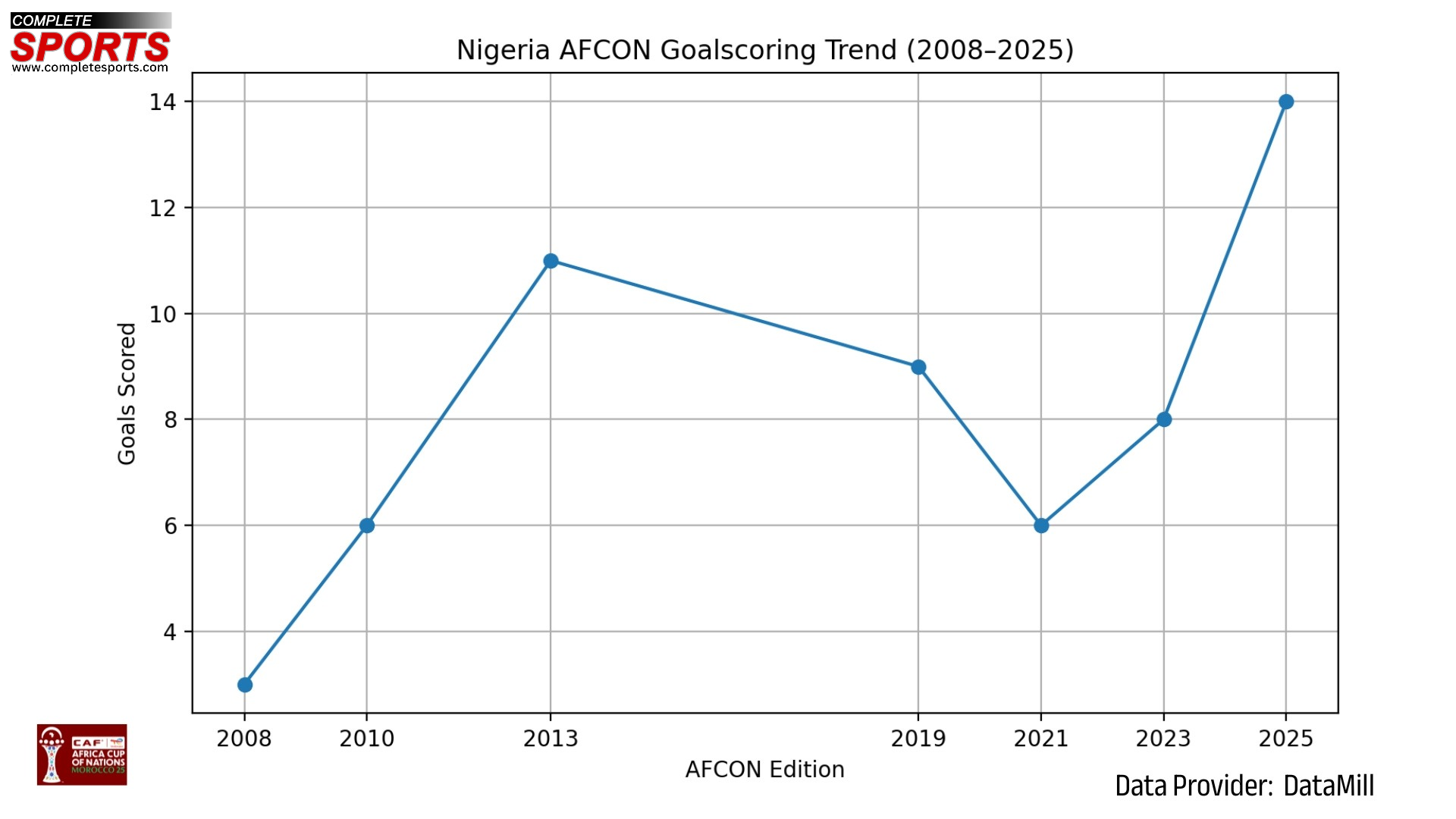
Nigeria’s overall goalscoring record at the Africa Cup of Nations shows a clear upward trend, even if the journey has not been smooth. From just three goals in 2008, the Super Eagles steadily improved, peaking at 11 goals in the 2013 tournament, which culminated in continental success.
The post-2013 period shows fluctuation rather than decline, with Nigeria consistently scoring between six and nine goals across successive editions.
The most striking development comes in 2025, where the Super Eagles recorded 14 goals, their highest tally across the seven editions analysed. This surge shows a more consistent attacking output and suggests a maturing offensive identity.
What This Tells Us About Super Eagles Going Forward
The Super Eagles’ goalscoring trajectory since 2008 suggests an attack that has steadily matured. AFCON 2025 showed how far the team has come in building a controlled, repeatable attacking structure.
The next challenge lies in adaptability. If Nigeria can solve the problem of access against well-organised defensive blocks, their attacking evolution may finally translate into sustained continental dominance.
By Alli Fesomade