

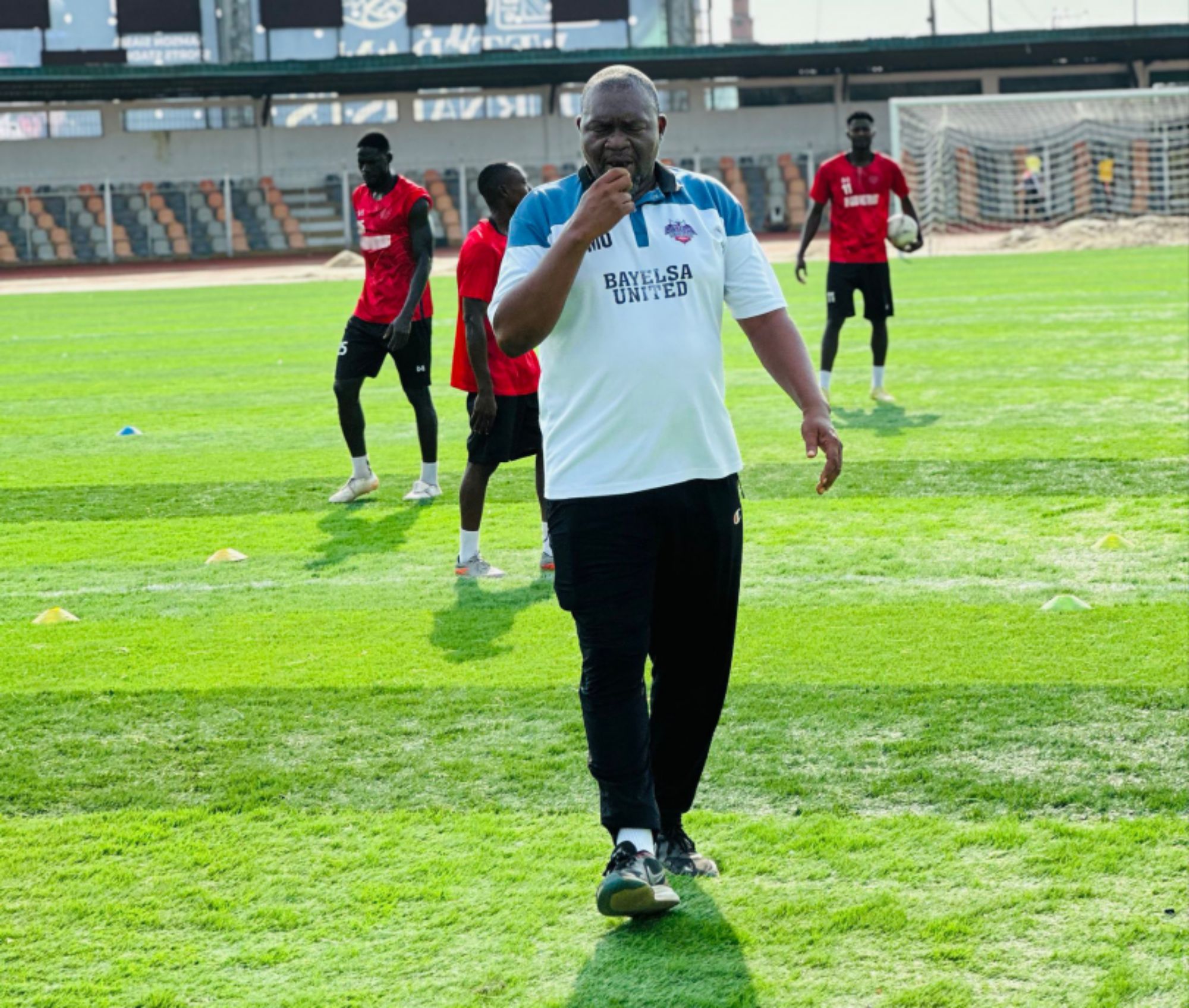
Bayelsa United Head Coach Meremu Okara has exclusively told Completesports.com how honesty about his true age forced him to decline an invitation to the U-23 Eagles camp ahead of the 1996 Atlanta Olympic Games, which Nigeria famously won — the first and only Olympic football gold medal by an African nation.
Okara spoke to Completesports.com on the eve of the Prosperity Boys’ 2025/2026 Nigeria Premier Football League (NPFL) Matchday 29 clash away to Kun Khalifat FC at the Dan Anyiam Stadium in Owerri.
Okara’s Early Playing Career Across Nigerian Clubs
Meremu Okara enjoyed an illustrious playing career that began with Agip FC, Port Harcourt, in 1986, where he played alongside Finidi George, now Technical Manager of Rivers United.
Also Read: NPFL 2025/2026: Okara Targets Top-Nine Finish With Bayelsa United
From Agip FC, Okara moved to the famous Femo Scorpions FC in 1987, where players such as Dimeji Lawal, Mutiu Adepoju and Emma Okocha were already on the club’s payroll.
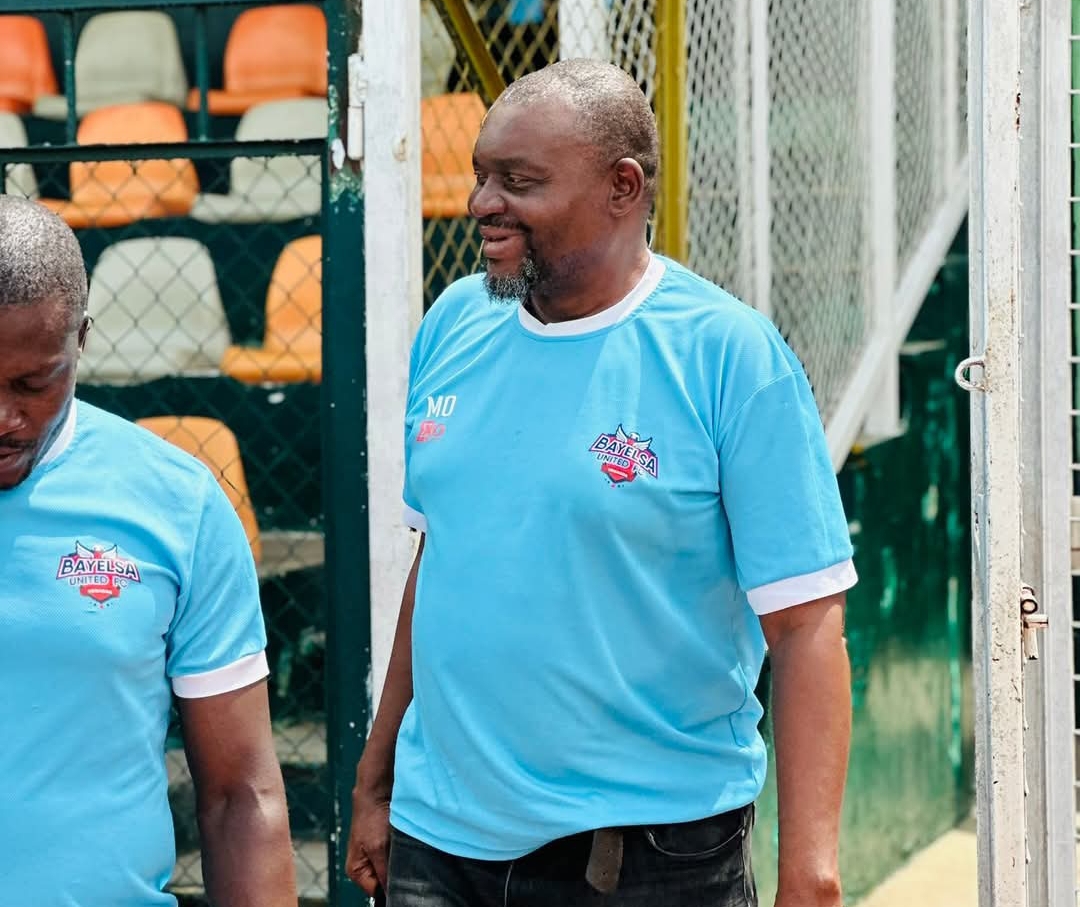
In 1989, he joined International Breweries Limited (IBL) FC, Ilesa, where the right wing-back played alongside the likes of Shola Akinsola and John Omugele.
His career then took him to Julius Berger FC, popularly known as the Bridge Boys, in 1990. There, Okara featured with players such as Sunday Oliseh, Isaac Semitoje and Jide Oguntuase before securing a move to Shooting Stars Sports Club (3SC) in 1991.
At the time, the Ibadan-based side had stars such as Dotun Alatise, Golden Ajebo and Felix Owolabi on their roster.
Okara’s Overseas Career Move And Injury-Forced Return
In 1992, Calabar Rovers became his next career stop, where he reunited with Finidi George. Imama Amapakabo and the late John Okon were also part of the Canaan City side.
His performances soon attracted Eagle Cement FC, Port Harcourt, who signed him in 1993. Ahmed Abdulrahman, now Secretary of Rivers United, was part of the squad then.
From Eagle Cement, Okara moved abroad in 1996 to join Susubribri FC in Ghana, coached by legendary Ghanaian ex-international Sunday Ibrahim.
After one season, he moved to Europe in 1997, joining Maccabi Herzliya of Israel. Later that same year, he featured for Stella FC of Abidjan, Côte d’Ivoire, before returning to Nigeria following a recurring shoulder injury.
Okara Explains Why He Rejected U-23 Eagles Invitation
“When I was invited to the U-23 Eagles camp ahead of the qualifiers, I declined the invitation based on principle,” the former defender revealed.
“I was convinced that I was above the 23-year age limit, so I sincerely and honestly told the NFF that I would not come because I was over the age.
“Fortunately, the team qualified and went on to win the gold medal, something no African country had done before. That was how I missed the fame, honour and rewards that came with the achievement. But I’m happy I stood by my principle,” Okara explained.
Okara Recalls Injury That Ruled Him Out Of AFCON 1990
Missing the Atlanta 1996 Olympic success was not the only painful moment in Okara’s career.
He also recalled missing out on the 1990 Africa Cup of Nations in Algeria, where the Super Eagles finished as runners-up after losing 1-0 to the hosts in the final.
“Before the Atlanta Olympic issue, I had already missed out on the Super Eagles squad for the 1990 AFCON in Algeria,” Okara said.
“At the time, I was playing for International Breweries Limited (IBL) FC, Ilesa. We were travelling to Bauchi for the Challenge Cup third-place match, while BCC Lions were to face Iwuanyanwu Nationale in the final.
“Unfortunately, we had an accident on the way and I sustained injuries. I couldn’t recover in time to attend the national camp or make the team for the tournament.”
He added that Dutch coach Clemens Westerhof had planned to monitor his progress before the injury setback.
“I remember Westerhof wanted his coaches to monitor me. The late Christian Chukwu was among those sent to watch our matches and track my recovery, but it never worked out.”
Coach Speaks On Nigeria’s World Cup Qualification Debate
The Bayelsa State-born coach also shared his thoughts on the controversy surrounding Nigeria’s petition to FIFA over DR Congo’s alleged fielding of ineligible players during the 2026 World Cup play-off in Morocco.
According to him, Nigeria should always aim to qualify for the World Cup through performance on the pitch.
“I’m a Nigerian with patriotic blood running through me. I always want Nigeria at the World Cup because we have the potential,” he said.
“But honestly, we put ourselves in this position during the qualifiers. If the team had shown the urgency and intensity earlier, we wouldn’t be in this situation.
“Yes, rules must prevail, but Nigeria is too big a football nation to qualify for the World Cup through the back door. If you ask me, I would say we should move on and start preparing for the next edition.”
NPFL Leadership Commended For Calendar Alignment
Okara also praised the leadership of the Nigeria Premier Football League (NPFL) for successfully aligning the domestic league calendar with that of the English Premier League (EPL).
He commended NPFL Chairman Gbenga Elegbeleye and his management team for achieving what once seemed impossible.
“In the past, it looked impossible. But what Elegbeleye and his team have done deserves commendation,” Okara said.
Also Read: NPFL: Bayelsa United Coach Okara Insists Title, Survival Race Still Wide Open
“Now our league can end on the same day as the EPL. Players who wish to travel abroad for trials during the summer window can do so without disrupting their clubs’ programmes.
“This also allows coaches to plan their season properly without interruptions. I believe more positive innovations will come.”
Okara Blames Player Exodus For Striker Shortage In NPFL
The Bayelsa United boss also addressed concerns about the lack of prolific strikers in the NPFL.
According to him, the constant movement of promising players abroad has left domestic coaches struggling to maintain quality attacking options.
He cited remarks by Rivers United coach Finidi George, who recently responded to questions about signing strikers.
“Finidi George gave the perfect answer when he was asked about signing strikers,” Okara noted.
“He asked: ‘Where are the strikers? Show me one and I’ll buy.’
“That reflects the reality. There are hardly quality strikers left in the country. Once you develop one and he scores three or four goals, he quickly moves to Europe. Now even football academies are losing their best talents early.”
By Sab Osuji