


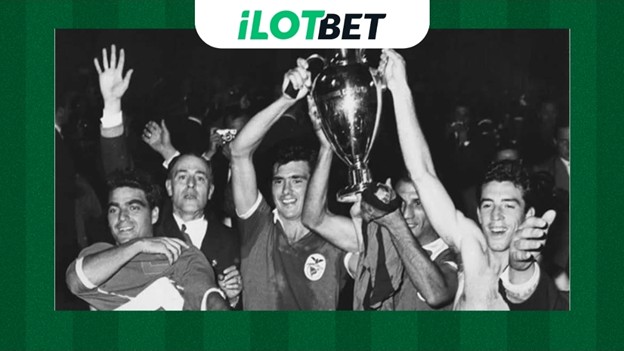
In 1962, Béla Guttmann stood on top of Europe. His team, S.L. Benfica, had just beaten Real Madrid 5–3 in Amsterdam to win their second straight European Cup. They were fearless, attacking, modern. A young Eusébio announced himself to the world. Lisbon felt like the center of football.
It was Benfica’s golden age. And then it ended, abruptly.
After delivering back-to-back European titles in 1961 and 1962, Guttmann reportedly asked for a pay rise. Benfica’s board said no. Guttmann walked away.
What happened next became legend.
According to the story that has followed the club for more than six decades, Guttmann declared that Benfica would not win another European Cup for 100 years. Whether those were his exact words remains debated. But what cannot be debated is what followed.
Benfica never won it again.
Related: Joining Saudi League Will Suit Salah – Heskey
The Finals That Slipped Away
Since 1962, Benfica have reached eight major European finals. They have lost every single one.
They fell in the 1963, 1965 and 1968 European Cups. They were beaten again in 1988 and 1990. They lost the 1983 UEFA Cup final. And in the modern era, they suffered back-to-back UEFA Europa League heartbreaks in 2013 and 2014.
Close calls. Narrow defeats. Late goals. Missed chances.
In 1990, before facing AC Milan in Vienna, the city where Guttmann is buried, Eusébio reportedly visited his former coach’s grave to seek forgiveness. Benfica still lost 1–0.
Coincidence? Maybe.
But football is not only about tactics and numbers. It is about memory. And fear. And the weight of history.
Why the Story Endures
It is easy to dismiss the idea of a curse. Football matches are decided by tactics, talent, preparation and small moments. Benfica have had strong teams across different eras. They have also faced giants: AC Milan, Manchester United, PSV, Sevilla, Chelsea.
But sport is not just about logic. It is also about memory and emotion.
Every time Benfica step onto a European final stage, the ghost of Guttmann is mentioned. Every narrow miss, a late goal conceded, a penalty lost, a red card shown, is folded back into the narrative.
The curse has become part of the club’s identity.
In truth, Guttmann’s “curse” may simply reflect the brutal nature of European competition. Finals are hard to win. Dynasties are rare. Margins are thin.
But the story matters because it captures something deeper about football, how success, pride, and a single moment of disagreement can shape decades of narrative.
Benfica’s last European title came in 1962.
Guttmann’s words, real or polished by time, have outlived him.
The hundred-year mark would arrive in 2062. Until then, every European campaign carries more than hope. It carries history. And in Lisbon, history has a long memory.
Think you can read the game as well as you watch it? Join iLOTBET today and turn your football insight into winning moments. Register now and be part of the action.





3 Comments
That is why I have said osimhen needs to apologise to finidi if he needs to win any major trophy for his country and european trophy for his club.
Curse in football is real! He who have ears! let him do what???!!!
Thank you mr writter for this wonerful piece which serve as a reminder that curse exist in football…
Ka chineke mezi-okwu…
x mr mokey yaish Blah blah blah
It really must existed ke -Ah ah, Are yuh not the prove of it? Ka gane?
Meanwhile, Osigoal is stii proofing yuh wrong efrydays – see as hin dismatled yur Juve wit single hand?
in fact, yuh go cry taya! dey play lmaoo x
The curse? is really, yuh har the prove of it.
Osigoal wii continued to rubbing peppers and salt in yur eyes and yuh wii continued crying and barking like dog lmaoo. yuh neva see shege, dey play!
csn or wat? yuh berra show my coment or yuh wii saw pepper hehehe