


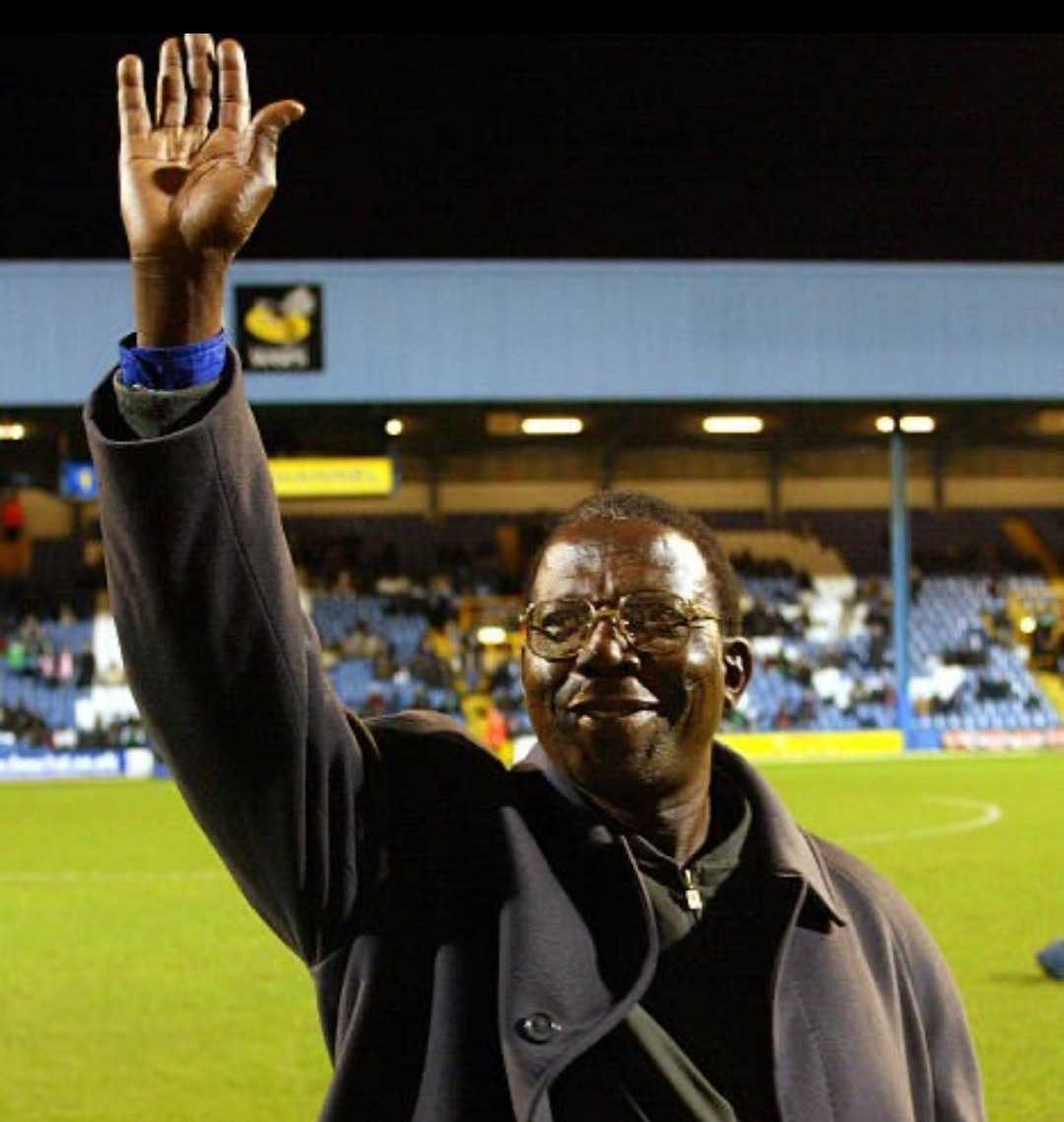
Coach Adegboye Onigbinde was the most searched topic in Nigeria online between the 10th and 11th of March 2026.
A man who could command the attention of so many Nigerians at a time when knockout matches in the UEFA Champions League were expected to dominate conversations deserves a closer look.
Onigbinde’s legacy is forever carved into Nigerian football heritage. His impact is relevant as both a coach and a builder of football knowledge. In what was perhaps his most remarkable quote, Onigbinde said, “Coaching is a 24-hour job. Even when you are resting, you are thinking about how to do it better tomorrow.”
Onigbinde: Early Life — From Classroom Teacher To Football Visionary
He hailed from Modakeke and his dedication to developing the beautiful game saw him rise to the highest level of football administration and technical development.
Before football defined his life, Onigbinde worked as a teacher. He began school at the age of ten and later trained at several teachers’ colleges across the old Western Region.
Also Read: Former Super Eagles Coach Onigbinde Dies At 88
His classroom experience influenced how he saw the world around him. Throughout his career, many people described him as a teacher first and a coach second.
Onigbinde was still a Grade III teacher in the late 1950s when Nigerian football legend Teslim Balogun encountered him. Balogun had spotted him during a football tour of the Western Region (Ile-Ife) and invited him to Ibadan to play football.
Onigbinde turned down the offer due to family circumstances. At that time, football wasn’t a lucrative venture and Onigbinde was concerned about fending for his family.
Teslim Balogun, however, kept a close tab on him. When Onigbinde joined St Luke’s College, Ibadan for his Teachers Grade 2, they became closer. Onigbinde became the captain of the school team in 1961 and often invited Balogun to their activities.
St Luke did not have an effective Games Master, so Onigbinde stepped in to coach and play for the school. Teslim Balogun had been helping his school prepare for Inter-Teacher Training College Football Competitions.
After working closely with Onigbinde, Balogun believed that Onigbinde’s understanding of the game would make him a better coach than him. Balogun then encouraged him to take up coaching. The advice proved decisive and changed the course of his life.
Onigbinde initially did not believe those comments but Balogun insisted on him. The Western Region Sports Council organised a coaching course between July and August, 1961 and Balogun seriously talked Onigbinde into attending it, and that was his first coaching course.
Coaching Philosophy: Discipline, Preparation And Tactical Intelligence
His teaching background defined his approach to almost everything else he did. He believed coaching and teaching are very similar, frequently comparing coaching to classroom activities. As such, discipline, patience and tactical understanding became the pillars of his coaching philosophy.
In his own words, Onigbinde often said that coaching was not just about match-day decisions but about preparation and instruction long before the players stepped onto the field. He believed that a well-prepared team needed minimal intervention. This was evident in his very calm touchline attitude.
During his years serving as a technical assessor for FIFA, Onigbinde often noted in his reports that coaches who spent games shouting constant instructions from the touchline had not done their jobs at the right time. He once used an exam analogy to back this up.
Onigbinde’s Rise To Prominence — Club Success And National Recognition
Looking at his coaching journey, when Onigbinde began his coaching career in the 1960s, he was scarcely known outside local football circles.
Reaching the quarter-finals of the African Champions Cup with Water Corporation FC of Ibadan in the late 70s brought him national acclaim and marked him out as a serious tactician.
In the early 1980s, precisely in 1984, his reputation rose even higher. At that time, the football federation was in murky waters regarding the Super Eagles (then Green Eagles).
They needed a miracle to turn their disappointments around and had parted ways with Afcon-winning Brazilian Otto Gloria. In light of that demand, the job was opened to Nigerian coaches.
After a competitive selection process, Onigbinde emerged as the top candidate out of over sixty applicants. He outperformed the other applicants by a landslide, scoring 84 per cent while the next best person had 65 per cent.
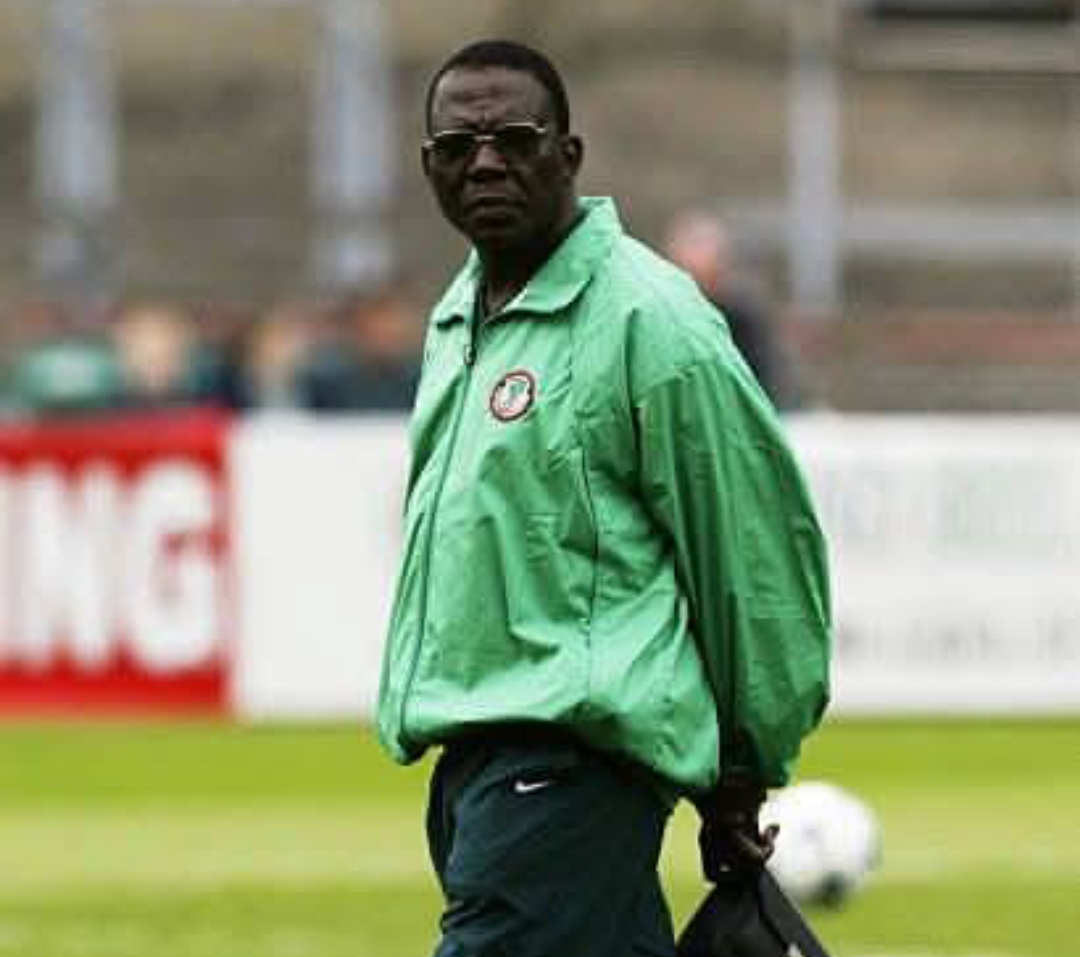
That was how Onigbinde became the first indigenous coach to lead Nigeria’s senior national team to the final of a major tournament, winning a silver medal at the 1984 Africa Cup of Nations (AFCON) in Cote d’Ivoire.
Onigbinde coached a team of rookies and a few experienced players to the final of the tournament before falling 3-1 to Cameroon. Renowned names in Nigerian football like Stephen Keshi, Rasheed Yekini and Peter Rufai were all young men in their early twenties.
Henry Nwosu, Muda Lawal and Yisa Sofoluwe also played important roles at the tournament. Henry Nwosu got the first goal of the Onigbinde Afcon era. The team showed fighting spirit against Malawi and Egypt in the group stages and semi-final, respectively, overcoming a two-goal deficit in both matches.
They remained unbeaten until they reached the final. In the final, Muda Lawal put Onigbinde’s team ahead but the Indomitable Lions roared back and won their first ever title. As the year progressed, Onigbinde enjoyed club-level success as well, taking IICC Shooting Stars of Ibadan to the final of the African Cup of Champions Clubs.
Under Onigbinde in 1984, Shooting Stars had a strong campaign, defeating teams like Semassi, Maghreb Fès, Tonnerre Yaoundé, and JE Tizi Ouzou to set up a two-legged final against Zamalek SC of Egypt.
The Coach’s Super Eagles And 2002 World Cup Mission
Onigbinde later revealed that his early days with the national team were far from comfortable. At one point, he took a leave of absence and businessman Moshood Abiola and a few others stepped in with support after hearing about the difficulties he’d faced.
Nearly two decades after his first stint, Onigbinde answered the nation’s call once more. This time, he was to lead the Super Eagles to the Korea-Japan 2002 FIFA World Cup.
Late Shaibu Amodu had been in charge of the team initially until Onigbinde took the reins and made history once again as the first indigenous coach to take Nigeria to a FIFA World Cup. The circumstances were far from ideal.
The team had struggled at the Nations Cup earlier that year and Onigbinde was brought in with barely three months to prepare a new squad. At the 2002 World Cup, Onigbinde was tasked with leading Nigeria past England, Sweden and Argentina in the group stages.
Nigeria eventually finished bottom in Group F after a 0-1 loss to Argentina and a 1-2 loss to Sweden before holding England to a goalless draw in their final match. The only World Cup goal under Onigbinde was scored by Julius Aghahowa.
The explosive attacker took to the sky to finish off a Joseph Yobo cross and head Nigeria into the lead against Sweden.
Onigbinde’s Global Influence: FIFA Technical Instructor And Football Educator
Onigbinde played a key role in shaping coaching education on the continent and globally.
For more than two decades, he worked extensively with both FIFA and the Confederation of African Football (CAF) as a technical instructor and assessor. Onigbinde helped organise coaching courses, analysed matches and contributed to the development of technical programmes across the continent.
By his own account, that work took him to more than forty countries in Africa and he has trained some of the foreign coaches that were eventually hired to lead the Super Eagles in FIFA refresher courses. Onigbinde even helped build the youth programme in Trinidad and Tobago in the early 2000s.
Onigbinde: Death Of A Legend And Nationwide Tributes
On March 9, 2026, news broke that the Modakeke-born football icon had breathed his last just four days after his 88th birthday. His passing was announced in a message that read: “With great gratitude to God for a life well spent, we announce the passing of this great man, a Modakeke High Chief, the first indigenous Nigerian Super Eagles football coach, father, husband, grandfather, great-grandfather, brother and friend, High Chief Festus Adegboye Onigbinde.”
Tributes have since poured in from different corridors, including the nation’s highest echelons. Governors, ex-players, organisations and the bereaved public have all sent condolences. NFF General Secretary, Dr Mohammed Sanusi, described him as a man who ate, drank, breathed, slept and lived football development.
Also Read: The Onigbinde That I Knew — A Humble Tribute By Odegbami
President Bola Ahmed Tinubu described the late Onigbinde as a trailblazer who made significant contributions to the growth of football in Nigeria. President Tinubu acknowledged Onigbinde’s contributions to the development of grassroots football and the strengthening of football administration in Nigeria.

Osun State Governor Ademola Adeleke described his passing as painful and devastating. Governor Adeleke condoled his immediate family, the Ogunsua and people of Modakeke, and the football community, urging everyone touched by this loss to honour his memory by sustaining the legacy of touching lives.
Lagos State Governor Babajide Sanwo-Olu also described him as one of the best Nigerian coaches in football history.
Chief Segun Odegbami called him a close confidant and master of the game.
Odegbami then urged the Nigeria Football Federation and the National Sports Commission to ensure that Onigbinde is immortalised for his unmatched legacy.
Former Super Eagles goalkeeper Vincent Enyeama also recalled Onigbinde’s impact on his career in his early goalkeeping days.
Onigbinde assured a young Enyeama that his time would come, backing it up by giving him opportunities to prove himself. Onigbinde’s words proved true as Enyeama went on to become one of Africa’s greatest goalkeepers.
A Lasting Legacy In Nigerian Football
A former player under Onigbinde at the National Cereals research Institute (NCRI) in the late 70s, Coach Chike Egbunu-Olimene, described him as most humble and straightforward. “Baba Onigbinde was meek with knowledge and never afraid to give young players a chance if he saw potential. I learnt that from him and used it in my own career as a grassroots coach’, he added.
As we close the book on Coach Onigbinde’s lifetime, some of his fondest quotes and memories come to mind. To touch on a few, Onigbinde’s decision to wear native attire (ankara) to the FIFA World Cup, the “Open Door Policy” in 2002, his decision to drop strong names in favour of young prospects at major tournaments, and his strong refusal to accept interference from the NFA.
In his own words: “No one can push me into a situation that I don’t believe in.”
Even when he retired, he was committed to football development and training others.
Onigbinde would be better remembered as a football educator. In his early 80s, Onigbinde, in his own words, said he believed he had lived a fulfilled life, having worked in the highest cadres of sports for decades.
There were also personal choices that were memorable as well. His decision to drop his baptismal name Festus in 1960 and use Adegboye instead showed his strong cultural identity and sense of purpose.
Adegboye was not one of his original names, but according to him, the name ‘Festus’ carried no meaning, unlike ‘Adegboye’, which meant ‘a child born to reclaim a chieftaincy title’.
Looking at the life and work of Coach Adegboye Onigbinde, it is difficult to disagree with the Nigeria Football Federation, who summed up the news of his demise in simple terms, because a big tree has indeed fallen.
By Alli Fesomade


2 Comments
A very verbose essay written since March 14th and no prior comments (March 25th).
Tells you how ‘influential’ the ambush coach of the worst Nigerian World Cup team was.
What an insensitive comment to make